Safari costs · Quote validation
Safari Hidden Costs: Fees, Tips, Flights and Extras
The cheapest quote is usually the one that's hiding the most. A safari headline price can look sharp and still leave out park fees, tips, drinks, bush flights and the single supplement – extras that can make a bare-bones quote meaningfully higher once everything is included. None of it is a scam; it's just the industry's habit of quoting the shell and letting the fillings surprise you at the airport. Here's every line that hides below the price, so nothing catches you out.
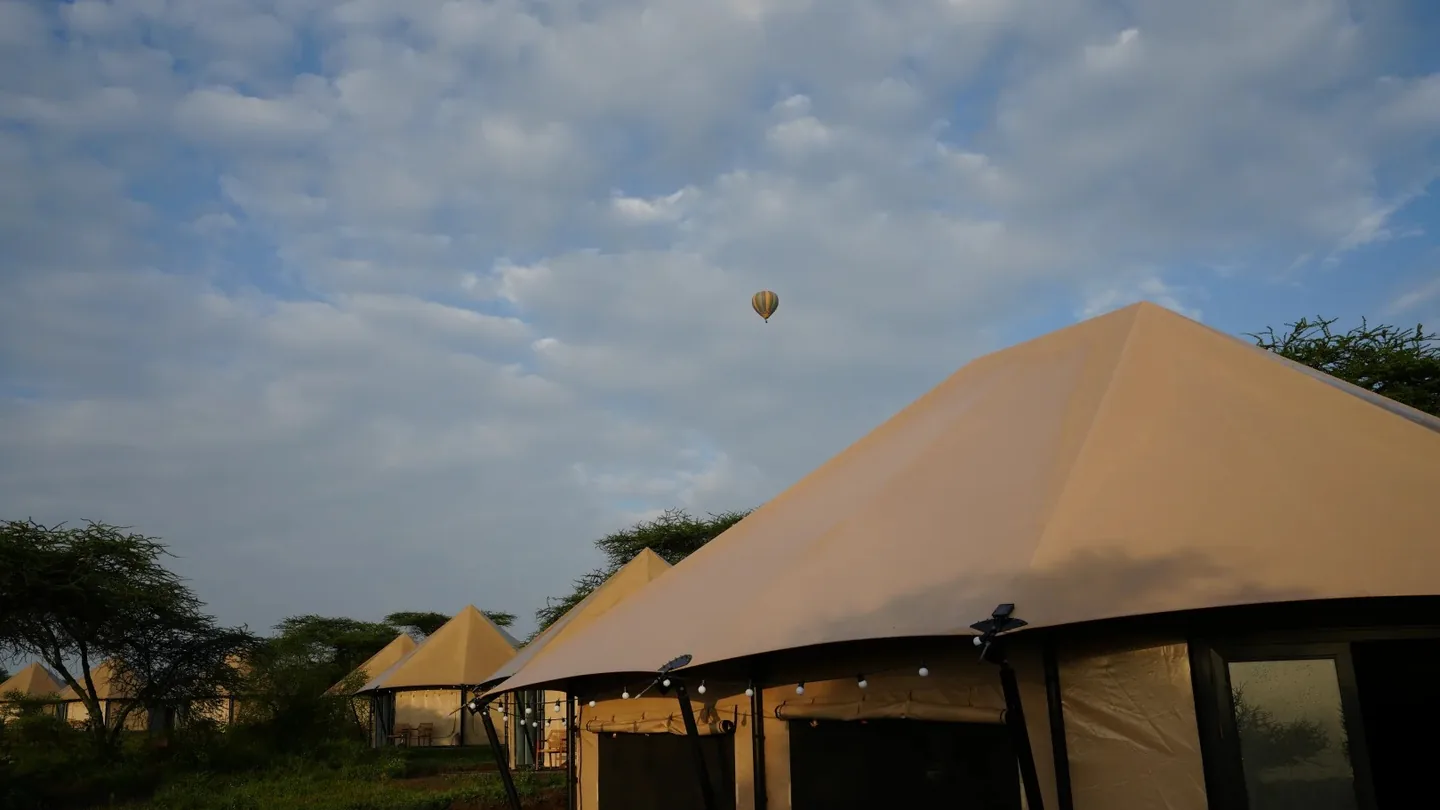
The nightly rate is only the headline; transfers, park fees and extras sit beyond the tent canvas. The Safari Atlas
The quick answer
The biggest hidden costs are park and conservation fees (often hundreds of dollars per person), international and bush flights, tips for guides and camp staff, the single supplement if you travel solo, and premium drinks and optional activities like balloon rides. Left out of a quote, they can change the total enough to make the cheapest option no longer the best value.
The fix is one question, asked in writing: what exactly is included, and what isn't? A quote that folds the fees in isn't more expensive – it's just honest. Always compare like-for-like before you decide which trip is cheaper.
Key facts
- Park fees: Serengeti entry is set by TANAPA and may appear with VAT or related charges on operator invoices; Maasai Mara is $100–$200 per adult by season, with 12-hour ticket validity.
- Ngorongoro: has separate conservation and crater-service charges; confirm the current NCAA tariff and operator invoice before comparing quotes.
- Tips: budget roughly $10–$25 per day for your guide, plus a shared amount for camp staff.
- Single supplement: solo travellers often pay 50–80% extra on accommodation.
- Flights: international airfare and bush flights are frequently quoted separately.
- Extras: premium drinks, balloon safaris (often $500+), visas and travel insurance sit on top.
Park and conservation fees
This is the big one, and the one most often left out of a cheap quote. Park and conservation fees are set by the authorities, charged per person, and substantial: TANAPA sets Serengeti entry, which may appear with VAT or related charges on operator invoices; Kenya's Maasai Mara is $100 to $200 per adult depending on season, with 12-hour ticket validity. Ngorongoro is its own line item: the NCAA tariff separates conservation and crater-service charges, so ask the operator to show the current fee basis on the invoice.
Across a week these fees run into the high hundreds or low thousands per person. A quote that excludes them isn't cheaper – you'll pay them anyway, often in cash-free electronic systems at the gate – so the only sensible move is to confirm in writing that they're included. This single line explains most of the gap between two otherwise identical quotes, a point we hammer in our budget vs luxury guide.
Flights, international and bush
Two different flight costs hide in the word "flights". Your international airfare to Nairobi, Kilimanjaro or Johannesburg is almost never in a land-only safari price – budget another $800 to $1,500 depending on where you're flying from. Then there are bush flights: the light-aircraft transfers between camps, which can run from a few hundred dollars to around $1,000 per person per leg and may or may not be bundled into your quote.
The confusion is worst when a quote says "from" a low number that assumes you'll drive every transfer, then reality adds flights to reach the camps you actually chose. Ask specifically which internal flights are included, and whether the headline is land-only or includes international air. Our fly-in vs driving guide covers when those bush flights are worth paying for.
See all-inclusive safari packages → Trips with fees, transfers and meals folded into one clear price. Check datesTips and gratuities
Tipping is expected on safari and adds up over a trip, yet it almost never appears on a quote. As a rough guide, budget around $10 to $25 per day for your driver-guide, plus a shared amount for the camp or lodge staff, usually pooled and left at reception. On a week's trip for two that can total a few hundred dollars – real money to plan for, not an afterthought to scramble for on the last morning.
Bring it in small-denomination US dollars, since that's what's easiest to give, and decide your amounts before you go rather than agonising each night. It isn't a hidden cost so much as an assumed one, but because it's rarely spelled out, first-timers routinely under-budget for it. Our safari tipping guide gives the full breakdown by role and country.
The single supplement
If you're travelling alone, this is the line that stings. Lodge rooms are priced on two people sharing, so a solo traveller usually pays a single supplement – commonly 50 to 80 percent on top of the per-person rate – to occupy a room built for two. It can quietly undo the money you saved by joining a shared vehicle, and it's easy to miss because it hides inside the accommodation line rather than standing out on its own.
The good news: some operators and lodges waive or reduce it in the low season, and dedicated small-group departures are designed to keep solo costs sane. If you're going alone, ask for the single supplement as a specific figure before you compare trips – our solo safari guide covers how to keep it down.
Want a quote with every hidden cost itemised?
The only way to compare safaris fairly is line by line. Tell us your rough plans and dates, and our safari planning team will send back a costed itinerary with park fees, tips guidance, flights and extras all spelled out – so the price you see is the price you pay. No obligation.
Drinks, activities and the small stuff
The last layer is a scatter of smaller lines that add up. Premium drinks – imported wines and spirits – are often excluded even at camps that include house drinks. Optional activities can be significant: a hot-air balloon safari over the Serengeti or Mara typically runs $500 or more per person, and a guided walk or cultural visit may carry a fee. Then there's the administrative tail: visas (often $50 to $100), travel insurance, airport transfers, and the odd conservancy fee layered on top of the national park fee.
Individually these are small; together they're another few hundred dollars you didn't picture. You don't need to pay for all of them – skip the balloon, stick to house wine – but you do need to know they exist so you can choose, rather than be surprised. Being deliberate about extras is also where a lot of the savings live, which is the subject of our saving money on safari guide.
How it all stacks up
Put together, the hidden lines can turn a tidy-looking headline into a very different total. Here's roughly how the extras layer on top of a bare land price, so you can see why "cheapest quote" and "cheapest trip" are often not the same thing.
How extras stack on a bare quote · illustrative
Five questions to ask before you accept a quote
- Are all park and conservation fees included? Get it in writing – this is the biggest hidden line by far.
- Is this land-only, and which flights are in it? Separate international airfare from bush flights explicitly.
- What tips should I budget? Ask for a per-day figure for guide and staff so it's not a last-minute scramble.
- Is there a single supplement? Solo travellers should get this as a specific number, not a vague "extra".
- What's excluded entirely? Drinks, activities, visas and insurance – know the list so you can choose.
So how do you avoid surprises?
The non-negotiable. A quote with park and conservation fees folded in is the only one you can trust and compare. Treat a fees-excluded price as incomplete, not cheap.
Establish whether the price is land-only, and which internal flights are covered. This is where a "from" price most often balloons once you build the real trip.
Tips, drinks, a possible single supplement and one or two activities. Set the money aside up front so they're a choice, not a shock on the last morning.
The safari itself is rarely where people get burned – it's the quote. Compare trips on a like-for-like, everything-in basis and the cheapest headline often turns out to be the dearest trip. Ask the one question, in writing, and the hidden costs stop being hidden.
Costs are typical 2026 figures and vary by country, season, operator and trip. Park fees follow official schedules current at July 2026 and are quoted VAT-inclusive where the authority does so. Confirm exact inclusions, fees and any supplements in writing with your operator before booking.
Sources & price notes
Fee figures checked July 2026 against the TANAPA tariff schedule (Serengeti, VAT included, 24-hour validity), the Ngorongoro Conservation Area Authority (separate conservation and crater-service charges; confirm current tariff), and the Maasai Mara schedule (Narok County; 12-hour validity). Tip, supplement and extras ranges are typical mid-market 2026 figures that vary by operator and trip. Confirm current fees and exactly what a quote includes with your operator before booking.