Destination guides · Kenya
Amboseli Safari Guide: Elephants Under Kilimanjaro
Amboseli isn't the biggest park in Kenya or the busiest with big cats – and it doesn't need to be. It has one image no other place on earth can match: great herds of elephants crossing dusty pans with the snows of Kilimanjaro filling the sky behind them. Add easy access from Nairobi and low year-round fees, and you have one of the most rewarding – and photogenic – short safaris in Africa.
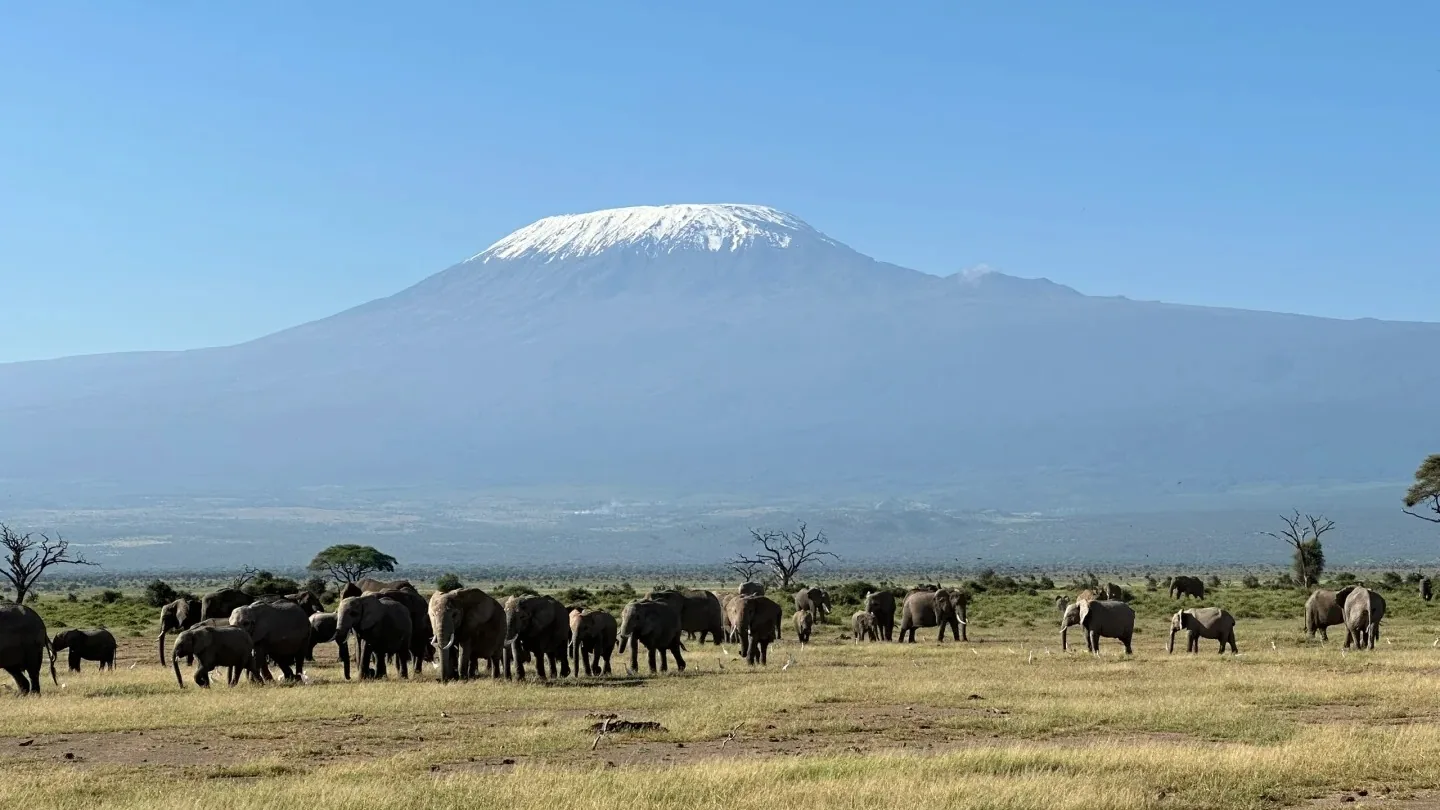
Few landscapes make scale feel as effortless as elephants beneath Kilimanjaro. The Safari Atlas
The quick answer
Amboseli is a compact Kenyan park famous for large elephant herds and the backdrop of Mount Kilimanjaro. It's about four hours from Nairobi (or a short flight), the park fee is $90 per person per day, year-round with no seasonal doubling, and it pairs beautifully into a longer Kenya loop. Big cats and plains game are here too, but the elephants and the mountain are the point.
Go in the dry season – roughly June to October and January to February – for the clearest Kilimanjaro views and easiest game viewing. Two nights is plenty; it's a highlight, not a whole trip.
Key facts
- The draw: big elephant herds with Kilimanjaro behind – one of Africa's iconic images.
- Park fee: $90 per person per day, year-round (no peak doubling) – a Kenya Wildlife Service park.
- Access: about 4 hours by road from Nairobi, or a short scheduled flight.
- Wildlife: elephants above all, plus lion, cheetah, hyena, plentiful plains game and rich birdlife.
- Best time: dry season (Jun–Oct, Jan–Feb) for clear Kili views and easy spotting.
- Compact: two nights suits it – a highlight within a longer Kenya safari, not a stand-alone trip.
What Amboseli is like
Amboseli is small and flat, a mosaic of open dusty pans, golden grassland and, at its heart, lush green swamps fed year-round by meltwater filtering underground from Kilimanjaro. That contrast – parched plains and vivid wetlands – is what draws and holds the wildlife, especially in the dry months when the swamps are the only reliable water for miles. The openness makes for effortless spotting and huge skies, and gives the park its cinematic, wide-angle feel.
Because it's compact, Amboseli rewards a short, focused stay: you can cover its key areas in a couple of days of game drives, so it works best as one leg of a Kenya loop rather than a week on its own. It's the classic opener or closer – the elephant-and-mountain chapter alongside the Mara's big cats and Nakuru's rhinos, exactly the shape of our 7-day Kenya itinerary.
The wildlife
Elephants are the stars, and Amboseli's are special: some of the best-studied and most relaxed herds in Africa, including big, old bulls with magnificent tusks, moving across the pans and wallowing in the swamps in family groups. Watching these herds up close, unhurried and at ease, is the park's defining experience – and the reason so many photographers make the trip.
Beyond the elephants, Amboseli holds a good supporting cast: lion, cheetah and spotted hyena, along with buffalo, giraffe, zebra, wildebeest and plentiful plains game concentrating around the swamps. Its birdlife is outstanding too, especially when seasonal water fills Lake Amboseli and pulls in flamingos, pelicans and waders. It's not the big-cat capital the Mara is – if lions are your priority, pair Amboseli with the Maasai Mara – but for elephants and all-round, easy game viewing, it delivers handsomely.
See Amboseli safari trips → Amboseli paired into a classic Kenya loop, fees included. Check datesKilimanjaro and the light
The mountain is half the reason to come, so it's worth knowing how to see it well. Kilimanjaro – just across the border in Tanzania – towers over Amboseli's southern horizon, and on a clear day its snow-capped summit behind a herd of elephants is one of the great sights in African travel. But it's often shrouded in cloud during the middle of the day, so the trick is timing: the peak is usually clearest at dawn and again in the late afternoon, when the cloud lifts.
That makes the early-morning and late-afternoon game drives doubly rewarding here – you're chasing both the wildlife and the mountain window, in the soft golden light photographers prize. Manage your expectations, though: even in the dry season the summit can stay hidden for a day or two, so give yourself a couple of mornings for the odds. When it all lines up – elephants, snow, low light – there's no better photograph on a Kenya safari, as our photography safari guide notes.
Best time to go
Amboseli is a year-round park, but the dry season is clearly best: roughly June to October and January to February, when skies are clearer for Kilimanjaro, the vegetation is sparse, and wildlife concentrates tightly around the swamps for easy viewing. The dust of the dry months is also part of the park's classic look, elephants moving through it in the golden light. These are the months most visitors target, and the busiest and priciest.
The green season – the long rains of March to May and the short rains of November – brings lush scenery, newborn animals, superb birding and lower prices, with the trade-off of more cloud around the mountain and a chance of muddier tracks. Unlike Kenya's Maasai Mara, Amboseli's fee doesn't double in high season, so the cost gap between peak and green is gentler here. If clear Kili views top your list, go dry; if value and green scenery appeal, the rains are underrated, as our green season guide argues.
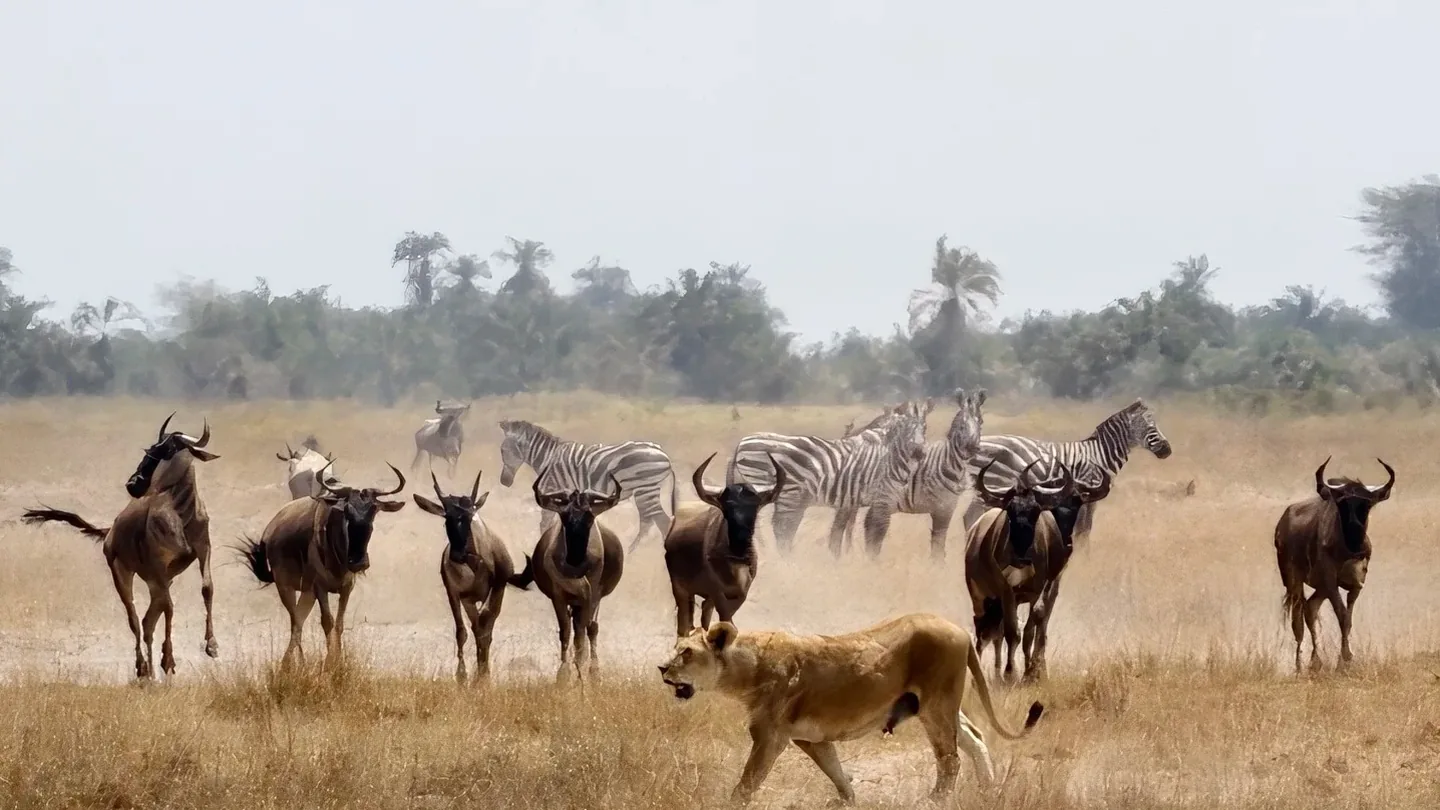
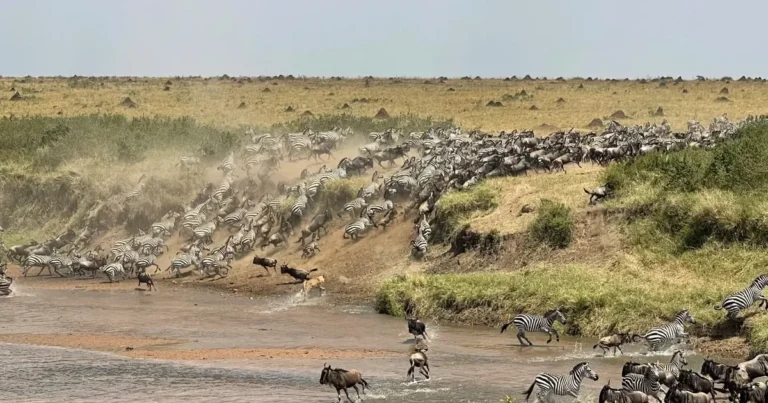
Green-season Amboseli can turn a familiar plain into a theatre of pursuit. The Safari Atlas
Amboseli by season · 2026
Want Amboseli built into a Kenya safari?
Amboseli shines as one leg of a longer loop with the Mara and Nakuru. Tell us your dates and how long you have, and our safari planning team will build a costed Kenya itinerary with Amboseli timed for clear Kilimanjaro views – fees included. No obligation.
Cost, fees and getting there
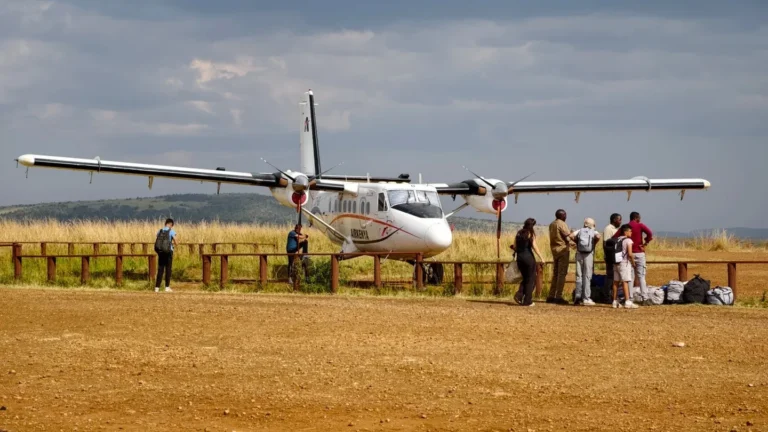
Amboseli is one of Kenya's more affordable headline parks, helped by two things. First, the park fee is $90 per person per day year-round – no peak-season doubling, unlike the Maasai Mara's jump to $200 – which keeps a short stay's costs predictable. Second, it's close: about four hours by road from Nairobi, so you don't need an expensive flight to reach it, though a short scheduled flight is available if you'd rather save the drive.
On the trip as a whole, Amboseli slots into the usual Kenya cost bands – budget group, mid-range private, or luxury – and its accessibility makes it a natural first or last stop. Confirm, as always, that park fees are included in any quote, since on any Kenya trip they're a real line, as our hidden costs guide stresses. For the full Kenya cost picture, see our 7-day Kenya itinerary and cost.
Where to stay
Accommodation splits between camps and lodges inside the park – closest to the swamps and the wildlife, and best for catching the dawn and dusk mountain light without a commute – and options in the private conservancies bordering it, where you'll find capped vehicle numbers and activities the park doesn't allow, such as night drives and walking safaris. The in-park lodges famous for their Kilimanjaro views are the classic choice for photographers.
Whichever you pick, location matters here as everywhere: a camp well placed for the swamps and the southern horizon puts you among the elephants at the best hours, the point our inside vs outside the park guide makes. For a first Amboseli visit, an in-park lodge with a mountain view or a bordering conservancy camp both work beautifully – choose the conservancy if you want the walks and night drives.
Browse Amboseli camps and lodges → In-park lodges with Kilimanjaro views and conservancy camps. See optionsFive questions to ask before you visit
- Are the elephants and Kili my priority? If yes, Amboseli is ideal – pair it with the Mara for big cats.
- Which season? Dry (Jun–Oct, Jan–Feb) for clear mountain views; green for value and birding.
- Drive or fly from Nairobi? Four hours by road, or a short flight to save time.
- Inside the park or a conservancy? In-park for the mountain light; conservancy for night drives and walks.
- How many nights? Two is plenty – Amboseli is a highlight within a longer Kenya loop.
So when should you visit?
For the clearest Kilimanjaro views and easiest game viewing, with elephants concentrated around the swamps in golden dust. The classic time – busiest and priciest, and the best odds of the iconic shot.
For lush scenery, newborns, superb birding and lower prices – with more cloud around the mountain the trade-off. Amboseli's fee doesn't double off-peak, so the value here is quietly strong.
Whenever you go, treat Amboseli as one leg – the elephant-and-mountain chapter alongside the Mara's cats and Nakuru's rhinos. Compact and close to Nairobi, it's the perfect opener or closer.
Amboseli does one thing better than anywhere on earth – elephants beneath Kilimanjaro – and does it cheaply, easily and in a couple of days. Go in the dry season for the clearest mountain, base near the swamps for the best light, and fold it into a wider Kenya trip. It's not a whole safari on its own, but it may be the chapter you photograph most.
Fees, access and timings are typical 2026 figures and vary by operator and season. The park fee follows the Kenya Wildlife Service schedule, revised periodically. Kilimanjaro views depend on weather. Confirm current fees and inclusions with your operator before booking.
Sources & price notes
The $90-per-person-per-day, year-round park fee follows the Kenya Wildlife Service schedule (revised periodically). Kilimanjaro visibility depends on weather and is clearest at dawn and late afternoon. Confirm current fees and inclusions with your operator before booking.