Destination guides · Namibia
Etosha Safari Guide: Wildlife at the Waterholes
Etosha turns the usual safari on its head: instead of driving around looking for animals, you park at a waterhole and let the animals come to you. Around a vast, shimmering salt pan visible from space, the dry season concentrates elephant, rhino, lion and antelope at a handful of springs, delivering some of the easiest, most reliable game viewing in Africa – on roads you can drive yourself, for a fraction of an East African price.
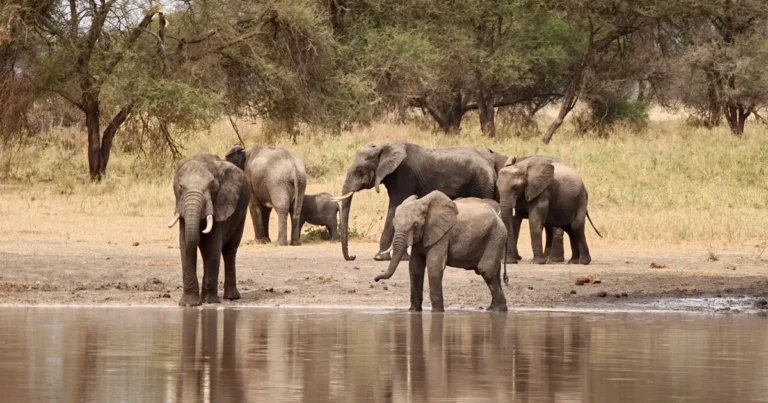
Etosha rewards stillness: choose a waterhole, wait, and let the park come to you. Video: The Safari Atlas.
The quick answer
Etosha is a huge Namibian park built around a salt pan and its waterholes, where wildlife gathers in the dry season for outstanding, easy viewing – elephant, black rhino, lion, giraffe and vast antelope numbers. It's excellent for self-drive on good roads, cheap to enter (about N$280 per person per day for international visitors from April 2026, roughly $15), and lower-risk for malaria than the tropical parks.
Go in the dry season, roughly May to October, when the waterholes concentrate the game. The wet season (November to April) is green and great for birds and newborns, but the wildlife disperses. Note: Etosha has no buffalo, so it's not a full Big Five park.
Key facts
- The draw: waterhole game viewing around a vast salt pan – easy, reliable dry-season sightings.
- Park fee: about N$280 per person per day for international visitors (from 1 April 2026, roughly $15), plus a small vehicle fee.
- Self-drive: excellent – good roads and floodlit rest-camp waterholes make it very accessible.
- Best time: dry season (May–Oct), when game concentrates at the waterholes.
- Wildlife: elephant, black rhino (a stronghold), lion, giraffe, springbok, oryx – but no buffalo.
- Lower malaria risk than tropical parks, mainly in the wet season – still take advice.
What Etosha is like
Etosha is defined by its pan – a vast, flat, silvery-white salt depression, the dry bed of an ancient lake, so large it's visible from space and gives the park its stark, otherworldly look. For most of the year the pan is bone dry and shimmering; when the rains fill parts of it, it can draw flamingos in their thousands. Around the pan lies open grassland, mopane woodland and calcrete plains, dotted with the springs and waterholes that are the whole park's beating heart.
It's also refreshingly accessible: good gravel and tar roads, well-run rest camps, and a scale that makes it easy to explore over a few days. This is classic Southern African self-drive country – the same accessibility that makes the region such good value in our South Africa vs Kenya comparison – and Etosha is one of the continent's great self-drive parks. It pairs naturally into a wider Namibia road trip taking in the dunes and the coast.
The waterhole safari
Etosha's signature is waterhole game viewing, and it flips the usual safari script. In the dry season, when surface water all but vanishes, the park's waterholes become the only source for miles, so the wildlife has to come to them – and you simply position yourself at a good one and watch the parade arrive. Elephants, rhino, lion, giraffe and great herds of antelope filter in and out through the day, often several species at once, jostling and interacting at the water's edge.
It makes for extraordinarily reliable, low-effort viewing – you're not searching, you're waiting, and the action comes to you. Several rest camps even have floodlit waterholes where you can watch after dark, when rhino and other nocturnal animals often appear, from the comfort of a viewing bench. For patient watchers and photographers especially, a good waterhole in the dry season is one of the most rewarding seats in African wildlife viewing, and it rewards the slow, stay-put approach our slow safari vs more parks guide champions.
See Etosha and Namibia safaris → Self-drive and guided Etosha trips within a wider Namibia route. Check datesThe wildlife
Etosha's wildlife is abundant and, in one respect, special: it's one of Africa's strongholds for black rhino, and sightings – often at floodlit waterholes after dark – are a real highlight. Alongside them you'll find elephant (pale and dusted white from the pan's soil), lion, leopard, cheetah, giraffe, zebra, and vast numbers of springbok, oryx (gemsbok), kudu and other antelope drawn to the springs. The birdlife is excellent too, especially when water gathers on the pan.
One honest caveat: Etosha has no buffalo, so it's not a full Big Five park – you can see four of the five (elephant, rhino, lion, leopard) but the buffalo is absent. That matters little to most visitors, given the sheer volume and reliability of the sightings, but it's worth knowing if ticking off the Big Five is your goal, in which case pair Etosha with a buffalo destination. For easy, high-volume game viewing and rhino in particular, though, Etosha is superb.
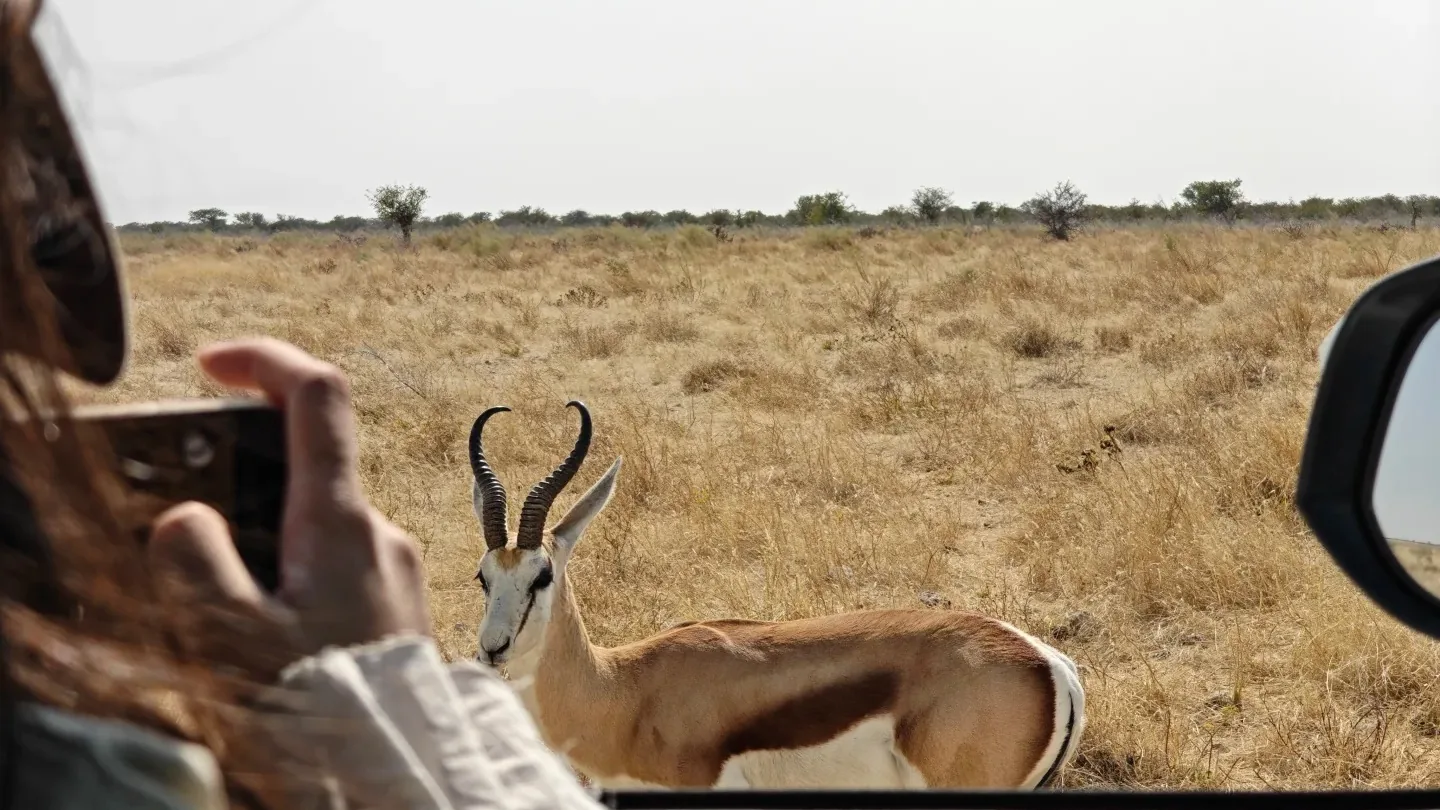
At Etosha, the open ground makes distance part of the sighting. The Safari Atlas
Best time to go
Etosha is emphatically a dry-season park at its best: roughly May to October. As the land dries out, the waterholes become the only water and the wildlife concentrates around them in ever-greater numbers, so game viewing gets easier and more spectacular as the dry season deepens toward its September–October peak. The weather is clear and pleasant (cold at dawn), and this is the classic, most rewarding time to visit – and the busiest.
The wet season, roughly November to April, transforms the park: the rains green the plains, animals disperse widely (with water everywhere, they no longer need the waterholes), newborn antelope appear, migratory birds arrive, and the pan may fill to draw flamingos. It's a beautiful, birdy, lower-priced time – but for concentrated big-game viewing it can't match the dry months. So go dry for the waterhole spectacle; go wet for birds, babies and green scenery, the trade our green season guide weighs.
Want Etosha built into a Namibia trip?
Etosha shines within a wider Namibia route with the dunes and the coast. Tell us your dates and whether you'd like to self-drive or be guided, and our safari planning team will build a costed Namibia itinerary with Etosha timed for the waterholes. No obligation.
Etosha by season · 2026
Cost, fees and self-drive
Etosha is one of Africa's best-value big-game parks, on two fronts. First, the park fee is low: from 1 April 2026 international visitors pay about N$280 per person per day (a combined entrance and conservation fee, roughly $15), plus a small vehicle fee of around N$60 for a standard car – a fraction of East Africa's gate charges. Second, Etosha is superb for self-drive: good roads, well-signed waterholes and comfortable rest camps mean you can hire a car, set your own pace and skip the cost of a guided vehicle entirely.
That self-drive option makes a Namibia safari genuinely affordable – the same value-through-self-drive that our Kruger vs private reserve and South Africa vs Kenya guides highlight for Southern Africa. You can also go guided if you'd rather not drive, but for independent, budget-conscious travellers Etosha is one of the continent's most accessible great parks. Confirm current fees, which rose in April 2026, and factor the car hire and fuel into your budget.
Where to stay
Accommodation splits between the rest camps inside the park, run by the parks authority, several with the famous floodlit waterholes right on site – unbeatable for after-dark rhino sightings without leaving camp – and the private lodges just outside the gates, which are generally more comfortable and often offer guided drives and other activities. In-park camps put you closest to the dawn and dusk waterhole action; outside lodges trade a little proximity for more polish.
For the classic Etosha experience, staying at least a night inside the park to use a floodlit waterhole is well worth it, the location-first principle from our inside vs outside the park guide. Many trips combine an in-park rest camp with a nicer lodge outside for a balance of proximity and comfort. Book the in-park camps ahead in the dry season, as they're popular and limited.
Browse Etosha camps and lodges → In-park rest camps with floodlit waterholes and lodges outside the gates. See optionsFive questions to ask before you visit
- Is easy, high-volume viewing my aim? Etosha's waterholes deliver it – go in the dry season.
- Which season? Dry (May–Oct) for the waterhole spectacle; wet for birds, newborns and green scenery.
- Self-drive or guided? Etosha is excellent and cheap to self-drive – or go guided if you prefer.
- Do I need buffalo? Etosha has no buffalo, so it's not full Big Five – pair it if that matters.
- In-park or outside? Stay in-park at least a night for the floodlit waterholes.
So when should you visit?
For the waterhole spectacle at its best – game concentrated at the springs, easy and reliable viewing that peaks in September and October. The classic time, busiest and most rewarding.
For green plains, newborn antelope, superb birding and flamingos if the pan fills – at lower prices, with the game dispersed. Beautiful and quiet, but not the concentrated big-game viewing of the dry months.
Whenever you go, Etosha is one of Africa's great value, self-drive parks – pair it with the Sossusvlei dunes and the coast for a classic Namibia loop. Cheap to enter and easy to explore at your own pace.
Etosha rewards patience over pursuit: park at a good waterhole in the dry season and the wildlife of Namibia files past, rhino and all. Go May to October for the concentrated game, drive it yourself to keep the cost down, and stay in-park for the floodlit waterholes. It's among the easiest, best-value great safaris in Africa – just remember to pack the patience, and mind the missing buffalo.
Fees, access and timings are typical 2026 figures and vary by operator and season. Namibia's park fees rose on 1 April 2026 – the N$280 international daily fee and vehicle fee follow the Ministry of Environment, Forestry and Tourism schedule. Malaria risk is lower but present, mainly in the wet season. Confirm current fees and take medical advice before booking.
Sources & price notes
Etosha park-fee, wildlife and best-time details are typical 2026 figures; confirm current fees with your operator. The park fee (about N$280 per international adult per day from 1 April 2026, plus a vehicle fee around N$60) follows the Namibian Ministry of Environment, Forestry and Tourism / NWR schedule. Etosha has no buffalo. Malaria risk is lower but present in the wet season – confirm current fees and take medical advice before booking.