Planning guides · When to go
When to Visit the Southern Serengeti
The southern Serengeti has one great season, and it's the opposite of everyone else's. While the crowds chase the river crossings up north from July, the short-grass plains around Ndutu are quiet and dusty. Then, from around December, the rains green them and the migration pours back in to give birth – and for a few electric weeks the south becomes the most dramatic wildlife theatre in Africa. Timing your visit is really just timing the calving.
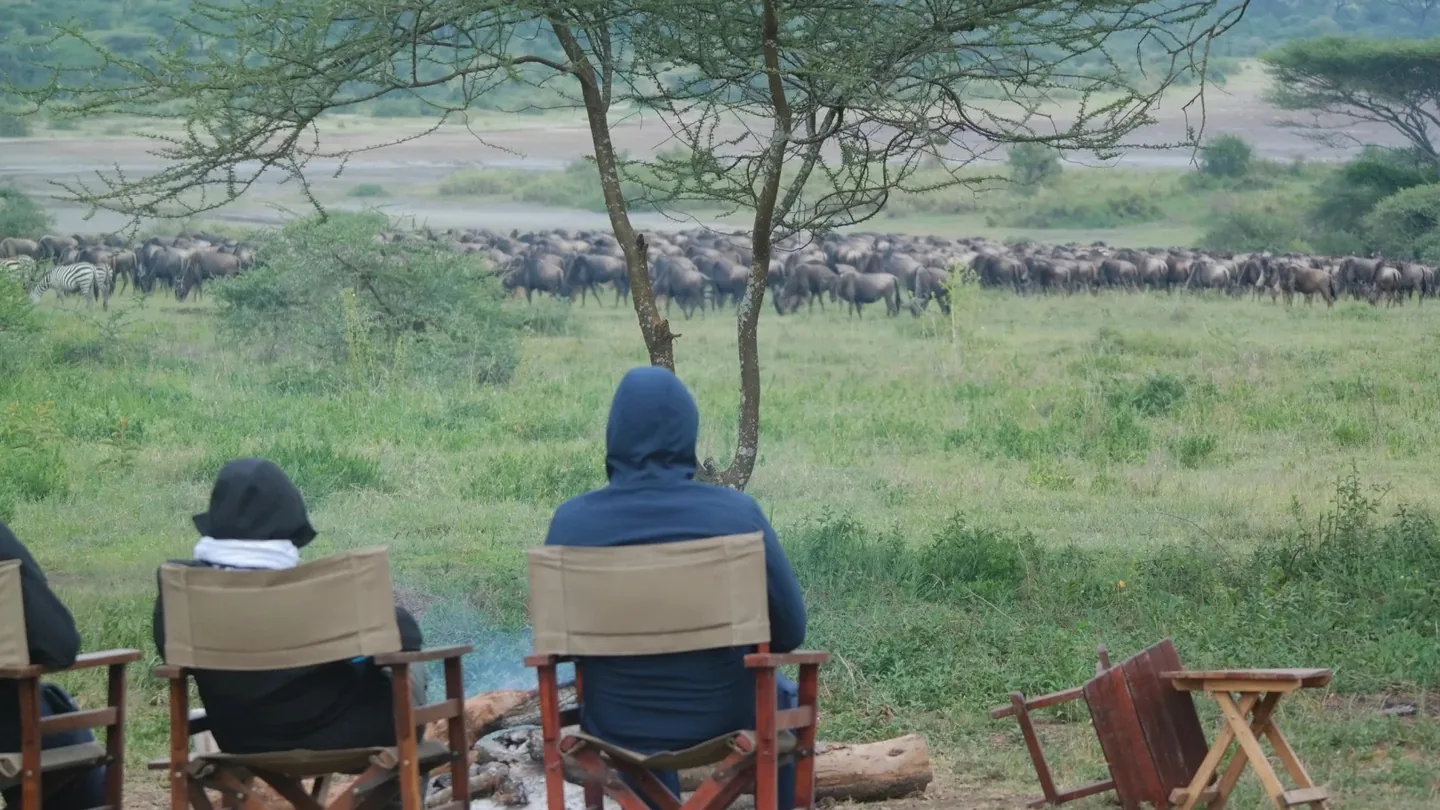
In the south, the season arrives at the camp before it shows up on a calendar. The Safari Atlas
The quick answer
Visit the southern Serengeti for the calving season, roughly December to March, peaking in late January and February, when hundreds of thousands of wildebeest give birth on the Ndutu short-grass plains – drawing the year's most intense predator action. This is the south's headline, and the reason to base here rather than the central or northern Serengeti.
Outside that window – roughly May to November – the herds have moved north and the south is quiet, so if your dates fall then, base in the central or northern Serengeti instead. For calving and green-season drama, though, the south from December to March is unbeatable.
Key facts
- Peak: late January to February – the height of the calving on the Ndutu plains.
- Season: roughly December to March, when the herds are in the south for the green-season grazing and birthing.
- The draw: mass calving and the year's most intense predator action – lions, cheetahs, hyena.
- Feel: green, photogenic short-grass plains; quieter than the July–October northern crossings.
- Off-season: roughly May–November the herds are north – the south is quiet, so base elsewhere then.
- Timings shift yearly with the rains – the migration follows no fixed calendar.
Why the south is a timing question
The southern Serengeti isn't a place you visit any time of year for the same experience – it swings from spectacular to sleepy depending on where the migration is. The short-grass plains around Ndutu are the migration's nursery, mineral-rich and perfect for newborns, but they only fill with life when the rains green them and the herds arrive to graze and give birth. For the rest of the year, with the herds far to the north, the south is a beautiful but quiet corner.
So visiting the south is really about catching the calving window, and getting your dates and your camp aligned with it. This is the same fix-your-dates-then-find-the-herds logic as our where to stay in the Serengeti and migration month-by-month guides – applied to the one region whose whole appeal is seasonal.
The calving season
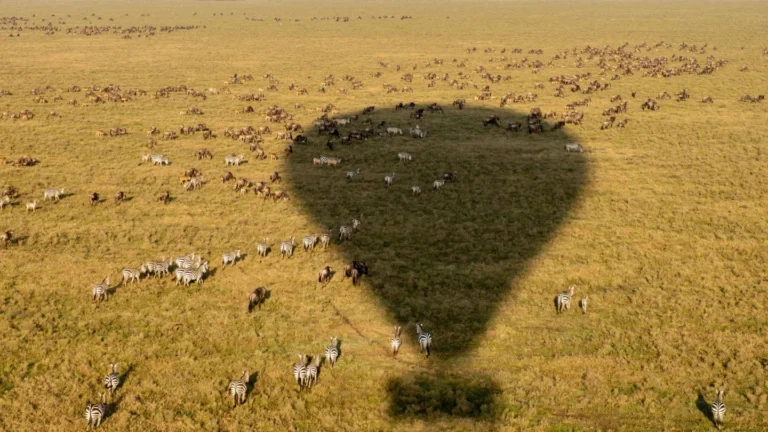
The calving is the south's headline event, and it's genuinely one of the great wildlife spectacles. Over a few weeks, roughly late January into February, hundreds of thousands of wildebeest give birth on the Ndutu plains – up to several thousand calves a day at the peak. The newborns, wobbling and vulnerable, draw every predator for miles, so this is the year's most concentrated big-cat action: lions, cheetahs and hyena all hunting in the open, with kills a daily possibility.
For photographers and repeat visitors especially, calving rivals or beats the famous river crossings for drama – the difference being it's on the open short-grass plains, in green-season light, with far fewer vehicles than the July-to-October crush up north. If your reason to visit the Serengeti is the migration at its most intense, the southern calving is our top recommendation, and it anchors the calving option in our safari calendar.
See calving-season safaris → December-to-March trips to the Ndutu plains, positioned for the calving. Check datesMonth by month
December opens the season: the short rains have greened the plains and the herds begin drifting down from the central Serengeti. It's early – the calving hasn't peaked – but the south is filling and prices are gentler than the January–February high point. January builds toward the peak; by late January the calving is usually well under way and the predator action ramps up. February is the classic peak – mass calving, intense hunting, green plains – and the month most calving trips target.
March is the tail: calving winds down and the herds start to gather for the long march north, but there's still plenty on the plains and it's quieter and cheaper than February. By April the long rains set in and the herds are leaving. So the sweet spot is late January to February for the peak, with December and March as gentler, cheaper shoulders on either side – the trade our peak vs shoulder season guide weighs.
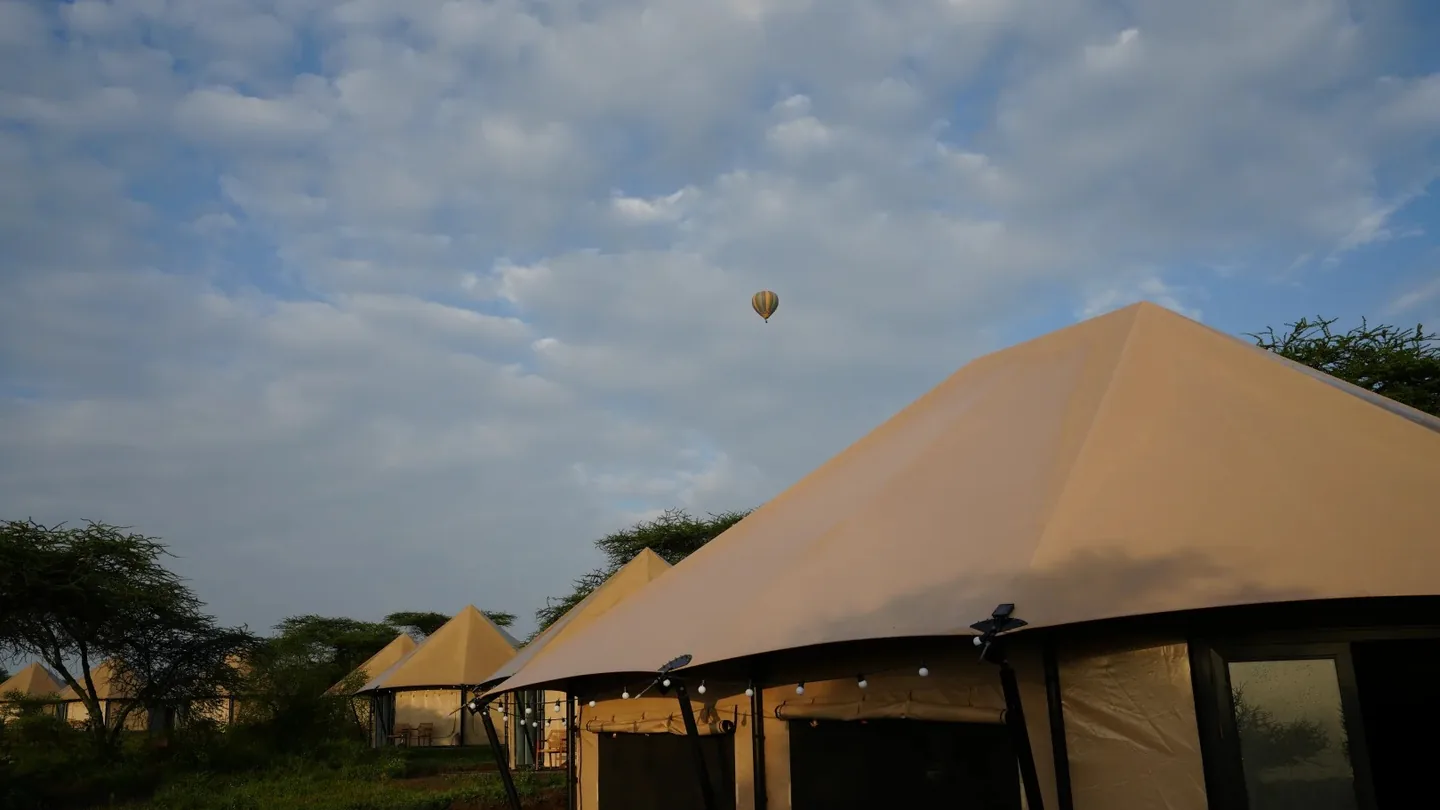
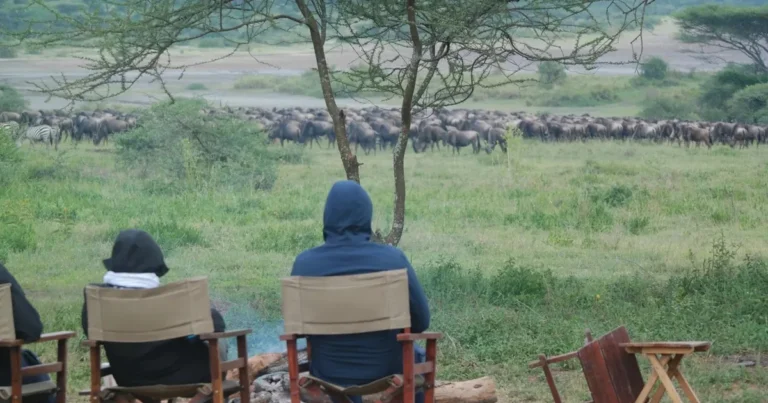
In Ndutu, staying close to the plains lets the migration set the morning schedule. The Safari Atlas
The green-season upside
Calving season coincides with the green season, and that brings bonuses beyond the newborns. The plains are lush and photogenic, the light is soft and dramatic, and the dust of the dry months is gone – a photographer's dream backdrop. The rains typically come as short afternoon storms rather than all-day washouts, so game drives carry on around them, and the mornings are often clear.
Crucially, the south in calving season is also quieter and often cheaper than the northern crossings at their July-to-October peak, so you get arguably the greater spectacle with fewer vehicles and better value. That combination – peak drama, green scenery, thinner crowds – is exactly why our green season safari guide rates the early-year window so highly. It's the closest thing to having the migration at its best with the crowds at their fewest.
Want a southern Serengeti trip timed to the calving?
The calving peaks in a narrow window and the best Ndutu camps sell out early. Tell us your possible dates, and our safari planning team will tell you how they line up with the calving and book a mobile camp positioned for the action. No obligation.
The year at a glance
The southern Serengeti's year in one strip – the calving window and the quiet months. Find your dates and read whether the south is worth it, or whether to base elsewhere.
Southern Serengeti · the year · 2026
If your dates fall outside
Be honest with yourself if you can't travel between December and March: the southern Serengeti isn't the right base for the rest of the year. From roughly May to November the migration is in the central and then the northern Serengeti, and the south is a quiet corner – beautiful, with some resident game, but not where the action is. Forcing a southern trip in, say, August means missing both the calving (long over) and the crossings (far to the north).
So flip the plan: fix your dates first, then choose the Serengeti region to match. For July-to-October dates, base in the north (Kogatende) for the river crossings; for dates that miss both events, the central Serengeti (Seronera) delivers superb resident wildlife year-round. Our where to stay in the Serengeti guide maps region to month, so you end up where the herds actually are.
Read: where to stay in the Serengeti → Matching the region – south, central, north – to your dates. See the guideFive questions to ask before you book
- Can I travel Dec–March? That's the south's window – outside it, base elsewhere.
- Is calving my priority? If yes, aim for late January to February, the peak.
- Do I want value and quiet? December and March shoulders trade a little drama for lower prices and fewer vehicles.
- Is my camp near Ndutu? A mobile camp on the short-grass plains puts you among the calving.
- Have I booked early? The best calving-season camps sell out well ahead.
So when should you visit?
For the calving at its height and the year's most intense predator action, on green, photogenic plains with fewer crowds than the northern crossings. The prime window, and worth booking early.
For most of the calving-season magic at gentler prices and with fewer vehicles. The herds are present, the plains are green, and it's a smart-value alternative to the February peak.
If your dates fall May to November, base in the northern Serengeti for the crossings or the central Serengeti for resident game. The south is quiet then – don't force it.
The southern Serengeti is a one-season wonder, and that season is the calving – roughly December to March, at its best in late January and February. Aim your dates at that window, base near Ndutu, and book early, and you'll witness the migration at arguably its most dramatic. Miss it, and the honest move is to let the calendar send you to another part of the Serengeti.
Calving and migration timings are typical 2026 patterns and shift year to year with the rains – no event can be guaranteed on a given date. Confirm the herds' likely position for your dates and the exact location of any camp with your operator before booking.
Sources & notes
Southern Serengeti calving timings (roughly December-March, peaking late January to February on the Ndutu plains) shift each year with the rains and are indicative, not fixed. Serengeti park fees follow the TANAPA tariff schedule (VAT included). Confirm the herds' likely position for your dates and camp locations with your operator before booking.