Planning guides · Great Migration
Great Migration Month by Month: Where the Herds Are
The Great Migration isn't an event you catch on a date – it's a year-long loop, and the herds are somewhere different every month. Turn up in the wrong place at the right time and you'll wonder what the fuss is about. This is where they are, month by month, so you can be where they are.
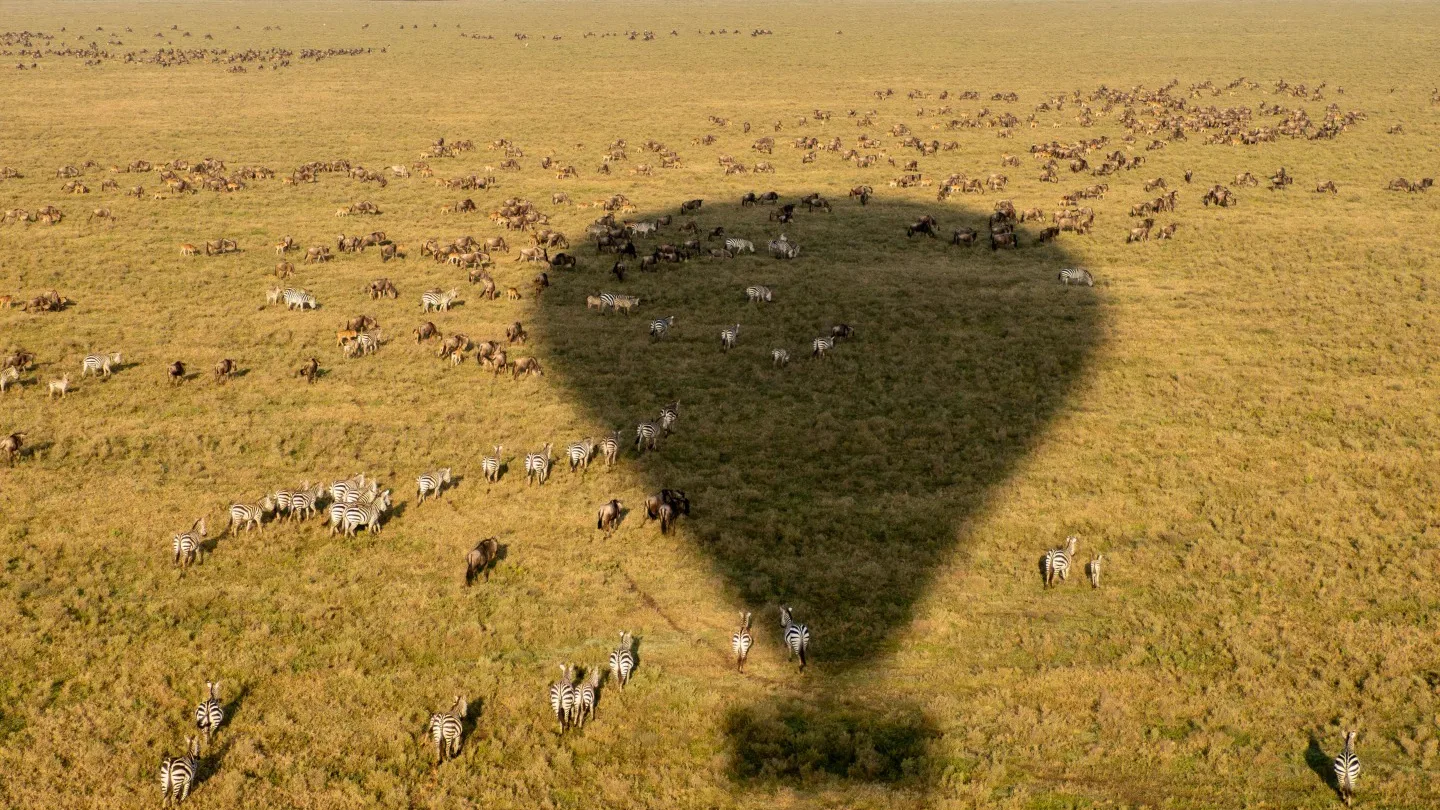
Wildebeest and zebras spread across the Ndutu plains in February 2025. The Safari Atlas
The quick answer
Over 1.5 million wildebeest, with hundreds of thousands of zebra and gazelle, walk a roughly 620-mile (1,000 km) loop through the Serengeti–Masai Mara ecosystem each year. Calving is January to March on the southern Serengeti; the herds move north through April and May; the Grumeti crossings come in June; and the famous Mara River crossings peak in August and September before the herds head south again from October.
Nothing here is guaranteed to the day – the rains drive it, and timings can shift two to four weeks. Pick the month for the event you most want, then the place follows.
Key facts
- Jan–Mar: calving on the southern Serengeti (Ndutu) – up to 8,000 births a day at the February peak.
- Apr–May: herds trek north through the central Serengeti in the long rains.
- Jun: Grumeti River crossings in the Western Corridor – about half the crowds of the Mara crossings.
- Jul–Sep: Mara River crossings, peaking in August and September, into the Masai Mara.
- Oct–Dec: herds recross south and return toward the calving grounds as the short rains arrive.
- Not guaranteed: crossings hinge on rainfall and can shift by two to four weeks.
How the migration loop works
Picture a giant clockwise circuit through the Serengeti in Tanzania and the Masai Mara in Kenya. The herds follow the rain and the fresh grass it brings, so the loop repeats every year with reasonable predictability – but never on an exact schedule. When the rains are early or late, the whole procession shifts with them.
That's the one thing to hold onto: the pattern is reliable, the dates are not. Nobody can promise you a river crossing on a given morning – some travellers wait days, others catch it in an afternoon. What you can do is put yourself in the right region for the month, which stacks the odds heavily in your favour. For the wider question of weather, crowds and price by season, see our guide to the best time to go on safari.
Where the herds are, by month
Here's the whole year at a glance. Read it as a tendency, not a timetable – but a strong one.
Great Migration position by month
January to March: calving
The year opens on the lush southern Serengeti, on the Ndutu and Salei plains between the park and the northern Ngorongoro highlands. January sees the herds gathering on nutrient-rich grass, with a few early births and predators already circling. February is the calving peak: up to 8,000 wildebeest born a day, around half a million in a two-to-three-week burst, and the most concentrated predator action of the entire cycle. March sees the last calves arrive as the herds begin to disperse and the long rains approach.
It's the migration's most overlooked chapter – no river drama, but a wall of newborns and big cats that many seasoned travellers rate above the crossings. If you want predators in action, this is the window.
April to June: heading north
April and May are the quiet, green, wet-season months, when the bulk of the herd leaves Ndutu and treks north through the Seronera region of the central Serengeti toward the Western Corridor. It's the cheapest, least crowded time to be in the ecosystem, and the rutting season adds its own drama, though afternoon storms and softer roads are the trade.
June flips the switch to the dry season. The herds push into the Western Corridor and the first big obstacle arrives: the Grumeti River crossings. Less famous and less frantic than the Mara, and with roughly half the vehicles, Grumeti is a superb, under-the-radar way to see a crossing without the northern crowds.
Want to catch a specific chapter?
Tell us which you're after – calving, Grumeti, or the Mara crossings – and your rough dates. Our safari planning team will place you in the right region at the right time and send back a costed itinerary. No obligation.
July to September: the crossings
This is the headline act. July sees the frontrunners reach the Mara River in the northern Serengeti, around Kogatende, with the first crossings from late in the month; the north and the Masai Mara hit peak busyness. August is the classic scene – the main herds pouring across the river into Kenya's Masai Mara at the height of the dry season, steep banks and crocodiles and all. September keeps the herds concentrated in the Mara, with crossings still happening and the plains packed with wildebeest, zebra and gazelle.
These are the months everyone pictures, and the reason the northern camps book a year ahead. Just hold the timing loosely: a crossing can take fifteen minutes or make you wait days, because the herds cross when they cross. Being there for several days, not one morning, is how you improve your odds.
See Mara crossing-season trips → August and September itineraries in the northern Serengeti and Masai Mara. See optionsOctober to December: the return
October turns the herds around: they begin recrossing the Mara back south into the northern Serengeti, spreading into the Loliondo and Lobo regions – a fine, quieter chance to catch a crossing outside the July-to-September crush. November brings the short rains and sends the herds south through Loliondo, camps staying open and viewing staying good at shoulder prices. By December the herds are back on the Ndutu plains, fattening on volcanic grass before calving, and the loop begins again.
These transitional months are underrated: fewer crowds, softer prices, and a real chance of movement and drama for travellers happy to trade the guaranteed spectacle for value and space.
See calving-season trips → January to March on the southern Serengeti – newborns and peak predator action. See optionsFive questions to ask before timing a migration trip
- Which event do I most want? Calving, Grumeti or the Mara crossings are three different months and regions – choose one to build around.
- How many nights can I give it? Crossings aren't daily. More nights in the right region hugely improve your odds.
- Am I flexible by a week or two? The rains shift timings, so a little date flexibility helps you follow the herds.
- North or south this month? Being in the correct part of the ecosystem matters more than the exact date.
- Do I mind crowds? Peak crossings mean many vehicles. Grumeti, calving and the shoulder months are quieter.
So when should you go?
For the Mara River crossings – the spectacle everyone pictures. Busiest and priciest, and worth booking a year ahead for the northern camps. Give it several nights.
For the calving and the year's best predator action on the southern plains – the migration's most underrated chapter, and quieter than the crossings.
For a crossing without the crowds – Grumeti in June, or the southbound Mara recrossings from October – at softer prices, if you'll trade certainty for space.
Whichever month you choose, pick the event first and let it choose the place. The migration rewards travellers who follow the herds – not the calendar alone.
Migration timings are summarised from the herds' established annual cycle and long-run regional rainfall patterns. Movements vary year to year and can shift these windows by several weeks – treat specific months as guidance and confirm current conditions with your operator before booking.
Sources & notes
Migration figures – over 1.5 million wildebeest, a roughly 620-mile (1,000 km) annual loop, and up to 8,000 calves a day at the February peak – reflect established Serengeti–Mara ecosystem data. The herds follow the rains, not a calendar, so every monthly position and the river-crossing windows are indicative and can shift by two to four weeks from year to year. Confirm current conditions and camp positions with your operator before booking.