Accommodation guides · Location
Inside vs Outside the Park: Where Should You Stay?
This is the accommodation decision that quietly shapes every day of your safari, and most first-timers never think about it. Sleep inside the park and the wildlife is at your doorstep before breakfast. Sleep outside the gate to save money and you can lose an hour of your best light each way, just getting to the animals. The building barely matters next to where it sits.
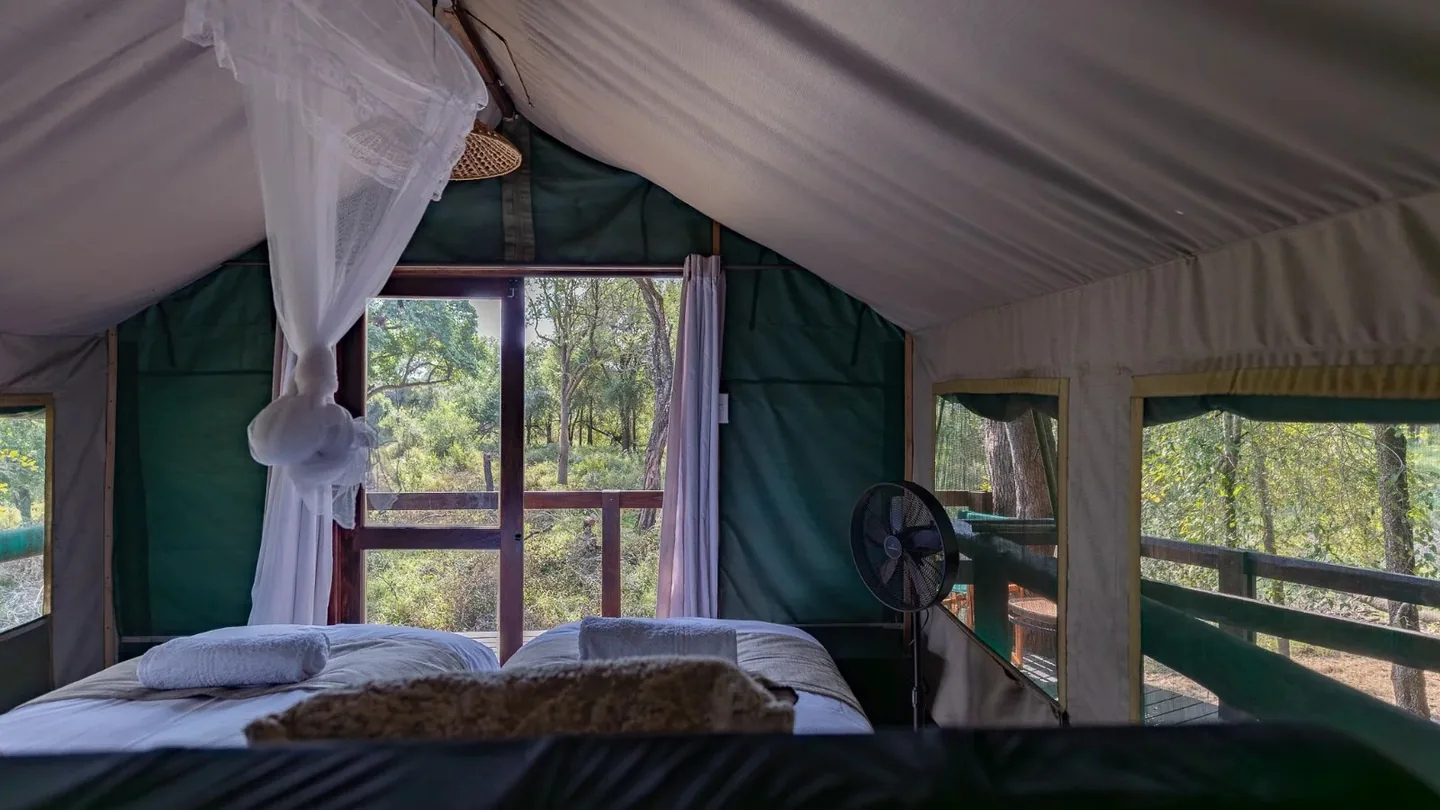
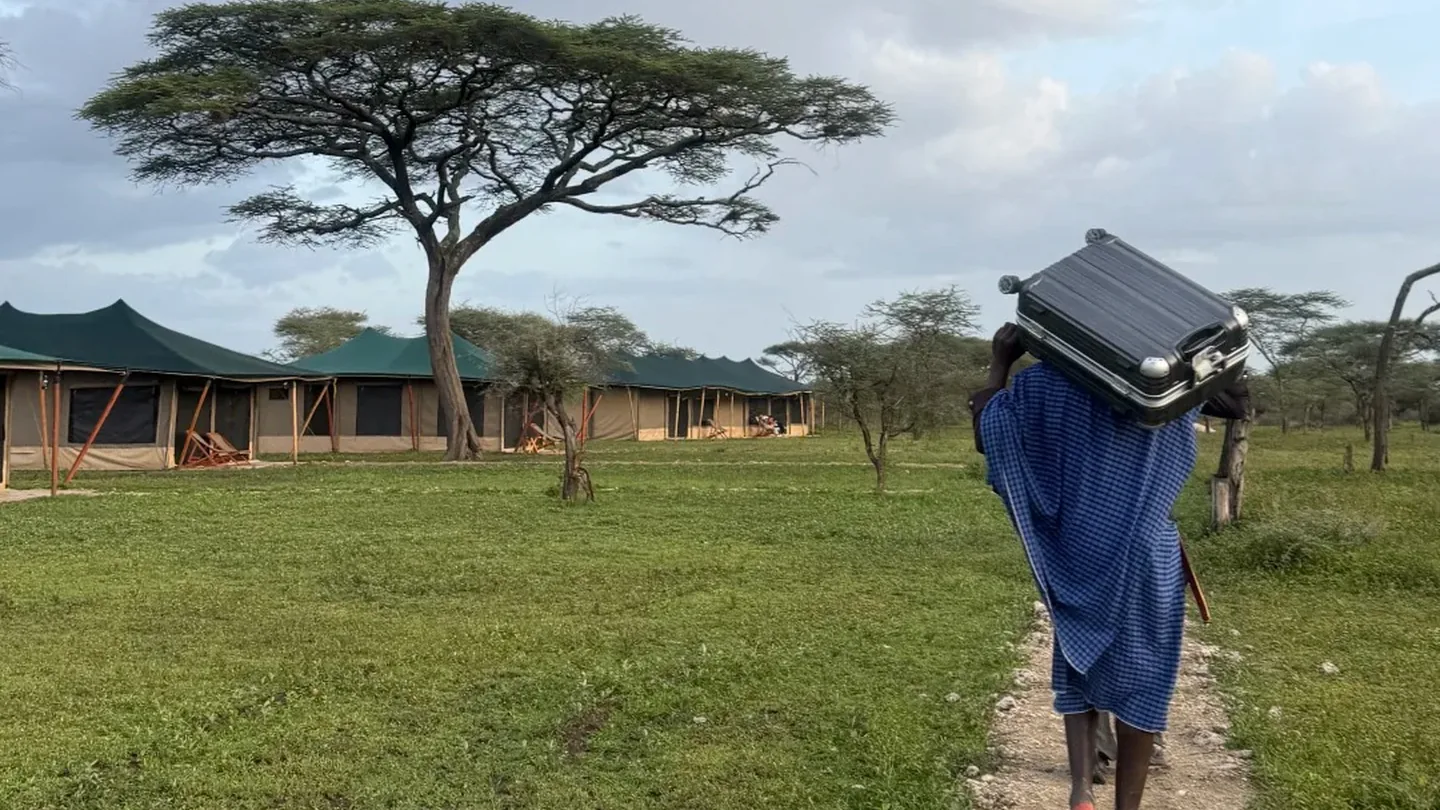
Staying inside the reserve changes the first hour of the day: the bush is outside the canvas, not beyond a gate. The Safari Atlas
The quick answer
Staying inside the park puts you among the wildlife from the moment you wake – more game-viewing time, the best dawn and dusk light, and no gate commute. It costs more, and inside a national park you're still bound by gate hours for driving. Staying outside the gate is cheaper, but you lose time driving in and out and can't beat the crowds through the gate at opening.
For most travellers we lean inside – the extra game-drive time is worth the premium. But a private conservancy bordering the park can be the best of both: prime location, fewer vehicles, and night drives the park itself forbids, plus relaxed walks.
Key facts
- Inside the park: less driving to the wildlife, better light, more game time – but pricier and gate-hour bound.
- Outside the gate: cheaper accommodation, but time lost commuting in and out each day.
- Gate hours: national parks bar driving before ~6:00am and require you off the roads by dusk – both inside and out.
- Conservancies: private land bordering the park – capped vehicles, plus night drives and walking safaris.
- Location beats building: a well-placed simple camp often beats a plush one far from the action.
- Peak-season tip: inside camps skip the morning queue at the gate when everyone else pours in.
The time cost of the gate
Everything here comes down to time, because on safari time is the wildlife. National parks let you drive from about 6:00am and require you off the roads by dusk. If your camp is inside the park, you're among the animals the instant the clock allows – you catch the whole golden first hour. If it's outside the gate, you first have to reach the gate, queue, and then drive to where the wildlife is, which can eat the best light of the morning before you've seen a thing.
Over a multi-day trip that lost time adds up to whole game drives' worth of viewing. It's the single most underrated variable in choosing a camp, and it's why we keep repeating that location matters more than the building – a point that runs through our accommodation guide. Before you compare tents and pools, compare positions on the map.
Staying inside the park
Camps inside the park – or in the best positions within a reserve – put you where the action is. You wake to the sounds of wildlife, you're on your first drive without a commute, and you can be out for the electric dawn and dusk hours while day-visitors are still driving in or already heading out. In peak season that's a real edge: you skip the morning queue at the gate that everyone staying outside has to join.
The trade is cost – inside camps command a premium for that location – and, in a national park proper, you're still bound by the same gate-hour driving rules, so no night drives from a park-interior lodge unless it holds a special concession. But for maximising your actual time with the wildlife, inside is hard to beat, and for most travellers it's where we'd spend the money, as our saving money guide notes when it lists what not to cut.
See camps inside the parks → Well-positioned stays that put you among the wildlife at first light. Check datesStaying outside the gate
Camps and lodges just outside a park's gate are usually cheaper – sometimes considerably – and that's their appeal. On a tight budget, a comfortable lodge outside the gate can let you afford more nights or a better standard than an in-park camp of the same price. For some parks the difference is small; for others it's the gap between an affordable trip and an unaffordable one.
The cost is the daily commute. You drive to the gate each morning, often arriving after the first light has gone, and you have to leave the park in time to get back out before it closes, trimming both ends of your day. If the outside lodge is close to a good gate and the park is compact, the loss is modest; if it's an hour away, you're sacrificing real wildlife time every day. Weigh the nightly saving against the game-drive hours it costs you, honestly – sometimes it's worth it, sometimes it isn't.
Want camps positioned to maximise your game time?
Where you sleep decides how much of the day you actually spend with wildlife. Tell us your budget, dates and which parks you're visiting, and our safari planning team will match you to well-located camps – inside, on the edge, or in a conservancy – and cost the trip. No obligation.
The conservancy option
There's a third choice that often beats both, and it deserves more attention: a private conservancy bordering the park. These are private reserves on land next to the national park, sharing an open boundary so the wildlife moves freely between them. You get a prime location – effectively inside the ecosystem – but on private land the rules are the conservancy's own, not the park's. That means capped vehicle numbers at sightings, and crucially night drives the national park forbids, plus relaxed walking safaris.
Kenya's conservancies bordering the Maasai Mara are the classic example: you sleep beside the reserve, you can do a dawn walk or a spotlit night drive, and you rarely share a sighting with more than a vehicle or two. The trade is price – conservancy camps sit at the premium end – and you may still enter the main park by day for its density of wildlife. For travellers who want location plus the activities the park bans, a conservancy is frequently the best answer, as our Kenya vs Tanzania guide explores.
Side by side
The three options at a glance. Read the game-time and activities rows – that's where the real differences live.
Inside vs outside vs conservancy · the trade
| Factor | Inside park | Outside gate |
|---|---|---|
| Cost | Higher | Lower |
| Game time | Most | Less (commute) |
| Dawn/dusk light | Captured | Often missed |
| Night drives / walks | No (park rules) | No |
| Best for | Max wildlife time | Tight budgets |
Mixing it across a trip
You don't have to pick one and stick with it. A smart itinerary can put you inside the park where the density and the location matter most – the heart of the Serengeti, say – and outside or in a cheaper lodge where you're just passing through or the park is compact enough that the commute is trivial. Spending the location premium where it counts, and saving where it doesn't, is exactly the kind of allocation that makes a budget stretch.
The same logic favours a night or two in a bordering conservancy for the walks and night drives, paired with in-park nights for the daytime density. Think of camp location as a lever you pull differently at each stop, not a single blanket choice – the approach our itinerary guide builds routes around.
Browse best-located safari camps → In-park and conservancy stays positioned close to the wildlife. See optionsFive questions to ask before you book a camp
- How far is it from the wildlife? Ask the drive time to the gate and to the good sightings – not just the address.
- What does the location cost me each day? Weigh the nightly saving against lost game-drive hours.
- Do I want night drives or walks? Only a conservancy (or special concession) offers them – not the park.
- Is the park compact or vast? A small park makes an outside lodge less costly in time than a huge one does.
- Can I mix? Splurge on location where it matters, save where the commute is trivial.
So where should you stay?
For the most wildlife time and the best light. You wake among the animals and skip the gate commute – worth the premium for most travellers, especially in a large park or peak season.
For a tighter budget, or where the park is compact and the gate is close. The nightly saving can fund more nights – just be honest about the game-drive time the daily commute costs you.
Often the best of both. Prime location beside the park, capped vehicles at sightings, and the night drives the park forbids, plus relaxed walking safaris – at a premium price worth paying if those matter.
Judge a camp by its position first and its polish second. The wildlife doesn't care how nice your tent is; it cares how close you are when the light is good. Spend the location premium where the park is big or the sightings are the point, and let the map, not the brochure, choose your bed.
Camp locations, gate hours and rules are typical 2026 patterns and vary by park, reserve and operator. Night-drive and walking rules differ by park and conservancy. Confirm the exact location, drive times and permitted activities of any camp with your operator before booking.
Sources & notes
The pre-6:00am driving ban and dusk cut-off are standard national-park rules; gate-hour and conservancy-activity rules vary by park and reserve. Conservancy night-drive and walking permissions differ by reserve – confirm the exact location and permitted activities of any camp with your operator before booking.