Accommodation guides · Inclusions
Are All-Inclusive Safari Lodges Really All-Inclusive?
Mostly yes – more than a beach resort, in fact – but "all-inclusive" on safari has a few famous holes, and the biggest one can cost hundreds. A good safari lodge folds in your meals, your drinks and your game drives so seamlessly you stop reaching for your wallet. Then the park fees, the tips, the premium wine and the balloon ride quietly land outside the bubble. Knowing which is which is the difference between a smooth trip and a sting at checkout.
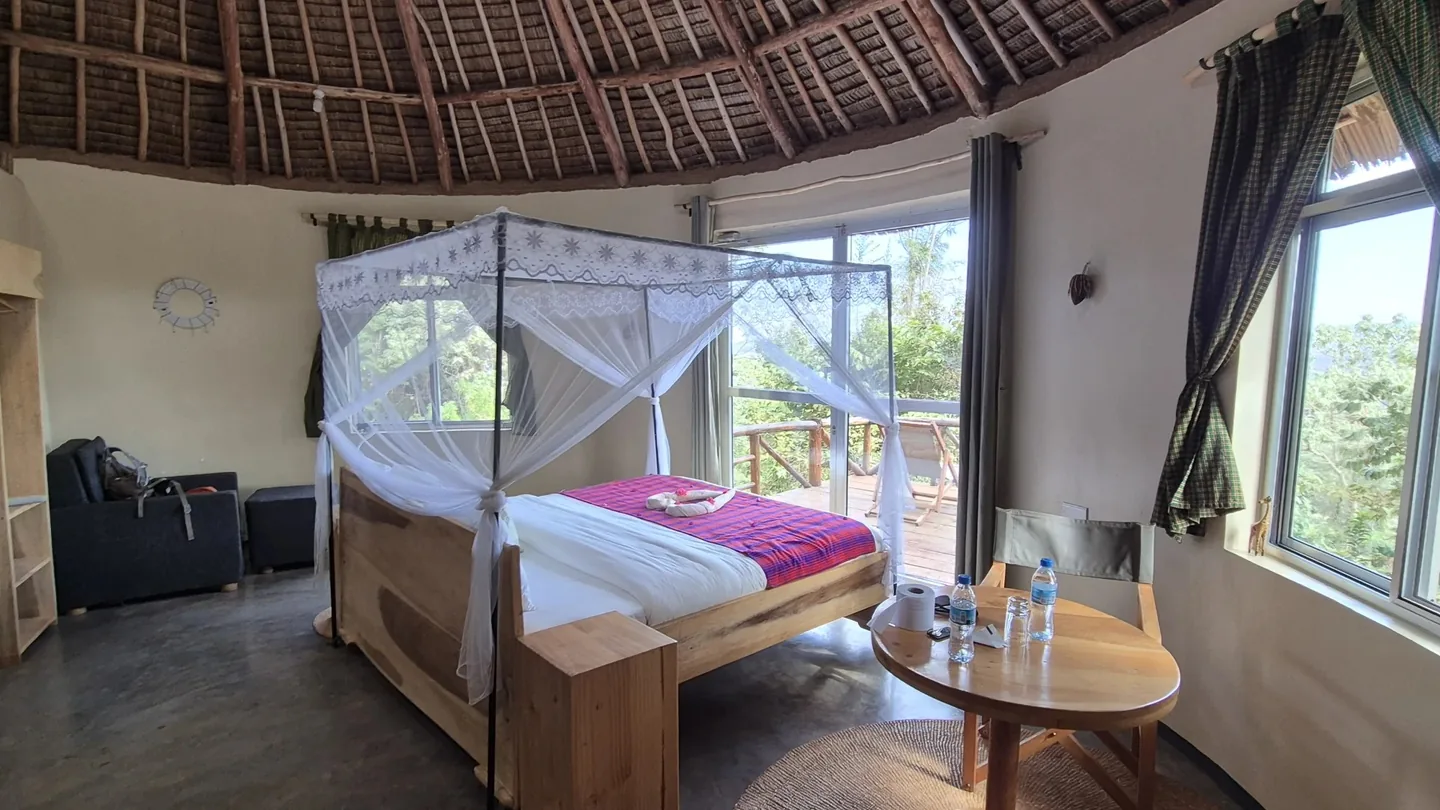
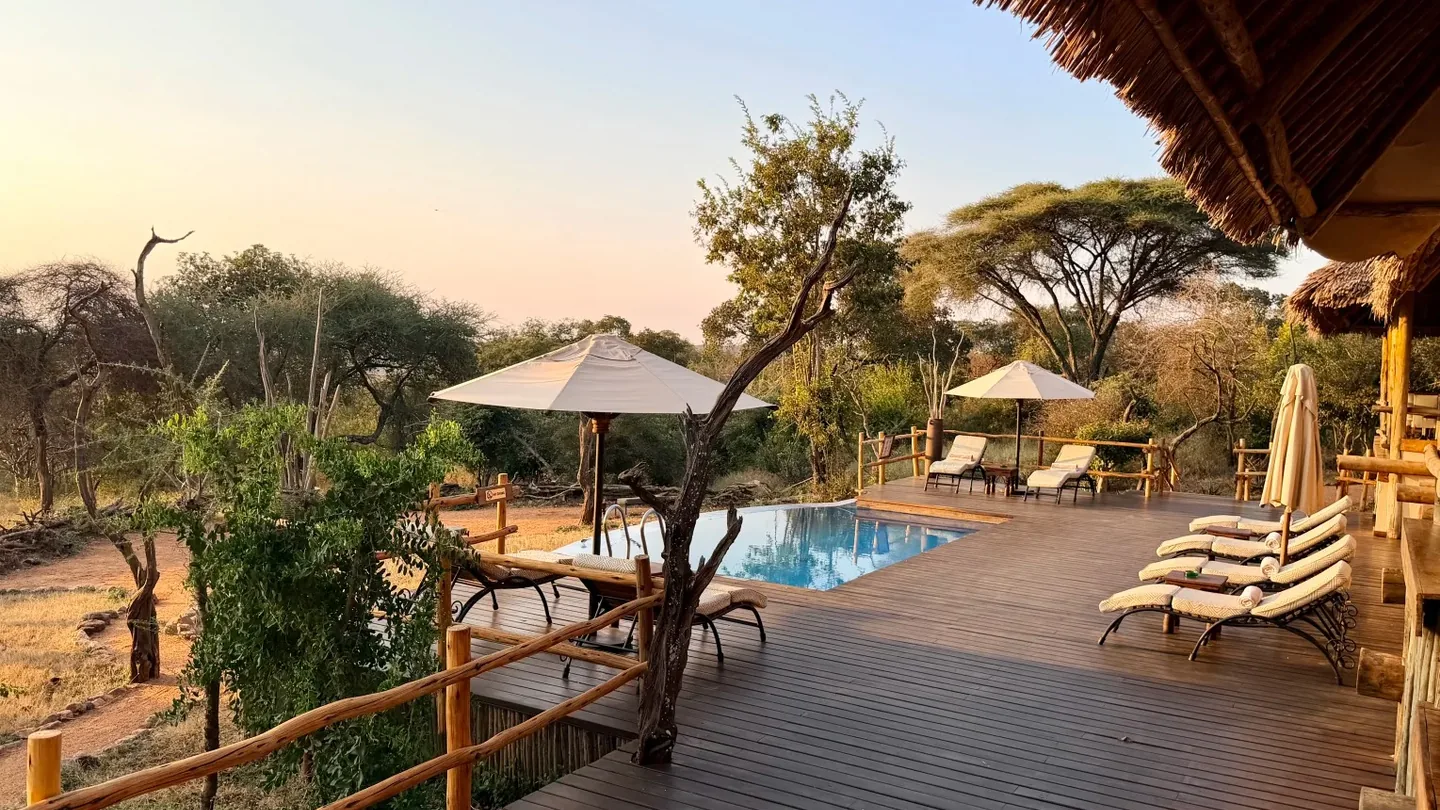
The room may look all-inclusive, but the meaningful exclusions are usually outside it. The Safari Atlas
The quick answer
A genuinely all-inclusive safari lodge covers accommodation, all meals, house drinks, twice-daily game drives, laundry and often Wi-Fi – and at the top end, park fees and local transfers too. It's more comprehensive than most all-inclusive holidays.
But the label is not a guarantee. The common holes are park and conservation fees (sometimes excluded, and they're the biggest line), premium drinks (imported wines and spirits), tips, optional activities like balloon safaris, and flights. Read the inclusions list, not the headline – especially for park fees.
Key facts
- Usually included: accommodation, all meals, house drinks, twice-daily game drives, laundry, often Wi-Fi.
- Sometimes included: park and conservation fees, local road transfers – check, don't assume.
- Usually excluded: premium/imported drinks, tips, balloon safaris and some activities, spa treatments.
- Almost always excluded: international and bush flights, visas, travel insurance.
- Park fees are the big one: the Serengeti is about $83 pp/day, the Maasai Mara $100–$200 – confirm if they're in.
- Full board vs all-inclusive: "full board" means meals only – not the same as all-inclusive.
What's usually included
Start with the good news, because it's genuinely generous. At a proper all-inclusive safari lodge, the rate typically covers your accommodation, all meals (three a day plus snacks), house drinks (local beers, house wines, soft drinks, often spirits), the twice-daily game drives with a guide, laundry, and usually Wi-Fi. Many higher-end camps add local road transfers and, crucially, sometimes the park and conservation fees. You arrive, settle in, and largely stop thinking about money – which is part of the point.
This is more comprehensive than a typical beach all-inclusive, where drinks and activities are often extra. On safari, the guiding – the whole reason you're there – is baked into the rate, and that seamlessness is a real feature of the tier. So the base case is reassuring: for the core of your day, all-inclusive on safari usually means what it says, as our accommodation guide notes across camp types.
The grey areas
Between clearly-in and clearly-out sit a few lines that vary lodge to lodge, and these are where surprises hide. Park and conservation fees are the biggest – some lodges fold them into an all-inclusive rate, many don't – and because they're substantial, this single item can swing your real cost by hundreds. Local transfers (the drive or short flight between camp and airstrip) may or may not be in. And some activities – a guided bush walk, a cultural visit, a night drive – are included at some camps and charged at others.
The rule for the grey areas is simple: never assume, always ask. Two lodges quoting similar "all-inclusive" rates can differ by a lot once you learn one includes park fees and the other doesn't. This is exactly the like-for-like problem our hidden costs guide and is your quote fair guide tackle – the label tells you less than the itemised list beneath it.
See all-inclusive safari lodges → Lodges with fees and inclusions itemised so nothing hides. Check datesWhat's usually not
Now the lines that almost always sit outside the bubble, so you can budget for them upfront. Premium and imported drinks – fine wines, champagne, top-shelf spirits – are usually charged even where house drinks are free. Tips for your guide and the camp staff are expected and never in the rate; budget roughly $10 to $25 a day for your guide plus a shared amount for staff, as our tipping guide details. Optional activities like a hot-air balloon safari (often $500 or more) or a spa treatment are extra by nature.
And the big structural exclusions: international and bush flights, visas, and travel insurance are essentially never part of a lodge's all-inclusive rate – they sit at the trip level, not the lodge level. None of this is a scam; it's just where the "all" in all-inclusive stops. Knowing the list means you choose these extras deliberately rather than being surprised by them.
The park-fee trap
If you remember one thing, make it this: check whether park and conservation fees are inside the all-inclusive rate, because they're the largest variable and the easiest to overlook. The Serengeti runs about $83 per person per day, Ngorongoro adds a conservation fee plus a per-vehicle crater fee, and Kenya's Maasai Mara is $100 to $200 per person – so over a stay these become a four-figure line. A lodge that includes them looks pricier on paper but may be cheaper in reality than one that doesn't.
This is why comparing all-inclusive lodges on headline rate alone is misleading: the one quoting less may simply be leaving the fees for you to pay at the gate. Rebuild both quotes to the same basis – fees in, or fees out for both – before you judge which is better value, exactly as our safari quote checklist advises. Ask the question in writing, and the trap disappears.
Want a lodge quote with every inclusion spelled out?
The word "all-inclusive" hides as much as it reveals. Tell us your dates and which camps or areas you're considering, and our safari planning team will send back an itemised comparison – fees in or out, drinks, transfers, activities – so you can see the true cost. No obligation.
In and out, at a glance
The usual inside-the-bubble and outside-the-bubble lines. The grey items – especially park fees – are the ones to confirm in writing.
All-inclusive safari lodge · in vs out
| Line | Usually in? | Usually out? |
|---|---|---|
| Meals & house drinks | Yes | – |
| Twice-daily game drives | Yes | – |
| Park & conservation fees | Sometimes | Often |
| Premium drinks, tips, balloon | – | Yes |
| Flights, visas, insurance | – | Yes |
Full board vs all-inclusive
One more source of confusion worth clearing up, because the terms get used loosely. Full board means your meals are included – breakfast, lunch and dinner – and nothing more; drinks, activities and everything else are extra. All-inclusive goes further, adding house drinks and, on safari, the game drives. On a beach holiday the gap between the two matters mostly for the bar bill; on safari it matters more, because "game drives included" is a big deal.
So when you compare rates, check which basis each is quoted on – a cheaper "full board" rate isn't really cheaper if you'll pay for drinks and drives on top. And a few camps use their own bespoke terms ("fully inclusive", "premium all-inclusive"), so the only reliable move is to read the actual inclusions list rather than trusting the label. The label is a headline; the list is the contract.
Read: how to read safari lodge reviews → Spotting what a lodge really offers, beyond the marketing. See the guideFive questions to ask before you book
- Are park and conservation fees included? The biggest swing – get it in writing.
- Which drinks are covered? House drinks yes, premium and imported usually no.
- Are transfers and activities in? Local transfers and things like walks or night drives vary by camp.
- Is this all-inclusive or full board? Full board is meals only – not the same thing.
- What's definitely extra? Tips, flights, balloon, visas and insurance – budget for them upfront.
So is it really all-inclusive?
Meals, house drinks and twice-daily game drives are genuinely covered, and often more. For the heart of a safari day, all-inclusive lives up to the name – more so than most holidays.
Park and conservation fees, premium drinks, tips, activities and flights often sit outside the rate. The park fees especially can add hundreds – confirm whether they're in before you compare quotes.
Two "all-inclusive" rates aren't comparable until you know what each covers. Rebuild both to the same basis – fees in or out for both – and the genuinely better value becomes obvious.
All-inclusive on safari is real and generous – just not total. Treat the label as a starting point, not a promise, read the inclusions list line by line, and pin down the park fees above all. Do that and the only surprises left will be the ones outside your tent, on four legs.
Inclusions vary widely by lodge, operator and tier and are typical 2026 patterns. Park fees follow official schedules current at July 2026. Confirm exactly what any all-inclusive rate covers – especially park fees – in writing with your operator before booking.
Sources & price notes
All-inclusive lodge inclusions and common exclusions vary by camp; check the specific lodge's terms. Park fees follow the TANAPA (Serengeti, VAT included) and Maasai Mara (Narok County) schedules. Inclusions vary by lodge – confirm exactly what a rate covers with your operator before booking.