Planning guides · Comparisons
Serengeti vs Maasai Mara: Which Park Is Better?
They're the same plains – the Maasai Mara is simply the Serengeti's northern tip with a border drawn across it. So the real question isn't which has better wildlife, because they share it. It's about size, crowds, cost and, above all, when you're going.
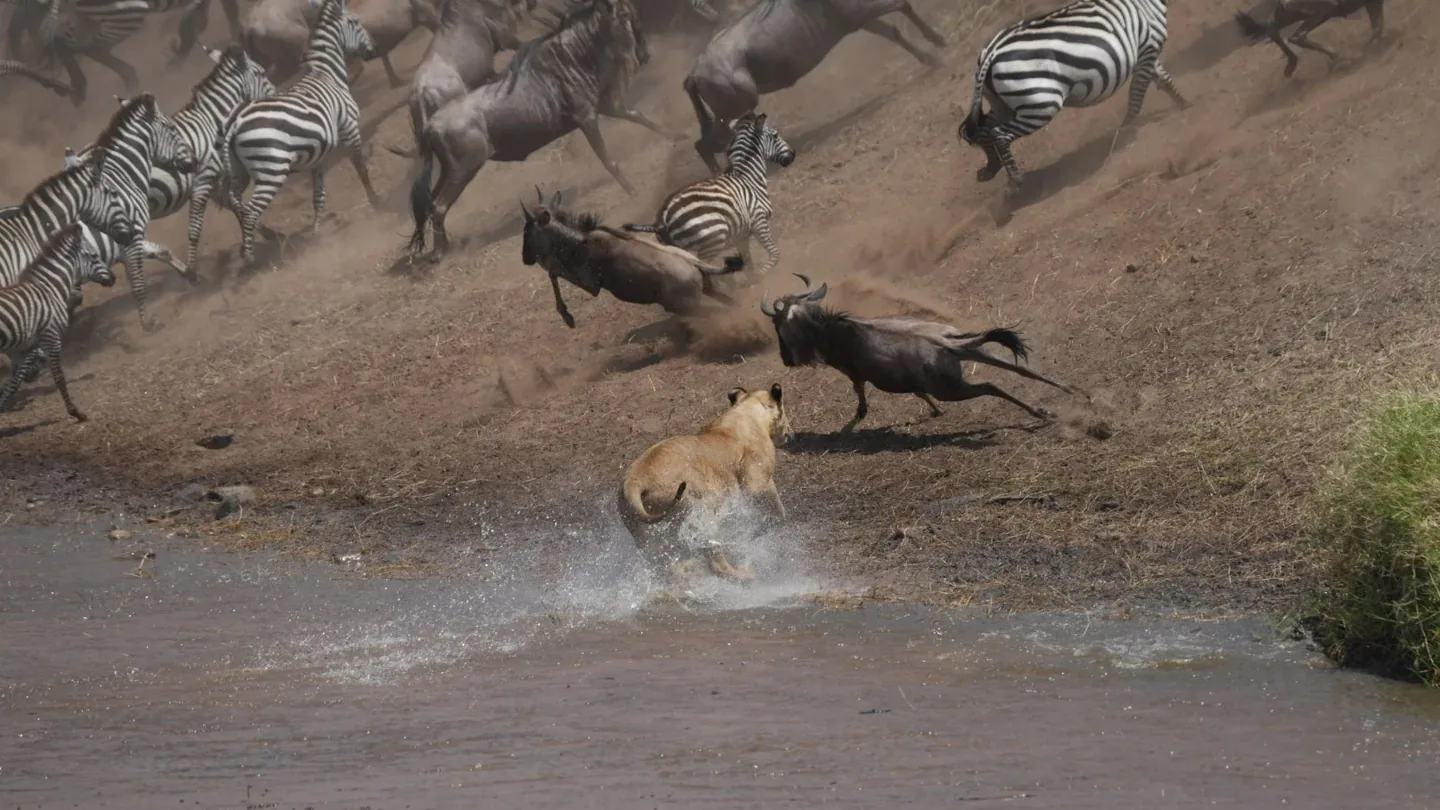
At a river crossing, migration and predation become the same story. The Safari Atlas
The quick answer
The Serengeti (Tanzania) is vast – roughly ten times the size of the Mara – with the migration present most of the year, including the January–March calving. The Maasai Mara (Kenya) is compact and intense, famous for the August–September river crossings and reliably close big-cat sightings.
Choose the Mara for the crossings, close action and a shorter trip; choose the Serengeti for scale, the calving, and a sense of endless wilderness. When you can travel usually settles it.
Key facts
- Size: the Serengeti is enormous (many times larger than the Mara National Reserve), which spreads out vehicles and crowds.
- Park fees: Serengeti about $71–$83 per person per 24h (VAT included); Maasai Mara $100 (Jan–Jun) / $200 (Jul–Dec) per person per 12h.
- River crossings: the famous Mara River crossings peak Aug–Sep, on both the Kenyan Mara and the northern Serengeti.
- Calving: only the southern Serengeti (Ndutu), January to March.
- Ticket validity: Serengeti 24 hours; Maasai Mara 12 hours (expires 6pm).
- Both are guided-only in the core areas; night drives are limited to bordering conservancies, and walking in the Serengeti is available only as a booked, ranger-led activity.
One ecosystem, two parks
The Serengeti and the Maasai Mara are a single, continuous grassland ecosystem, split only by the Kenya–Tanzania border. Tanzania holds the huge southern majority – the Serengeti National Park plus its bordering conservation areas – while Kenya holds the smaller, northern Maasai Mara National Reserve. The wildebeest, and the big cats that follow them, move between the two every year.
Because they share the wildlife, the decision is really about everything else: how big the space feels, how many other vehicles you share it with, what you pay to enter, and which chapter of the migration is playing when you arrive. Get those right and either park delivers a world-class safari.
Serengeti vs Maasai Mara at a glance · 2026
| Factor | Serengeti | Maasai Mara |
|---|---|---|
| Country | Tanzania | Kenya |
| Size | Vast (about 10x the Mara) | Compact, intense |
| Park fee | ~$71–$83 / 24h (VAT incl.) | $100–$200 / 12h |
| Signature event | Calving (Jan–Mar); crossings | River crossings (Aug–Sep) |
| Crowds | Spread out by sheer space | Busier; conservancies help |
Where are the river crossings?
This is what most people are really asking. The dramatic Mara River crossings – wildebeest plunging down steep banks past waiting crocodiles – happen along the Mara River, which runs through both the northern Serengeti and the Kenyan Maasai Mara. They peak, roughly, in August and September, when the herds move north across the border and back.
So both parks can offer crossings in those months. The Kenyan Mara is the classic vantage; the northern Serengeti (around Kogatende) offers the same river with fewer vehicles. Crucially, if you're travelling outside August–September, neither park guarantees a crossing – and only the Serengeti has the other headline act, the calving. For the full year, see our Great Migration month-by-month guide.
Size, crowds and space
The single biggest experiential difference is scale. The Serengeti is one of Africa's largest parks and simply swallows visitors – away from the Seronera hub and the northern crossing points, you can drive for long stretches feeling like the only people on earth. The Maasai Mara packs comparable wildlife into a fraction of the area, which makes sightings frequent and close, but also means the famous scenes can get busy, with many vehicles at a single crossing or big cat.
Kenya's counter is its private conservancies bordering the reserve – Naboisho, Olare Motorogi, Ol Kinyei and others – where vehicle numbers are capped and you can add night drives and walking safaris. If crowds worry you in the Mara, staying in a conservancy is the fix. In the Serengeti, space itself does the job.
Explore private conservancy stays → Capped vehicles, night drives and walking, bordering the Mara. See optionsPark fees compared
The fee structures differ in a way that matters to your budget. The Serengeti charges non-resident adults about $71–$83 per 24 hours, and that figure already includes 18% VAT – so a full day costs the same round-the-clock. The Maasai Mara charges $100 per person from January to June, rising to $200 from July to December, and each ticket lasts only 12 hours rather than a full day.
The upshot: in the Mara's high season, which is exactly when the crossings happen, the gate fee is at its steepest, and you pay a fresh 12-hour ticket for each day of drives. The Serengeti works out steadier and, per 24 hours, often cheaper. Factor this into any peak-season comparison – it's a real line, not a rounding error.
Not sure which park fits your dates?
Tell us when you want to travel and what you most want to see – the crossings, the calving, or just close big cats. Our safari planning team will point you to the right park and send back a costed itinerary. No obligation.
When to visit each
Timing is the real decider. For the river crossings, aim for August or September in either park. For the calving and peak predator action, it has to be the southern Serengeti in January to February. For the Mara at its quietest and cheapest, the low season of January to June brings the $100 gate fee and thinner crowds, with resident wildlife still excellent.
Both parks are rewarding year-round because the resident lions, leopards, elephants and cheetahs don't migrate. So if your dates are fixed, don't agonise – pick the park that suits your budget and pace, and enjoy whatever chapter of the migration happens to be nearby.
Getting there and staying
The Maasai Mara is a manageable drive or short flight from Nairobi, which makes it easy to slot into a compact Kenyan loop with Amboseli and Lake Nakuru. The Serengeti is reached from Arusha, usually via Tarangire and the Ngorongoro Crater, and often involves an internal flight given the distances – part of why a Tanzania trip runs a little longer and pricier.
Accommodation spans the full range in both, from budget camps to fly-in luxury. The Mara's conservancies offer the most exclusive stays on the Kenyan side; the Serengeti's northern and central camps put you closest to the action in their respective seasons. Wherever you land, book crossing-season camps well ahead – the good ones fill a year out.
See migration-season itineraries → Serengeti and Mara trips timed to the crossings and the calving. See optionsFive questions to ask before choosing a park
- When am I travelling? Aug–Sep for crossings; Jan–Mar for calving (Serengeti only). The date often decides the park.
- Crossings or calving? Both parks can offer crossings in season; only the Serengeti has the calving.
- How much do crowds bother me? The Serengeti's space or the Mara's conservancies are the two answers.
- What's my budget in peak season? The Mara's $200 high-season fee and 12-hour tickets add up – weigh it against the Serengeti's 24-hour rate.
- How long is my trip? The Mara suits a compact Kenya loop; the Serengeti wants a few more days.
So which park should you choose?
For the classic river crossings, reliably close big cats, and a compact trip out of Nairobi. Stay in a conservancy if you want the space and the night drives.
For sheer scale, the calving season, and a wilder, emptier feel. Steadier 24-hour fees and space that absorbs the crowds – worth the extra travel days.
For a longer migration trip, cross the border and see the same river from both sides. Best on a 10-day-plus itinerary with the budget for the extra flights and fees.
Lead with your travel dates, then your budget and pace – the wildlife is shared, so let the season and the feel of the place decide. Either way you're standing in the greatest wildlife arena on the planet.
Park fees and figures are typical 2026 values for planning only and vary by season and tier. Confirm current park fees and exactly what a quote includes with your operator before booking.
Sources & price notes
Park fees checked July 2026 against the TANAPA tariff schedule (Serengeti; VAT included) and the Maasai Mara schedule (Narok County). Figures move with season and tier – confirm current rates and inclusions with your operator before booking.