Planning guides · First safari
Fly-in vs Driving Safari: Time, Cost and Comfort
Flying between camps buys you time; driving between them buys you the country in between. On a compact route the drive is cheap and part of the fun. Once the distances stretch – a remote southern circuit, or a corner of the Serengeti a full day's rough road away – a light aircraft stops being a luxury and starts being the sensible way to protect your holiday from the road.
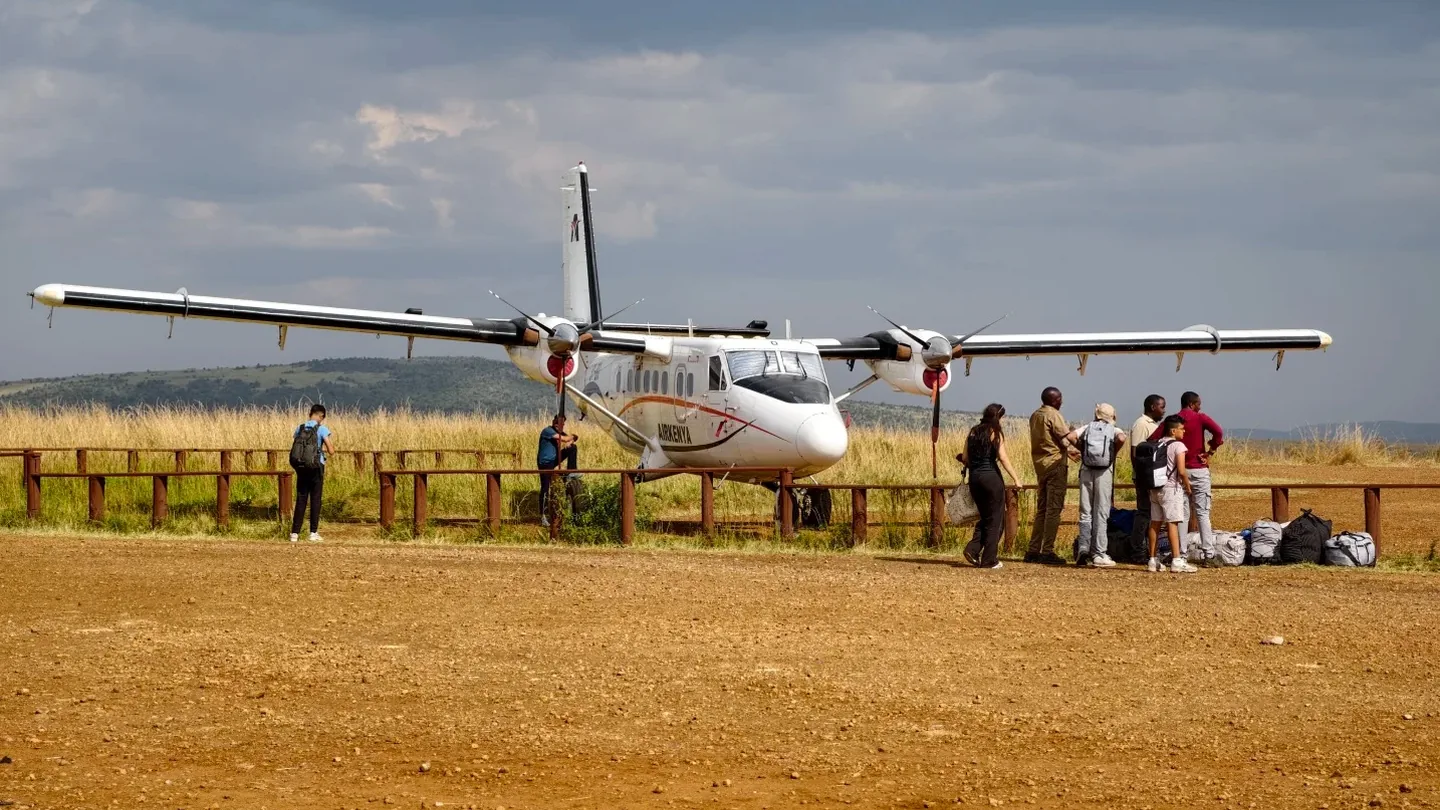
Flying turns a long transfer into a short hop, but the clock you save comes at a premium. The Safari Atlas
The quick answer
Driving is cheaper, keeps you in the scenery, and is the natural choice on Kenya's compact loops or short northern-Tanzania legs. Flying costs more – light-aircraft transfers typically run from a few hundred dollars to around $1,000 per person per leg – but on a spread-out itinerary it can save two to four whole days of driving.
The rule of thumb: drive the short, scenic legs; fly the long, dull or rough ones. Most well-built trips do both. The one thing flying forces on you is a strict 15kg soft-bag luggage limit – no hard suitcases.
Key facts
- Fly-in cost: light-aircraft transfers typically a few hundred dollars up to about $1,000 per person per leg, by distance.
- Time saved: flying can cut 2–4 full days off a spread-out northern Tanzania circuit versus road-only.
- Luggage limit: usually 15kg per person in a soft-sided bag – hard suitcases can't go in the hold.
- Driving upside: cheaper, no weight limit, and you see the landscapes and villages between parks.
- Driving downside: long, bumpy transfers can swallow a game-viewing day on remote routes.
- Storage: gateway hotels and camps store extra luggage, so you fly in with only what you need.
What each one actually means
A driving safari moves you between parks and camps by road in your safari vehicle – the same 4x4 you game-drive in, or a transfer vehicle. It's the traditional shape of an East African trip, and on the classic circuits it works beautifully: the transfers double as scenery, you pass through farmland and villages, and there's no weight limit on your bags.
A fly-in safari uses small light aircraft – often single-prop planes seating a dozen or so – to hop between bush airstrips, with a vehicle waiting at each camp for the game drives. You still drive inside the parks; you just skip the long road legs between them. It's the standard way to reach remote, high-end and hard-to-access areas, and it reshapes the whole feel of a trip, which is why we flag it in our first-safari planning guide. The decision isn't all-or-nothing, though – hold that thought.
The time trade – the real headline
Cost gets the attention, but time is the thing that actually changes your trip. A road transfer between two far-apart parks can eat most of a day: six or eight hours on rough tracks, arriving dusty and tired with no energy for an evening drive. The same hop by air is 45 minutes. On a spread-out northern Tanzania itinerary, choosing flights over road for the long legs can save two to four full days across the trip – days you either spend on game drives instead, or simply don't have to pay for.
That's the calculation to run: a fly-in leg that costs several hundred dollars but hands back a full game-viewing day can be better value than a "free" drive that costs you that day in the vehicle. On a short trip especially, where every day counts, the plane is often buying the one thing you can't get more of.
See fly-in safari itineraries → Light-aircraft routes to remote camps, with transfers built in. Check datesWhat flying costs, leg by leg
Light-aircraft transfers are priced by distance and are often already folded into the rate of remote and high-end camps, so they don't always appear as a separate line. As a standalone figure, expect anywhere from a couple of hundred dollars to around $1,000 per person for a single leg, with most northern-circuit hops landing in the lower-to-middle part of that band.
Driving, by contrast, is usually bundled into the day rate of your safari and adds little marginal cost – you're paying for the vehicle and guide regardless. So on paper the drive looks free and the flight looks dear. The honest comparison, again, isn't dollar-for-dollar: it's dollars against days. For how these transfer costs sit inside a whole trip budget, see our guide to what a safari costs.
Fly-in vs driving · the trade at a glance
| Factor | Fly-in | Driving |
|---|---|---|
| Cost per long leg | ~$300–$1,000 pp | Bundled, low extra |
| Time for a far leg | Under 1 hour | 6–8 hours |
| Luggage | 15kg soft bag | No real limit |
| Scenery between camps | From the air | Up close, villages too |
| Best for | Remote & far-apart camps | Compact, scenic loops |
Which legs should you fly, and which should you drive?
It depends entirely on your route. Tell us the parks you want and your dates, and our safari planning team will map which transfers are worth flying and which are better driven – with the time saved and the cost of each shown clearly, so you can decide. No obligation.
The 15kg soft-bag rule
Here's the practical catch that surprises first-time fly-in travellers: light aircraft enforce a strict luggage limit, usually 15kg per person, in a soft-sided bag. Hard-shell suitcases simply won't fit in the small holds and will be refused or left behind at the departure point. You need a soft duffel or holdall, and you need to pack to the limit.
It sounds restrictive and isn't, once you know the trick: almost every safari camp offers laundry, so three or four days of clothes covers a week. Anything you don't need in the bush – city clothes, extra bags, the hard suitcase you flew in with – can be left in secure storage at your gateway hotel in Nairobi or Arusha and collected on the way home. Plan for it and the weight limit is a non-issue; ignore it and you're repacking at a check-in desk in the bush. Our safari packing list is built around this limit.
Why most good trips do both
The framing of "fly-in versus driving" is a bit of a false choice, because the best itineraries mix the two by leg. You might drive the short, scenic opening hop – Arusha out to Tarangire, or across the Rift Valley in Kenya – where the road is part of the experience and flying would be pointless. Then you fly the long, punishing leg to a far corner of the Serengeti or down to the remote southern circuit, where a road transfer would cost you a day and arrive you exhausted.
So don't book a trip as wholly one or the other. Look at each transfer on its own: how far, how rough, how long, and what a flight would cost against the day it saves. A good operator plans exactly this way, and it's usually cheaper and better than defaulting the whole trip to road or to air.
Read: 7-day vs 10-day Tanzania safari → Where flying the long legs opens up the southern circuit. Compare tripsFive questions to ask before you book transfers
- How long is each road leg? Anything over about five or six hours on rough road is a strong candidate for flying.
- Are flights already included? Remote camps often bundle the air transfer – check whether it's in the quote or on top.
- What does the flight save me? Weigh the fare against the game-viewing day a long drive would cost.
- Have I got a soft bag? Fly-in means 15kg in a duffel – and storage for whatever you leave behind.
- Do I want the scenery between parks? If the drive is part of the appeal, keep the short, pretty legs on the road.
So which should you book?
On compact, scenic routes – Kenya's Amboseli–Nakuru–Mara loop, short northern-Tanzania legs. Cheaper, no weight limit, and the transfers are part of the trip rather than dead time.
For remote, far-apart or high-end camps – the southern circuit, distant Serengeti regions, tight schedules. You trade a few hundred dollars a leg for whole days back and arrive fresh.
Drive the short, beautiful legs and fly the long, rough ones. Judge each transfer on its own distance and cost, and most trips end up a sensible blend. Pack a soft bag either way.
The deciding number isn't the fare – it's the hours. Where a drive delivers scenery you'd want anyway, take it; where it only delivers a sore back and a lost day, the plane is quietly the better value, weight limit and all.
Transfer costs, flight times and luggage limits are typical 2026 figures and vary by operator, aircraft, route and season. Light-aircraft allowances and whether flights are included differ by trip – confirm exact luggage rules, fares and inclusions with your operator before booking.
Sources & price notes
Light-aircraft transfer costs, the 15kg soft-bag limit and time-saved estimates are typical 2026 figures for East African bush flights and vary by operator and route. Figures are typical ranges that move with route, aircraft and season – confirm exact fares, the luggage allowance and whether transfers are bundled with your operator before booking.