Safari costs · Value
Budget vs Luxury Safari: What Are You Really Paying For?
The animals cost the same at every tier. A lion in front of a $250-a-day camp is the same lion in front of a $1,500-a-day one, on the same plain, in the same light. So the price gap doesn't buy you a better safari in the way people assume – it buys comfort, space, privacy and service. Whether that's worth quadrupling the bill depends entirely on what you actually value.
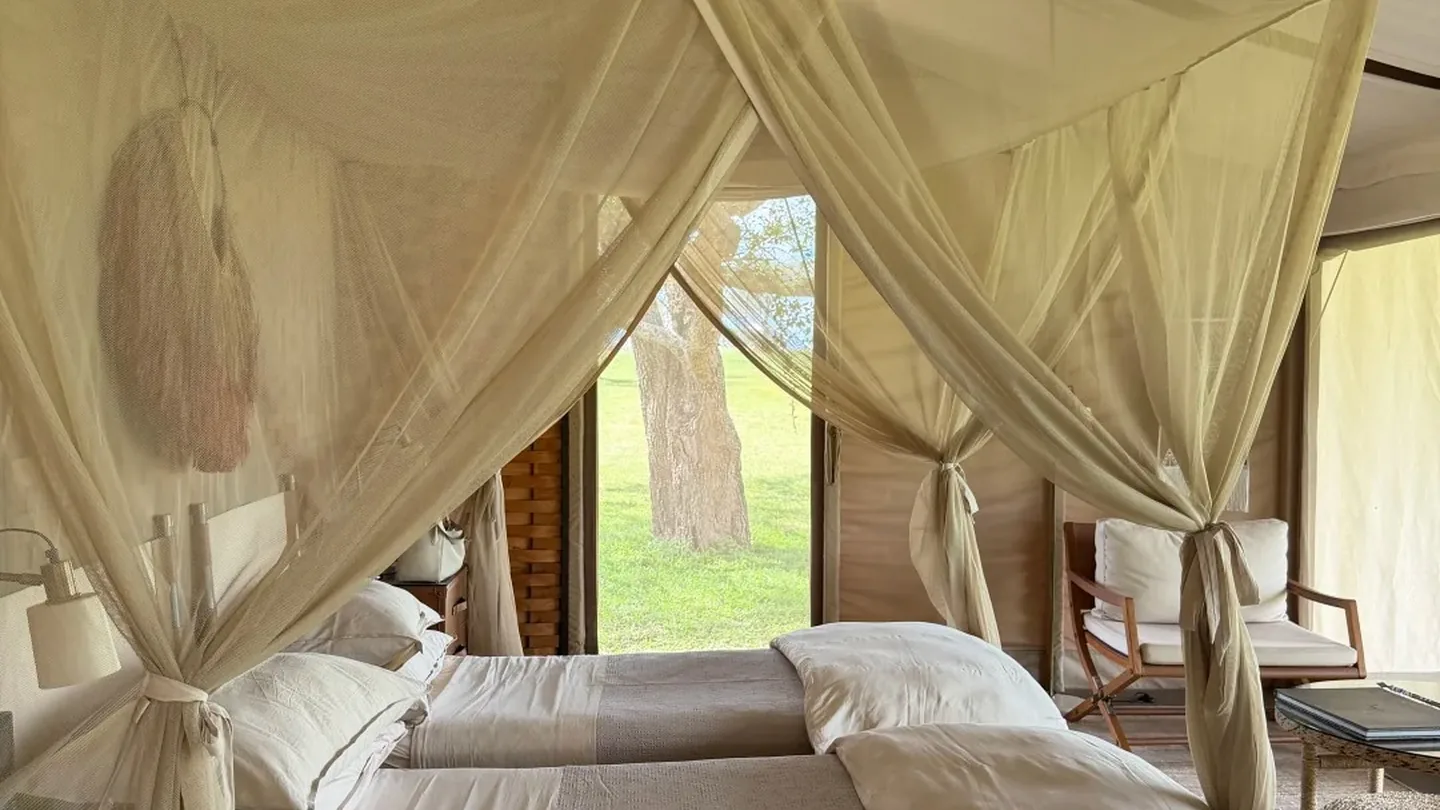
At the luxury end, what you buy is privacy, finish and space between game drives—not different wildlife. The Safari Atlas
The quick answer
Budget safaris run roughly $250–$400 per person per day: simpler camps, shared vehicles, more guests, less privacy – but the same parks and the same animals. Luxury runs $800–$1,500+, and the money goes on small private camps, exclusive settings, top guides and seamless service, not better wildlife.
The mid-range tier, about $450–$800 a day, is where we point most first-timers: comfortable tented camps, a private vehicle for two, and most of the luxury feel for roughly half the nightly rate. If a private plunge pool and total exclusivity are what you're paying for, luxury is honest value. If it's the wildlife, you don't need it.
Key facts
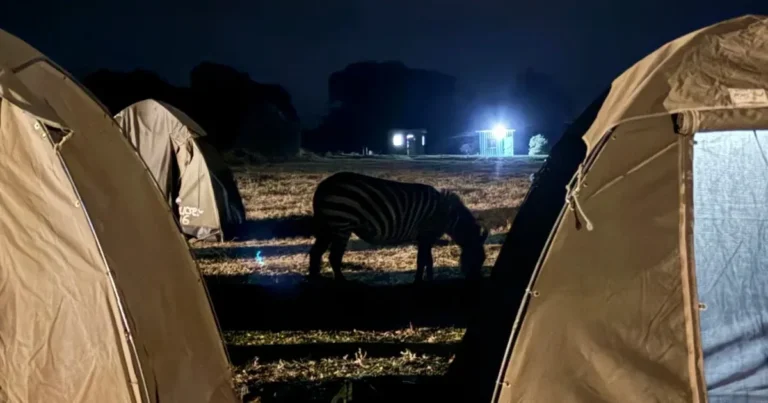
- Budget: about $250–$400 pp/day – basic lodges or tented camps, shared vehicles, larger group sizes.
- Mid-range: about $450–$800 pp/day – comfortable tented camps, often a private vehicle, strong guiding.
- Luxury: about $800–$1,500 pp/day – small private camps, exclusive locations, high service.
- Ultra-luxury: $1,500–$2,500+ pp/day at the most exclusive private reserves.
- The wildlife is identical across tiers – the price buys comfort, space, privacy and service.
- Watch the inclusions: park fees and extras can make a cheap quote much more expensive once you add them back.
What's identical at every tier
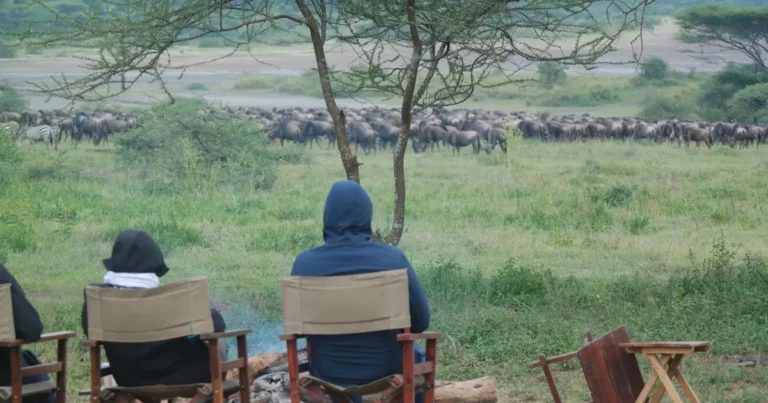
Start with the part nobody selling you a safari will lead with: the core experience barely changes with price. Budget and luxury trips visit the same national parks, drive the same tracks, and reach the same sightings – the wildlife doesn't check your room rate. A great guide can be found at every tier, and some of the best are on mid-range trips. The migration, the big cats, the dawn light: all shared.
So when a brochure implies that spending more means seeing more, be sceptical. What genuinely improves the wildlife odds is time on the ground, the right season, and a good guide – not thread count. This is the single most useful thing to hold in your head while comparing quotes, and it underpins everything in our broader guide to what a safari costs.
What the money actually buys
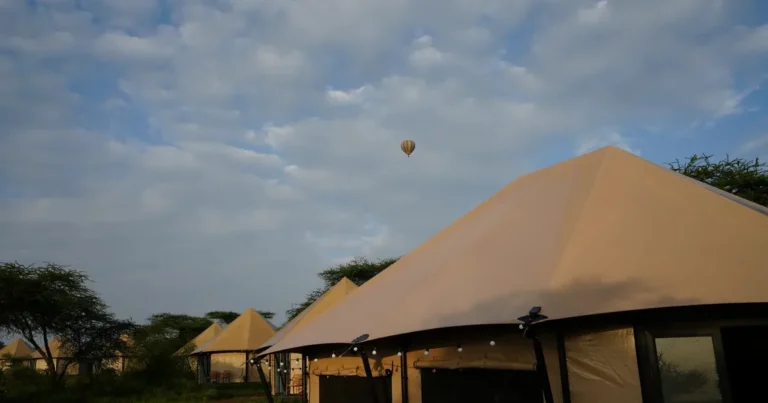
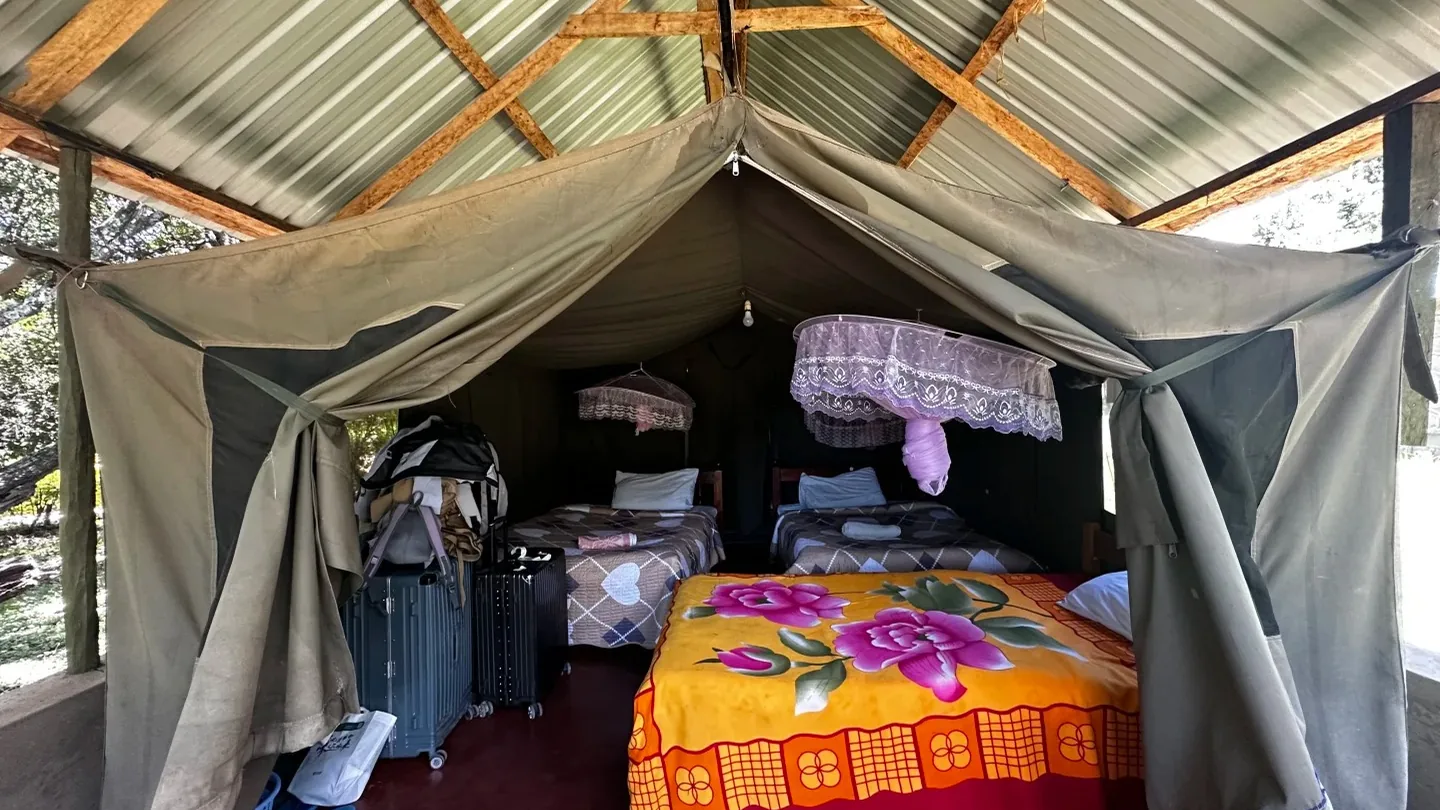
If it isn't the animals, what is it? Four things, mostly. Comfort – a budget camp gives you a clean, functional tent with a proper bed and en-suite; a luxury one gives you space, a private deck, sometimes a plunge pool, and design that makes the place itself part of the trip. Privacy and scale – budget camps may host 30 to 60 guests and put strangers in your vehicle; luxury camps have a handful of tents and a guide who's yours. Location – the priciest camps sit inside private concessions or the best positions in a reserve, cutting your drive to the action. And service – the seamless, anticipatory kind, with the logistics invisible.
None of that is trivial, and for some travellers it's the whole point of a special trip. But it's worth naming plainly, because it's the difference you're paying for – and it's a comfort-and-service difference, not a wildlife one.
Budget
$250–$400 / day
Simple camps, shared vehicle, larger groups. The same parks and animals.
Mid-range
$450–$800 / day
Comfortable tented camps, often a private vehicle, strong guiding.
Luxury
$800–$1,500+ / day
Small private camps, exclusive settings, seamless service.
The tiers, side by side
Here's how the three main tiers stack up on the things that actually differ. Read down the wildlife row first – it's the same at every level – then across the rest, which is where your money goes.
Cost per person per day · 2026
| Factor | Budget | Mid-range | Luxury |
|---|---|---|---|
| Wildlife | Same | Same | Same |
| Camp | Basic, larger | Comfortable tents | Small & private |
| Vehicle | Shared | Often private | Private + top guide |
| Location | Outside/edge | Good | Best / concession |
| Service | Functional | Attentive | Seamless |
Why mid-range wins for most
Here's our hill to die on: for most first-time travellers, the mid-range tier isn't a compromise between budget and luxury – it's the smart buy, and the luxury upgrade above it is the one with the weakest value case. At $450 to $800 a day you get a comfortable tented camp, usually a private vehicle for two, a genuinely good guide and a decent location. That's the great safari most people picture, and it delivers the vast majority of the luxury experience – the same lions, the same sunsets, the same dawn coffee on the plains – at roughly half the nightly rate.
Step up to luxury and the wildlife doesn't improve; the tent gets bigger and the service gets slicker. Those are real, and if they're what you came for, fair enough. But if you're weighing whether to stretch from mid-range to luxury purely to "do it properly", our steer is to keep the money and add a night or a stronger guide instead. If, on the other hand, this is a once-in-a-lifetime honeymoon and the setting matters as much as the sightings, that logic doesn't apply to you.
Wondering which tier is right for your trip?
The honest answer depends on what you value – wildlife, comfort, privacy or a special setting. Tell us your budget, dates and what matters most, and our safari planning team will price a budget, mid-range and luxury version side by side, with inclusions itemised. No obligation.
The inclusions trap
Before you compare two prices, make sure they cover the same things – because the cheapest-looking quote is often the one leaving the most out. Park and conservation fees alone are substantial: Serengeti entry is set by TANAPA and may appear with VAT or related charges on operator invoices, Kenya's Maasai Mara is $100 to $200 per adult depending on season, and Ngorongoro adds separate conservation and crater-service charges that should be shown clearly on the operator invoice. A quote that excludes fees, transfers, drinks and tips can become materially more expensive once you add them back.
So the tier comparison only works on a like-for-like basis. Ask every operator the same question – what's included, and what isn't – and rebuild the numbers to match before you decide budget looks cheap. A rate that folds the fees in isn't dearer; it's just being honest. Our guide to safari hidden costs lists exactly what to check for.
When luxury is honest value
None of this is a case against luxury – it's a case for buying it on purpose. Luxury earns its price when the setting and the service are part of what you came for: a milestone honeymoon, a family celebration, a photographer who wants a private vehicle and total flexibility, or simply a traveller who values comfort and privacy and can afford it. In a small private concession you also get real wildlife perks – capped vehicle numbers and night drives the crowded public parks can’t offer, plus relaxed walking safaris.
What we'd steer you away from is stretching to luxury out of a vague sense that a safari "should" be luxurious, or that budget means missing out on the wildlife. It doesn't. Spend up because you specifically want what the extra money buys, not because you're worried the animals won't show up for a cheaper tent.
Browse mid-range safari packages → The value sweet spot – comfortable camps, private vehicle, fees included. See optionsFive questions to ask before you pick a tier
- Am I paying for wildlife or comfort? The animals are the same – be clear which one the upgrade actually buys.
- Are park fees included? Get it in writing – missing fees can change the total dramatically.
- Is the vehicle shared or private? This drives both cost and experience more than the room does.
- What does the location save me? A camp deep in the reserve means less driving to reach the action each day.
- Would an extra night beat an extra tier? On a fixed budget, more days often deliver more than a plusher camp.
So which tier should you book?
If the wildlife is the whole point and comfort is negotiable. You'll see everything the luxury guests see – just from a simpler camp and, often, a shared vehicle. Honest value with no apology needed.
Our pick for most first-timers. Comfortable tented camps, usually a private vehicle, a strong guide – most of the luxury experience for around half the nightly rate. The value sweet spot.
If the setting, privacy and service are part of what you came for – a honeymoon, a celebration, or a private-concession stay with night drives and walks. Buy it deliberately, not out of worry the wildlife needs it.
Decide what you're actually buying before you decide how much to spend. Name the thing you value – wildlife, comfort, privacy, a special place – and the tier follows from it. For most people, most of the time, that answer lands in the middle.
Tier cost ranges are typical 2026 mid-market figures and vary by country, season, camp standard and group size. Park fees are quoted per official schedules current at July 2026. Confirm exactly what a quote includes before comparing tiers or booking.
Sources & price notes
Tier day-rate ranges are typical 2026 figures that vary by operator, season and route. Park fees checked against the TANAPA tariff schedule (Serengeti, VAT included), the Ngorongoro Conservation Area Authority (conservation and crater service fees), and the Maasai Mara schedule (Narok County). The crater service fee is charged per vehicle, not per person. Tier figures move with season, camp standard and party size – confirm current rates and inclusions with your operator before booking.