Safari costs · Is it worth it?
What Does a $1,000-a-Day Safari Actually Look Like?
A thousand dollars a day sounds like the summit of safari, and in one sense it is – but not in the way the number implies. It doesn't buy better wildlife or a rarer sighting. It buys a smaller camp, an emptier corner of the bush, a guide who's yours, and the sense that no one else is around. Whether that's transformative or merely nice depends entirely on what you'd otherwise be missing at half the price.
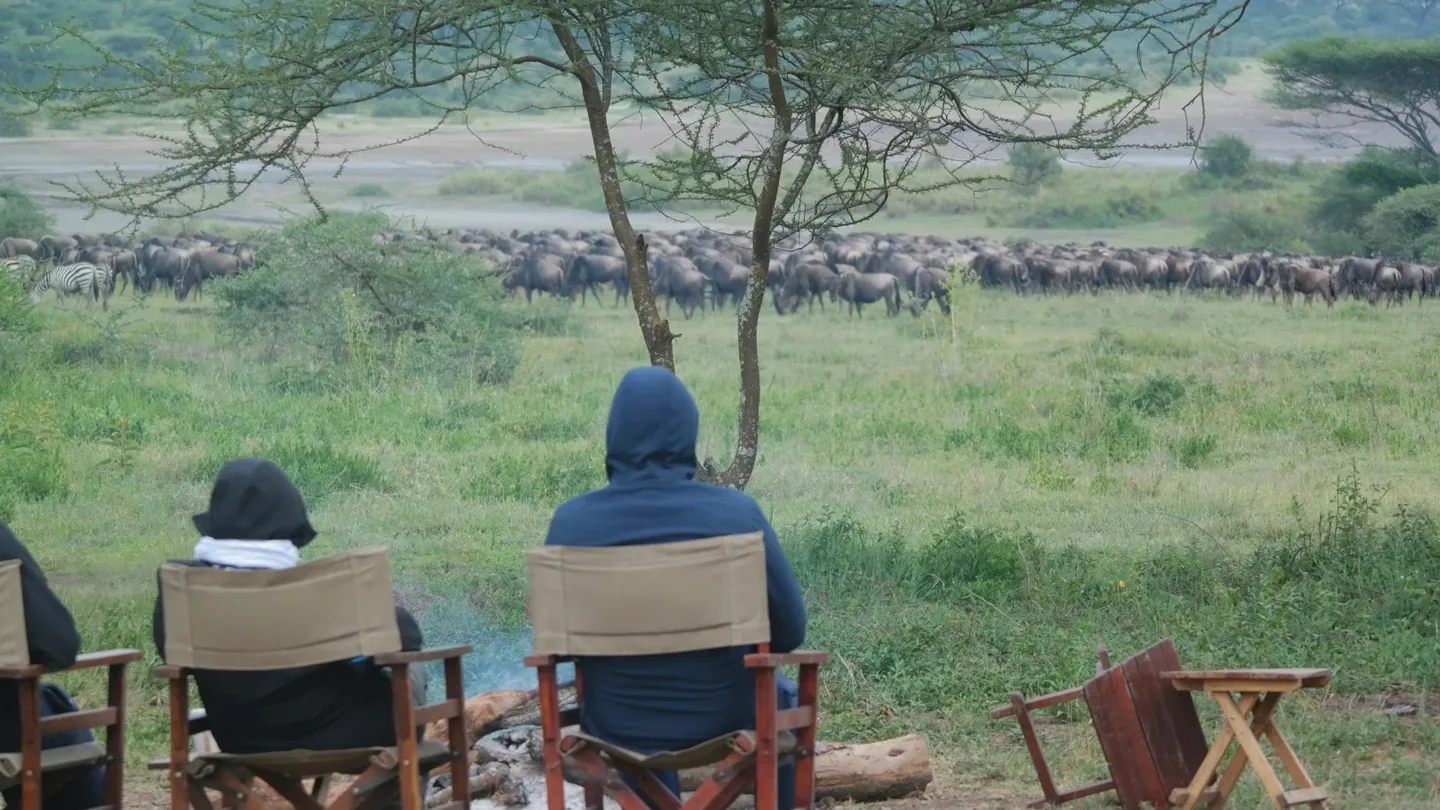
At $1,000 a day, the rarest luxury is not distance from wildlife but time and space to watch it. The Safari Atlas
The quick answer
A $1,000-a-day safari is solidly in luxury territory: a small, exclusive camp of a handful of tents, often in a private concession, with a private vehicle, a top guide, fly-in access and night drives or walking safaris the public parks don't allow. Everything is included and seamless.
Against a $500-a-day mid-range trip, the wildlife is identical – the extra $500 buys exclusivity, space, remoteness and service. It's worth it if uncrowded sightings, privacy and reaching the wild edges genuinely matter to you. If it's the animals you're chasing, a mid-range trip delivers the same ones for half the daily rate.
Key facts
- The rate: $1,000 per person per day sits at the luxury end – small private camps and concessions.
- Typically includes: private vehicle, top guide, fly-in transfers, all meals, house drinks, park fees.
- Unlocks: capped vehicle numbers, night drives the main parks forbid, and relaxed walking safaris.
- Versus $500/day: the wildlife is the same – the extra buys privacy, space, remoteness and service.
- The trap: above this rate you often pay for a name and design, not a better safari.
- A 7-day trip at this rate is roughly $7,000–$8,400 per person, before international flights.
What $1,000 a day includes
At this rate almost everything is bundled, and seamlessly so. Expect a small camp – often six to twelve tents rather than thirty to sixty – frequently sited in a private concession or a prime position inside a reserve. The rate typically folds in a private vehicle and guide, fly-in transfers between camps, all meals, house drinks, laundry, park and conservation fees, and the twice-daily game drives. You arrive and stop thinking about logistics; that invisibility is part of what you're paying for.
The tents themselves are spacious and beautifully finished, sometimes with a private deck or plunge pool. But the more meaningful inclusions are the ones that change the days: capped vehicle numbers so you're not sharing a sighting with a dozen other cars, and the option of night drives and guided walks that the crowded public parks simply don't permit. That access, more than the thread count, is the real luxury – a distinction our budget vs luxury guide keeps returning to.
See luxury private-camp safaris → Small camps and concessions around the $1,000-a-day rate. Check dates$1,000 vs $500 a day
The honest comparison isn't $1,000 a day against a budget trip – it's against the $500-a-day mid-range tier, because that's the real alternative for anyone weighing the jump. Both give you a private vehicle, a good guide, comfortable accommodation and the same national parks. What doubles is not the wildlife but the exclusivity, the remoteness and the polish. Seeing the two side by side makes the choice concrete.
$500/day mid-range vs $1,000/day luxury · what changes
| Factor | $500/day mid-range | $1,000/day luxury |
|---|---|---|
| Wildlife | Same | Same |
| Camp size | Comfortable, mid | Small & exclusive |
| Location | Good | Private concession |
| Crowds | Public-park vehicles | Capped numbers |
| Night drives / walks | Usually no | Often yes |
What the extra $500 buys
Be specific about the upgrade, because "luxury" is too vague to spend $500 a day on. The extra buys four concrete things. Exclusivity – a camp of a dozen guests rather than fifty, so it feels like your own. Uncrowded wildlife – private concessions cap vehicle numbers, so instead of a lion ringed by ten cars, it's just yours; this genuinely improves the experience of a sighting even though the lion is the same. Access – night drives and walking safaris, off-limits in the main parks, become part of the trip. And seamlessness – the anticipatory service where nothing is ever a hassle.
Notice that two of those – uncrowded sightings and the extra activities – do change what you experience, not just how plush the bed is. That's the strongest case for the rate, and it's why $1,000 a day can be worth it in a way that merely fancier tents at the same crowded sighting is not.
Wondering if the luxury day-rate is worth it for your trip?
The honest answer turns on whether crowds, privacy and remoteness matter to you. Tell us your dates and what you value, and our safari planning team will price a $500-a-day and a $1,000-a-day version side by side, so you can see exactly what the extra buys. No obligation.
Is it worth it?
Here's our hill to die on: for most first-time safari-goers, $1,000 a day is more than you need to have a superb trip – the mid-range tier already delivers the wildlife and the wonder – but it is honest value for the specific traveller who will actually use what it buys. If crowds at a sighting would genuinely bother you, if a walking safari or a night drive is on your list, if remoteness and privacy are part of the dream, then the extra $500 a day is money well spent, not vanity.
Where we'd steer you away is paying the rate out of a sense that a safari "should" be luxurious, or that spending less means missing the animals. It doesn't. A $500-a-day mid-range trip and a $1,000-a-day luxury one watch the same lions in the same light; the difference is everything around that moment. If those surroundings matter to you, pay for them gladly. If they don't, keep the money and add days, or a beach, instead – the logic we lay out in the $10,000 budget guide.
Above and below $1,000
It helps to know where $1,000 a day sits on the ladder. Below it, at $450 to $800, is the mid-range tier that suits most first-timers. Above it, ultra-luxury runs $1,500 to $2,500 and beyond – the most exclusive camps in places like the Okavango or the top private concessions. And this is where the value case gets weakest of all: the leap from $1,000 to $2,000 a day buys ever more design, service and cachet, but the wildlife and even the core experience barely shift.
So if you're going to spend at the luxury end, $1,000-ish a day is often the sweet spot within luxury itself – genuinely exclusive and remote, without paying a further premium for a name. Reserve the ultra-luxury rates for a true once-in-a-lifetime splurge where the camp is the point, and go in knowing that's what you're buying.
Browse private-concession camps → Capped-vehicle reserves with night drives and walking safaris. See optionsFive questions to ask before you pay it
- Would crowds actually bother me? Capped-vehicle concessions are a big part of what the rate buys.
- Do I want night drives or walks? If yes, the luxury tier is often the only way to get them.
- Is remoteness part of the dream? Fly-in exclusivity is real value – if you'll notice it.
- Am I paying for access or just a name? Below ultra-luxury, $1,000/day buys access; above it, mostly cachet.
- Would extra days beat the upgrade? More time can add more than a plusher camp at the same sighting.
So should you pay it?
If uncrowded sightings, night drives and walks, remoteness and seamless service genuinely matter to you. Within luxury it's often the sweet spot – exclusive and remote without paying extra for a name.
If it's the wildlife you came for. The mid-range tier delivers the same animals, a private vehicle and a good guide for half the daily rate – and the money saved buys more days or a beach.
Spend most nights at mid-range and one or two at a $1,000-a-day private concession for the night drives and exclusivity. Often the best-value way to taste the top tier without living there all week.
A $1,000-a-day safari is a wonderful thing bought for the right reason and an expensive habit bought for the wrong one. Name what the extra $500 gives you – privacy, quiet sightings, walking safaris – and ask honestly whether you'll feel it. If yes, it's worth every dollar. If you're not sure, the same lions are waiting at half the price.
Day-rates are typical 2026 figures, per person and land only, and vary by country, season, camp and operator. Park fees follow official schedules current at July 2026. Confirm exactly what a rate includes – fees, drinks, flights, activities – before comparing or booking.
Sources & price notes
Luxury and mid-range day-rates, and the ultra-luxury band above, are typical 2026 figures that vary by operator, season and route. Park and conservation fees follow the TANAPA tariff schedule (Serengeti, VAT included), the Ngorongoro Conservation Area Authority, and the Maasai Mara schedule (Narok County). Day-rate figures move with season, camp and inclusions – confirm exactly what a rate covers with your operator before booking.