Destination guides · Botswana
Okavango Delta Safari Guide: Africa's Great Wetland
The Okavango is the safari that breaks the mould. A river that never reaches the sea, it spills instead into the Kalahari and vanishes into a maze of channels, islands and lily-strewn lagoons – a wetland the size of a small country, teeming with life. Here you glide by dugout canoe as much as you drive, the crowds are absent by design, and the price is high. It is, quite simply, one of the most exclusive and magical safaris on earth.
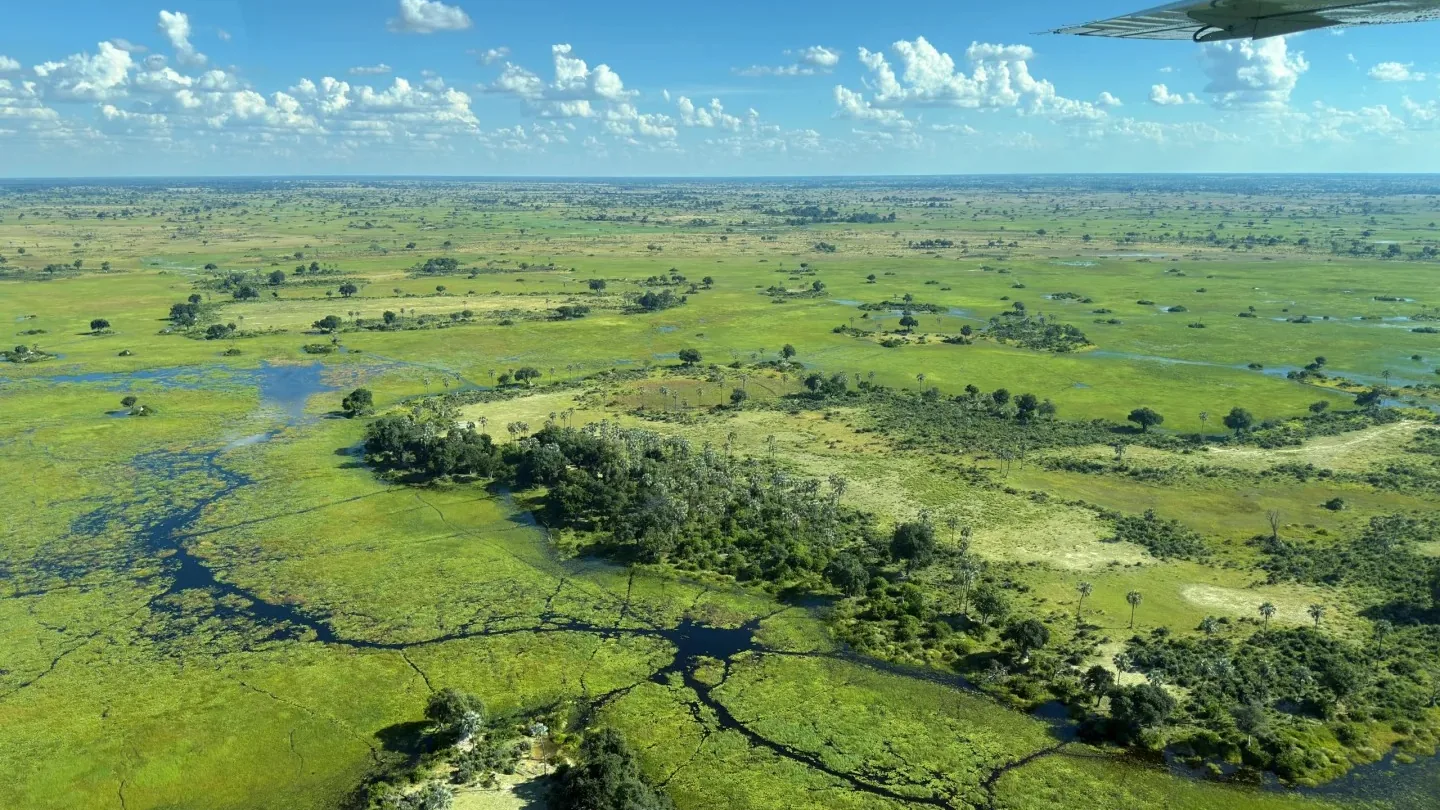
From the air, the Delta reveals why water—not roads—sets the itinerary. The Safari Atlas
The quick answer
The Okavango Delta is Botswana's vast inland wetland – a water-based safari of mokoro (dugout canoe) trips, boat cruises and game drives across islands, offering superb wildlife (elephant, big cats, wild dog) in near-total seclusion. It's premium and mostly fly-in: mid-range from about $450–$650 per person per day, luxury camps $1,000–$2,500+ per night, with budget mobile options from around $200 a day.
Go in the dry season, June to October, when the flood peaks and wildlife concentrates – the classic time and the priciest. The green season (November to March) is cheaper and superb for birding, with lower water. Note: the Delta is a malaria area.
Key facts
- The draw: a water-based safari – mokoro, boats and drives – in a pristine, low-density wetland.
- Cost: premium – mid-range from about $450–$650 pp/day; luxury camps $1,000–$2,500+ per night.
- Access: mostly by light aircraft from Maun into remote bush airstrips.
- Best time: dry season (Jun–Oct), when the flood peaks and wildlife concentrates.
- Wildlife: elephant, lion, leopard, wild dog, hippo, red lechwe and superb birdlife.
- Malaria area – take precautions; and it's a low-volume, exclusive destination by design.
What the Okavango is like
The Okavango is unlike anywhere else on a safari because it's wet. The river, born in the Angolan highlands, flows south into Botswana and, finding no outlet to the sea, fans out across the flat Kalahari sands into a shifting labyrinth of channels, floodplains, papyrus beds, palm-fringed islands and mirror-still lagoons. The result is a wilderness of extraordinary beauty and richness, its character changing with the water – and a safari built as much around boats and canoes as around vehicles.
It's also deliberately exclusive and remote. Botswana runs a high-cost, low-volume tourism model, so camps are small, widely spaced and reached by light aircraft, and you share the wilderness with very few other people – the antithesis of the busy East African parks. That seclusion is a large part of the appeal, and the reason the Okavango sits at the premium end of our best safari destinations guide.
The water safari
The signature Okavango experience is the mokoro – a traditional dugout canoe (now usually fibreglass) poled slowly and silently through the shallow channels by a local guide. Gliding at water level through reeds and lilies, past frogs, birds and the occasional elephant, is a serene, intimate way to experience the wilderness that no game drive can replicate. Motorboat cruises reach the deeper channels and larger lagoons, adding another water-borne dimension.
Crucially, the Okavango is not only water – the islands and floodplains are prime game-driving country too, and many camps combine mokoro, boat trips, game drives and guided walks depending on the water level and season. That variety – three or four completely different ways to explore in one place – is a big part of what makes the Delta special, and it suits the slow, immersive pace our slow safari vs more parks guide champions. Water levels vary through the year, so which activities dominate depends on when you visit.
See Okavango Delta safaris → Fly-in Delta camps with mokoro, boats and game drives. Check datesThe wildlife
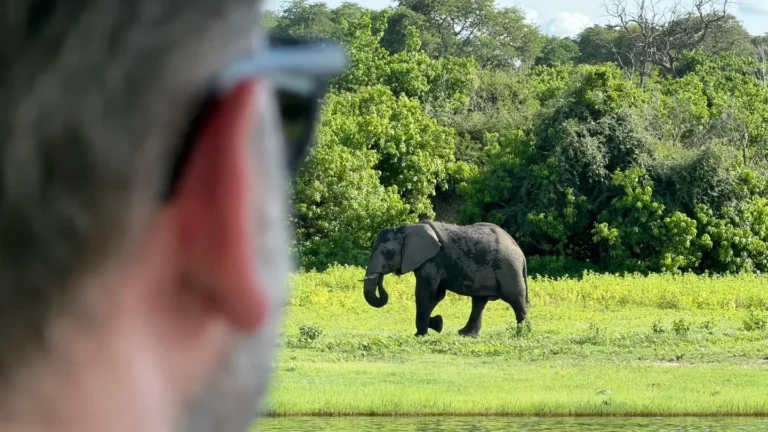
The Okavango's wildlife is superb and, in places, unique. The water draws and holds huge numbers of elephants, along with buffalo, hippo and the graceful, water-loving red lechwe antelope found in wetlands like this. The predators are a highlight: lion, leopard, and – a real draw – healthy populations of endangered African wild dog, which the Delta is one of the best places on earth to see. Cheetah roam the drier fringes, and the birdlife, from fish eagles to rare wetland species, is world-class.
What sets the Okavango apart isn't just the species but the setting and the seclusion: watching a leopard from a boat, or wild dogs hunting across a floodplain with barely another vehicle in sight, is a different order of experience. It's not the sheer plains-game numbers of the Serengeti, but for pristine wilderness, predator diversity and the sheer quality of the sightings, few places compete – which is why it appears in our honeymoon and Botswana vs Tanzania guides as a top-end choice.
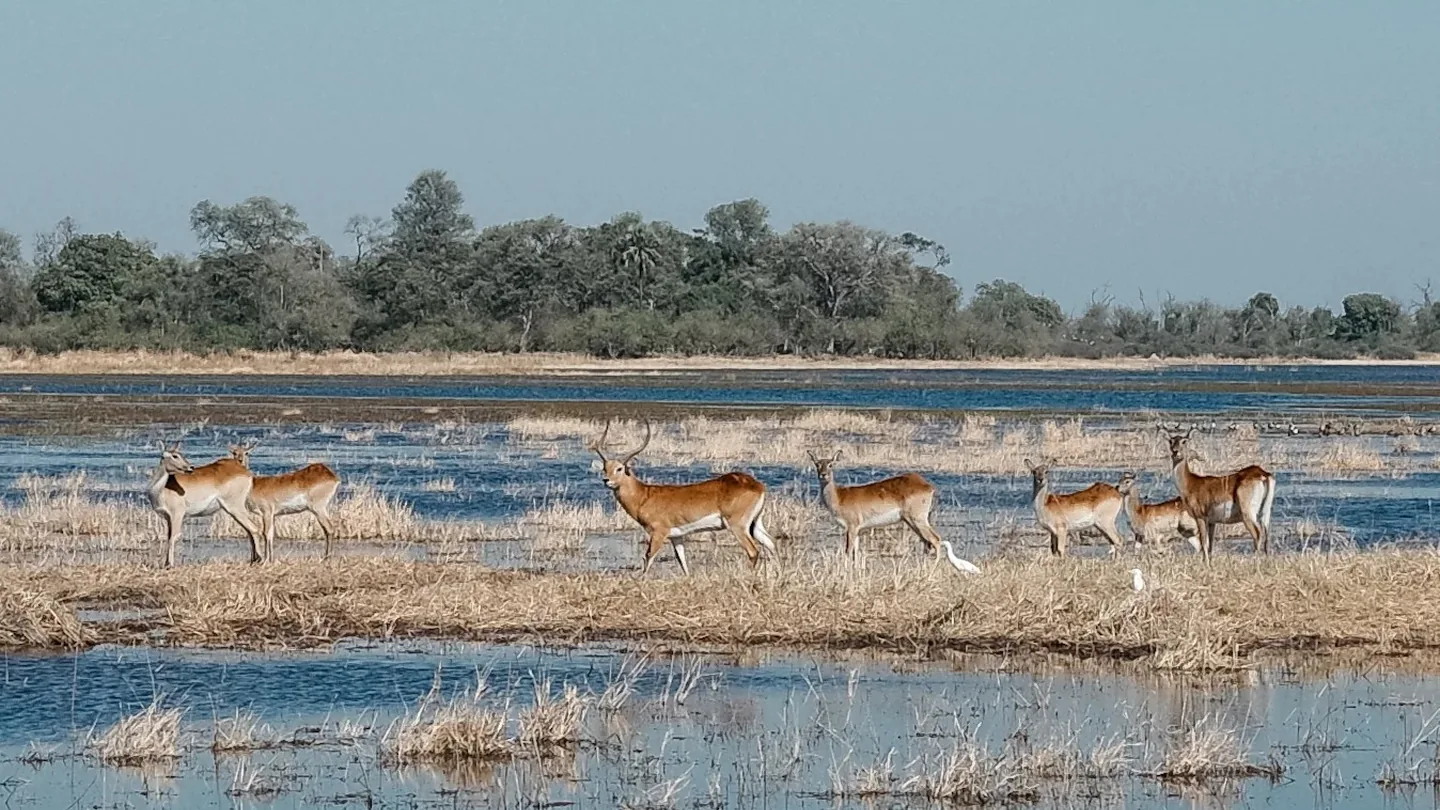
In the Delta, water shapes not only the landscape but every wildlife encounter. The Safari Atlas
Best time and the flood
The Okavango has a beautiful paradox at its heart: its flood peaks in the dry season. The waters that fan out across the Delta from around June are the previous summer's rains from Angola, arriving months later – so just as the surrounding land parches, the Delta fills. This makes the dry season, roughly June to October, the classic time: the flood is high, water activities are at their best, wildlife concentrates as the wider region dries, and the weather is clear. It's the peak – the busiest (relatively) and the priciest.
The green season, roughly November to March, is the wet summer: lower flood, lush surrounds, newborn animals, spectacular birding as migrants arrive, dramatic skies – and materially lower prices. Water levels are lower then, so mokoro availability varies by area, and it's the hotter, wetter time. For the classic high-water, high-wildlife Delta, go dry; for value, birds and green drama, the summer is underrated, the same trade our green season guide weighs. Either way, book far ahead: the best camps are tiny and sell out a year or more out.
Want an Okavango trip timed to the flood?
The Delta's water level shapes the whole experience, and its camps are tiny and book out early. Tell us your dates and budget, and our safari planning team will build a costed Okavango itinerary timed for the water and wildlife you want – fly-in transfers included. No obligation.
Okavango Delta by season · 2026
Cost and getting there
The Okavango is a premium destination, and there's no getting around it: this is Botswana's deliberate high-cost, low-volume model. Budget mobile and camping options start from around $200 per person per day, mid-range camps run roughly $450 to $650 per adult per day, and the famous luxury lodges range from about $1,000 to $2,500 per person per night and beyond at the very top. You're paying for exclusivity, seclusion and pristine wilderness rather than better wildlife than a cheaper park – the honest trade our budget vs luxury guide spells out.
Access is almost always by light aircraft from Maun, the gateway town, into small bush airstrips deep in the Delta – those fly-in transfers are part of the cost and the experience, and the usual 15kg soft-bag luggage limit applies, as our fly-in vs driving guide notes. For most travellers the Okavango is a splurge or a milestone trip rather than a first, budget safari – and one worth saving for.
Where to stay
Okavango camps come in two broad flavours worth understanding. Water camps sit in permanently flooded areas and lead with mokoro and boat activities; land camps occupy larger islands and lead with game drives and walks; and many camps offer a mix depending on the season's water level. Which suits you depends on whether the water experience or the game driving is your priority – and a classic Delta trip often combines a water camp and a land camp for both.
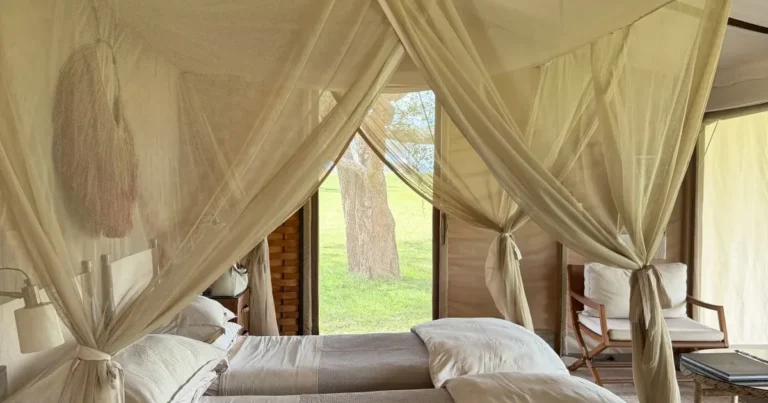
All are small, remote and, at the top end, extraordinarily luxurious – but as everywhere, position and the season's water matter as much as polish, the principle from our accommodation guide. Because camps are tiny and demand is high, they book out a year or more ahead, especially for the peak dry season, so plan far in advance. A good operator will pair the right camps for your dates and the water level, which is the whole art of an Okavango itinerary.
Browse Okavango camps → Water camps for mokoro and land camps for game drives. See optionsFive questions to ask before you visit
- Is the water experience my draw? If so, the Okavango is unmatched – time it for the high flood.
- Which season? Dry (Jun–Oct) for peak flood and wildlife; green for birds, value and lush drama.
- What's my budget? This is premium – from $450–$650/day mid-range up to $2,500+/night luxury.
- Water camp, land camp, or both? Combine the two for mokoro and game drives.
- Have I booked far ahead? Tiny camps sell out a year or more out, especially in peak season.
So when should you visit?
For the peak flood, the best water safari and wildlife concentrated as the region dries – the classic Okavango at its most magical. The busiest and priciest window, and worth booking a year ahead.
For lush surrounds, spectacular birding, newborns and dramatic summer skies at materially lower prices – with lower water, so check mokoro availability. Underrated value in an expensive destination.
Whenever you go, the Okavango is a premium, once-in-a-lifetime destination – a honeymoon, a big celebration, or a second safari. Pair a water camp and a land camp, and save for it. It rewards the outlay.
The Okavango Delta is the water safari that nowhere else can offer – mokoro at dawn, wild dogs across a floodplain, and a wilderness you have almost to yourself. Go in the dry season for the high flood, accept the premium price for the exclusivity it buys, and book far ahead. It's not a first budget safari – it's the one you save for, and remember forever.
Costs, access and timings are typical 2026 figures and vary by camp, operator and season. The flood level varies year to year with Angola's rains. The Delta is a malaria area – take precautions. Confirm current rates, water levels and inclusions with your operator before booking.
Sources & price notes
Okavango day-rates (budget from ~$200, mid-range ~$450-$650 pp/day, luxury ~$1,000-$2,500+ per night) are typical 2026 ranges that move with camp, season and the flood level. The Delta is a malaria area. Confirm current rates, water levels and inclusions with your operator before booking.