Safari costs · Fixed budget
What Kind of Safari Can You Get for $3,000?
Plenty of one, as it turns out – if you spend it in the right shape. Three thousand dollars per person won't buy a private plunge-pool tent, and it shouldn't try to. What it buys, cleanly, is a proper week of the same wildlife everyone else sees: a shared vehicle, honest camps, the Big Five, and the migration if your timing's right. The trick is knowing where every dollar goes so none of it is wasted on the wrong thing.
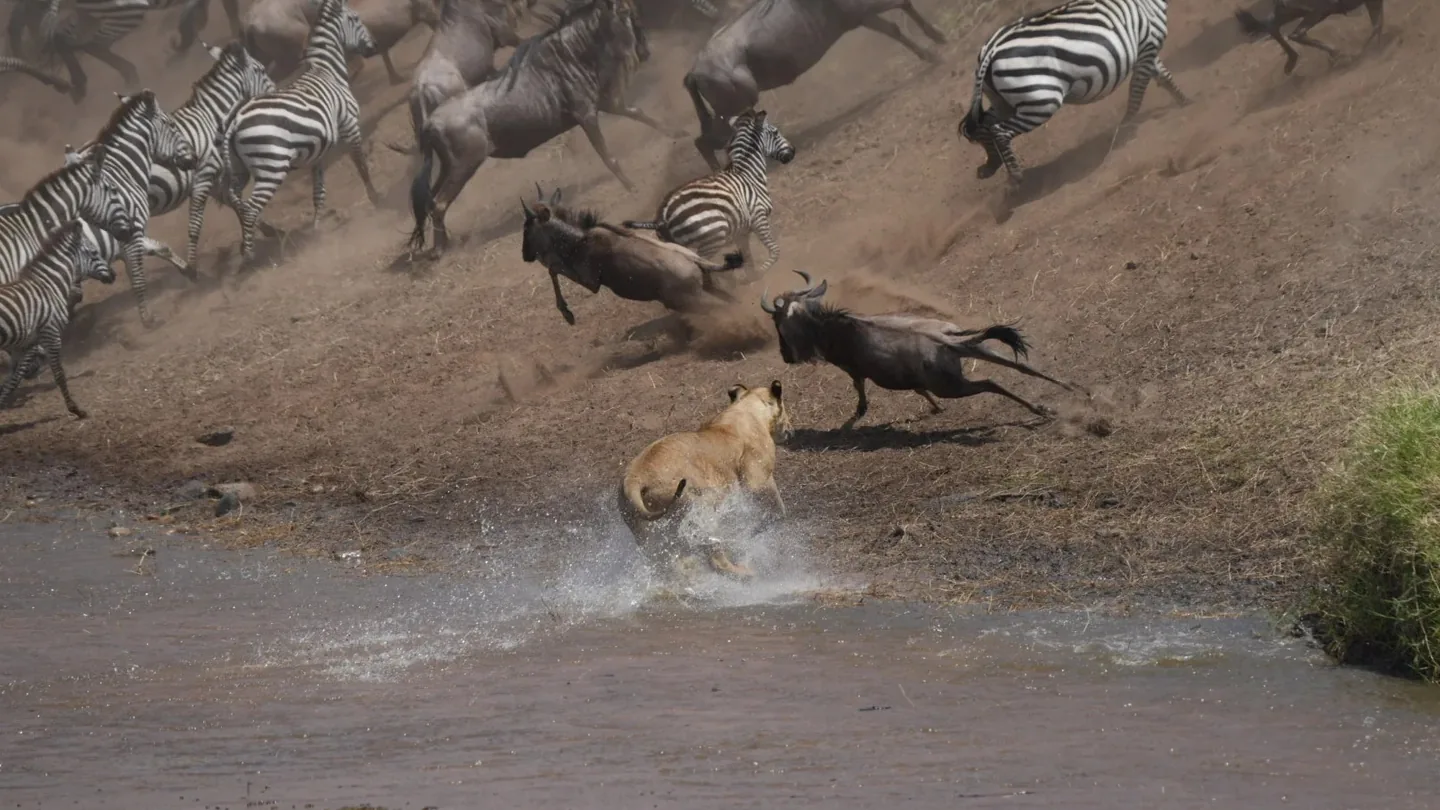
A $3,000 safari can still put you in the middle of the action; the compromise is usually privacy, not wildlife. The Safari Atlas
The quick answer
Around $3,000 per person, land only, buys a genuinely good budget group safari of roughly six to seven days in Kenya or Tanzania: a shared 4x4, simple but comfortable camps or lodges, park fees, meals and a guide included. You'll cover the classic parks and the Big Five – the same wildlife any tier sees.
What it won't stretch to is a private vehicle for two, a luxury camp, or lots of internal flights – and international airfares sit on top. Spend it as a shared, road-based trip in shoulder season and $3,000 goes a long way. Try to force it into a private luxury shape and it falls short.
Key facts
- What it buys: a 6–7 day budget group safari, land only, in Kenya or Tanzania.
- Tier: budget, roughly $250–$400 per person per day including park fees and meals.
- Vehicle: shared 4x4 with other travellers – the single biggest saving versus private.
- Excluded: international flights, most internal flights, premium drinks, tips and optional extras.
- Park fees are a big slice: Serengeti entry is set by TANAPA and may appear with VAT or related charges on operator invoices; Maasai Mara is $100–$200 per adult by season.
- Season swings it: low and shoulder months can make the same route meaningfully cheaper than peak.
The realistic shape of a $3,000 trip
Work backwards from the tier. A budget group safari runs roughly $250 to $400 per person per day all-in – camp, meals, shared vehicle, guide and, in a good quote, park fees. Divide $3,000 by that and you land on about six to eight days on the ground, before international flights. That's a real week of safari, not a taster.
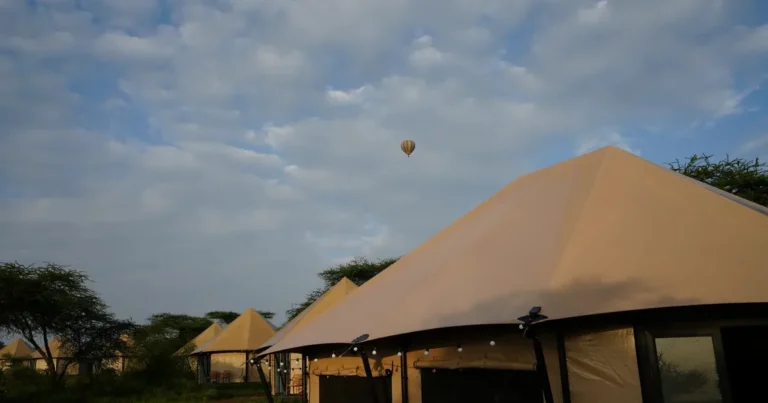
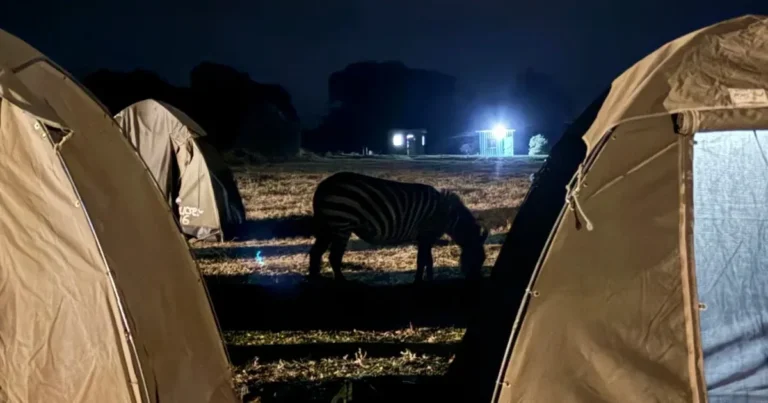
In practice that looks like a shared 4x4 joining a scheduled departure – the classic Kenya loop of Amboseli, Lake Nakuru and the Maasai Mara, or a Tanzania northern-circuit run through Tarangire, Ngorongoro and the Serengeti. You'll sleep in simple lodges or permanent tented camps, eat included meals, and share your guide and vehicle with a handful of other travellers. It is, deliberately, the sociable end of safari – and the wildlife is identical to what the luxury guests are watching, a point we make throughout our budget vs luxury guide.
See budget group safaris → Shared-vehicle departures around the $3,000 mark, fees included. Check datesWhere the $3,000 actually goes
The reason $3,000 feels tight isn't the camps – it's the fixed costs underneath them. On a typical six-day budget trip, a big chunk disappears before you've chosen a tent: park and conservation fees, the vehicle-guide-fuel package that's the same whether you're comfortable or not, and the transfers to reach the parks. Accommodation and meals are actually one of the smaller, more flexible slices. Seeing the split makes it obvious where you can and can't save.
Roughly where a $3,000 budget goes · illustrative 6-day trip
Park fees – the fixed cost
This is the line that most shapes a $3,000 trip, because you can't negotiate it. Park and conservation fees are set by the authorities and charged per person: TANAPA sets Serengeti entry, which may appear with VAT or related charges on operator invoices; Ngorongoro adds separate conservation and crater-service charges; Kenya's Maasai Mara is $100 to $200 per adult depending on season, with 12-hour ticket validity. Across a week those numbers become a four-figure slice of your budget on their own.
Two consequences follow. First, a quote that leaves fees out isn't cheaper – it's incomplete, and you'll pay them anyway, so always confirm they're included. Second, the fee load is a reason not to cram in too many parks: each new reserve is a fresh set of gate fees. On $3,000, a tight route through two or three parks beats a scattered dash through five. Our safari hidden costs guide breaks the fee structures down park by park.
Want to see what your $3,000 buys for your dates?
The same budget stretches further in shoulder season and on a tight route. Tell us your rough dates and which country appeals, and our safari planning team will build a costed budget itinerary that fits $3,000 – with park fees itemised so nothing's hidden. No obligation.
How to make it stretch further
A few levers move a $3,000 budget more than any camp downgrade. Travel in the low or shoulder season – the same route in January or November can cost meaningfully less than in peak months, and Kenya's Maasai Mara adult non-resident fee currently drops from $200 in Jul–Dec to $100 in Jan–Jun. Join a group departure rather than paying for a private vehicle; sharing the 4x4 is the biggest single saving on the whole trip. Keep the route compact and drive the transfers instead of flying them, so you're not paying for extra fees and internal flights.
What we wouldn't cut is nights in the headline park or the quality of the guide. A rushed single night in the Mara or Serengeti to save a little is the economy people most regret, and a poor guide can flatten even a wildlife-rich day. Trim the camp standard and the season before you trim the time or the guiding – more on that in our guide to saving money on safari.
What $3,000 won't buy
Being honest about the ceiling saves disappointment. Three thousand dollars, land only, won't cover a private vehicle to yourselves, a genuine luxury or fly-in camp, or a trip stitched together with several internal flights. It also won't include your international airfare, which for many travellers is another $800 to $1,500 on top. And it's a per-person figure – two people means a $6,000 land budget, not $3,000 split.
If a private or fly-in feel is what you're set on, the honest move is to either lengthen your saving or drop a day or two and step up the tier – which is exactly the territory of our $5,000 safari guide. On $3,000, embrace the shared, road-based, sociable trip for what it is: the best-value way into the same wild everyone else pays more to watch.
Browse budget Kenya departures → Shared-vehicle group trips that fit a $3,000 land budget. See optionsFive questions to ask before you book
- Are park fees included? On a tight budget this single line decides whether $3,000 is enough or short.
- Is the vehicle shared? A private vehicle is the fastest way to blow past $3,000 – sharing is the saving.
- Which season are my dates? Shoulder and low season can cut real money – and the Mara fee changes by season.
- How many parks? Each extra reserve adds a fresh set of gate fees – keep the route tight.
- Is this per person or total? $3,000 is per head; two of you need a $6,000 land budget.
So how should you spend it?
Shared vehicle, simple camps, shoulder season, two or three parks done well. This is where $3,000 shines – a full week of the Big Five and, with luck, the migration.
Trade a day or two for a stronger camp or a compact private element. Fewer nights, but closer to the mid-range feel – sensible if comfort matters more than length to you.
If your heart's set on a private vehicle or a fly-in camp, $3,000 will frustrate you. Waiting until you can spend nearer $5,000 buys a genuinely different, more comfortable trip.
Three thousand dollars is a real safari, not a consolation prize – provided you spend it as a shared, tight, well-timed trip rather than a stretched imitation of a pricier one. Get the shape right and the only thing separating you from the luxury vehicle is the vehicle.
Costs are typical 2026 figures, per person and land only, and vary by country, season, group size and operator. Park fees follow official schedules current at July 2026. The budget breakdown is illustrative – confirm exact inclusions and current fees with your operator before booking.
Sources & price notes
Budget day-rates and savings ranges are typical 2026 figures that vary by operator and season. Park fees checked against the TANAPA tariff schedule (Serengeti, VAT included, 24-hour validity), the Ngorongoro Conservation Area Authority (separate conservation and crater-service charges; confirm current tariff), and the Maasai Mara schedule (Narok County; 12-hour validity). The budget split is illustrative for a six-day trip – confirm current fees and inclusions with your operator before booking.