Planning guides · Budget
How to Do a Budget Safari Without Ruining It
A budget safari and a bad safari aren't the same thing. The lions don't know what you paid, and a camping trip in the right park beats an over-stretched lodge trip in the wrong one. The trick is knowing which corners save real money and which ones quietly wreck the experience.
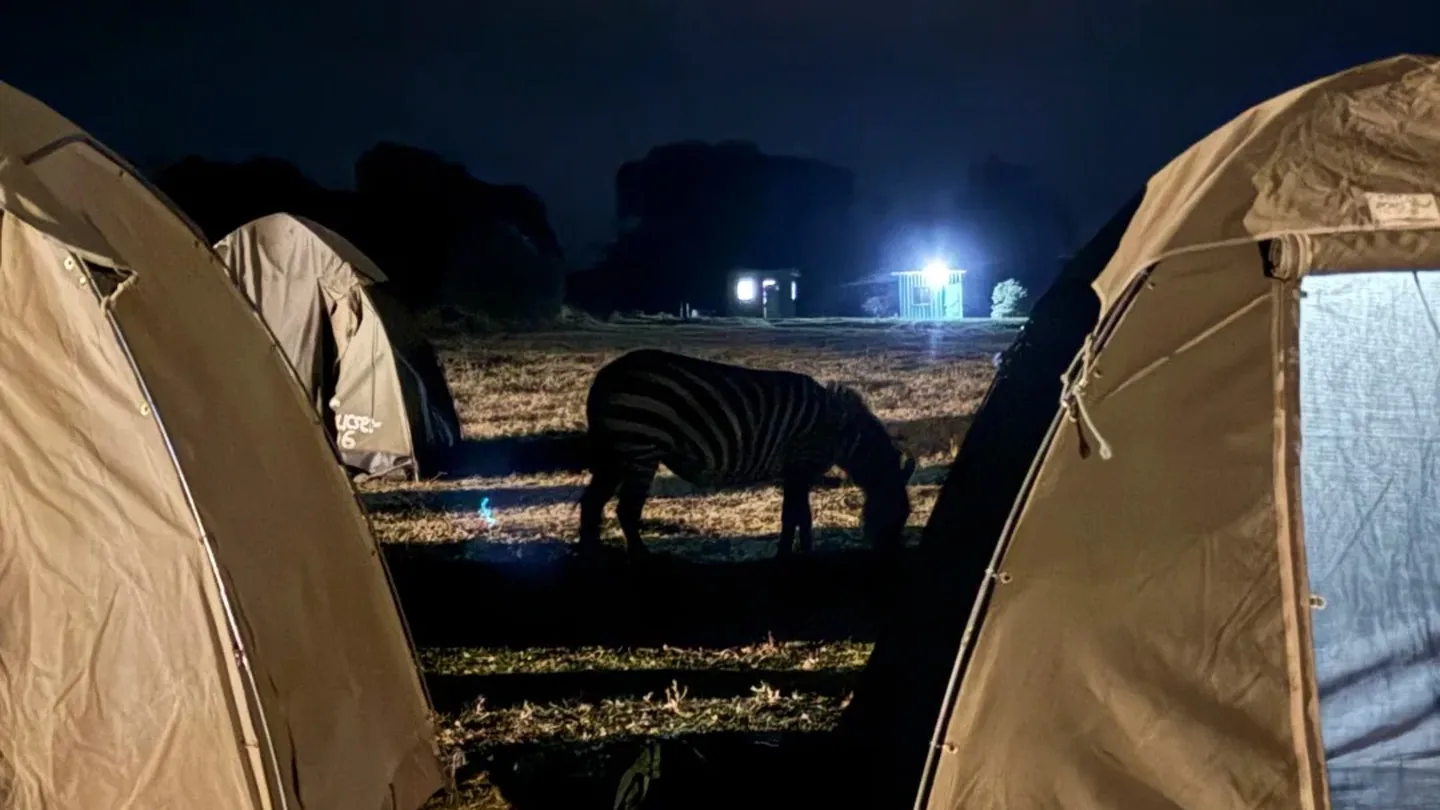
Budget safari does not have to mean a smaller experience; sometimes the wild comes right to camp. The Safari Atlas
The quick answer
A genuine budget safari runs roughly $150–$250 per person per day – camping or basic guesthouses, a shared vehicle, group departures – and a self-drive camping trip in a park like Kruger or Etosha can go lower still, around $100–$200 a day. A week camping the northern Serengeti circuit typically runs $1,500–$2,000 per person through a reputable local operator.
You save by travelling green season, joining a group, and staying in one region. What you never cut: the quality of the guide, and enough nights to actually see something.
Key facts
- Budget range: about $150–$250 per person per day; self-drive camping can hit $100–$200.
- Best value countries: Namibia (Etosha) and South Africa (Kruger) for self-drive; Tanzania for group camping.
- Kruger self-drive: can be one of the cheapest strong safaris, but totals depend heavily on vehicle hire, fuel, rest-camp availability and the current SANParks daily conservation fee.
- Group departures: sharing the vehicle and guide is one of the cheapest ways to safari.
- Green season (Nov–Apr): lower rates, lush scenery, fewer crowds.
- Never cut: guide quality and enough nights per park – a rushed cheap trip is the false economy.
What a budget safari actually costs
Build it from the ground up and the numbers stop being scary. On a self-drive camping trip, the daily total is built from park entry, campsite or rest-camp space, food, fuel and the vehicle. Self-drive routes in lower-cost parks can sometimes come in under $200 per person per day; guided East Africa usually sits higher once park fees and a proper guide are included.
Packaged, a five-day budget camping safari across Tanzania's northern circuit – Serengeti, Ngorongoro and Tarangire – typically runs $1,500–$2,000 per person through a reputable Arusha operator, park fees included. That's the honest floor for a guided East African trip with the marquee parks; go lower and something's usually been left out of the quote.
Budget safari, cost per person per day · 2026
Where budget goes furthest
Destination is the biggest single lever. Namibia's Etosha is arguably the best value of any major safari park: low entry fees, excellent self-drive infrastructure, and waterhole-based game viewing that does the work for you. South Africa's Kruger is the other standout: official rest camps, paved access roads and a daily conservation fee that is still a fraction of many headline East African park fees. The exact total moves with vehicle hire, exchange rate and which rest camps you can book.
For a guided budget trip with the famous names, Tanzania's northern circuit on a group camping basis is the sweet spot. What pushes prices up elsewhere – high park fees, fly-in-only camps, dollar pricing – is exactly what to avoid on a budget, which is why Botswana, for all its magic, is the wrong place to try to go cheap.
Where to save real money
The savings that don't hurt are structural, not experiential. Travel green season and rates drop while the bush turns beautiful. Join a scheduled group departure so the vehicle, fuel and guide split across more people. Camp or self-cater where the park allows it – it's the cheapest route to genuine game viewing. And route smart: focus on one primary region, stay at least three nights per area, and cut travel days, because transfers and extra gates cost money the animals don't reward.
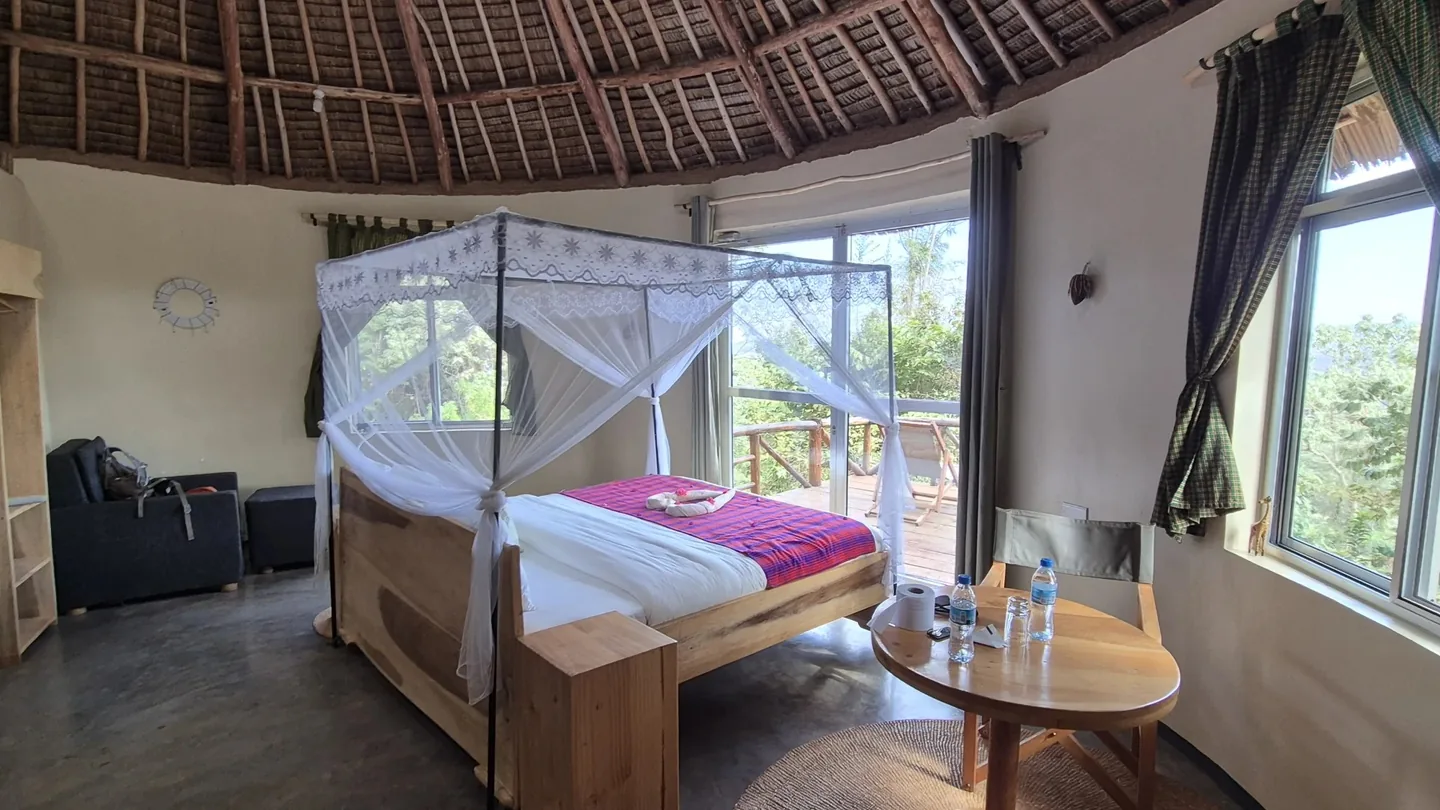
A neat middle path is to mix accommodation levels – two nights camping or in a rest camp, one night in a simple lodge – so you bank the savings without feeling like you roughed it the whole way. None of these touch what you actually see; they touch how much you paid to see it.
Want a budget trip that doesn't feel budget?
Tell us your rough budget and dates and our safari planning team will send back a costed camping or group itinerary that puts the money where it counts – good guide, right park, enough nights. No obligation.
What you should never cut
Here's our hill to die on: the two things you must not economise on are the quality of the guide and enough nights in the park. A great guide is the difference between seeing a landscape and reading it – they find the leopard, read the alarm calls, and turn a quiet drive into a good story. A cheap operator with a bored driver will save you money and cost you the trip.
And two rushed nights somewhere spectacular is the classic false economy: you spend the trip in transit, arrive tired, and leave having barely settled. Fewer parks, more nights, a proper guide – cut anything else first. If saving the money means gutting these, you haven't found a cheaper safari; you've found a worse one.
Explore self-drive safari options → Kruger and Etosha routes built for value, not compromise. See optionsSelf-drive vs group camping
Two roads to a cheap safari, each with a personality. Self-drive – realistic mainly in South Africa and Namibia, where roads, rest camps and fuel support it – is the cheapest and most flexible: you set the pace and pay for little more than the car, the campsite and the fees. The trade is that you're your own guide, so you'll find less than an expert would.
A group camping safari – the norm in East Africa, where parks are guided – keeps a professional in the driver's seat and splits the cost across the group. You give up some control over pace and stops, but you keep the expertise and the company. For most first-time budget travellers the group route is the safer bet; confident, experienced travellers in the right country can save more going self-drive.
When to go to save the most
Season is a free discount. The green season – roughly November to April across much of the safari map – brings lower rates, lush scenery and thinner crowds, and it's when budget trips stretch furthest. The trade is some rain and, in a few remote spots, muddier roads or closed camps, but game viewing stays good and the savings are real.
Avoid the peak dry and migration weeks if the budget is tight: that's when park fees, camps and demand all climb at once. If your dates are fixed in peak season, lean harder on the other levers – group departures, camping, one region – to claw the value back.
Browse green-season value trips → Lower rates, lush scenery and fewer vehicles – the biggest free saving. Check pricesFive questions to ask before booking a budget safari
- Are park fees included? On a budget this is the line that makes or breaks a quote – get it in writing.
- Group or self-drive? Group keeps the guide and splits costs; self-drive is cheaper but you find less. Know which country supports which.
- How many nights per park? Two is the sensible floor. Don't let a cheap price buy you a trip spent driving.
- Which season are my dates? Green season is the biggest free saving. Peak season erases budget fast.
- Who is the guide? The one thing worth protecting. A good guide is the difference between cheap-and-great and cheap-and-forgettable.
So how should you do it?
If you're in South Africa or Namibia and comfortable driving yourself. The cheapest, most flexible route – Kruger or Etosha from around $100–$200 a day. You trade a guide's eye for the savings.
Our pick for most budget travellers, especially in East Africa. A professional guide, shared costs, the marquee parks – a week of northern Tanzania from around $1,500–$2,000.
If you want the savings without roughing it the whole way. A couple of nights camping or in a rest camp, one in a simple lodge, in one strong region and the green season.
Whichever route you take, budget the trip around the guide and the nights, then save on everything else. Do it that way and a cheap safari isn't a compromised one – it's just a smarter-spent one.
Cost ranges are typical 2026 figures for planning only and vary by operator, season, group size, park and exchange rate. Park fees are revised periodically – confirm current rates and exactly what a quote includes with your operator before booking.
Sources & price notes
Tanzania park fees referenced here were checked July 2026 against the TANAPA tariff schedule; South African rest-camp rates against SANParks. Cost ranges are typical mid-market figures and move with season, group size and exchange rates – confirm current rates and inclusions with your operator before booking.