Safari costs · Fixed budget
African Safari With a $10,000 Budget
At $10,000 the constraint isn't money any more – it's choosing well. This is the number where every door opens: a full luxury fly-in week, a private couple's trip with change to spare, or two whole ecosystems stitched together. The risk at this tier isn't spending too little, it's spending on the wrong things – buying exclusivity you won't notice while skimping on the guide and the time that actually make the trip.
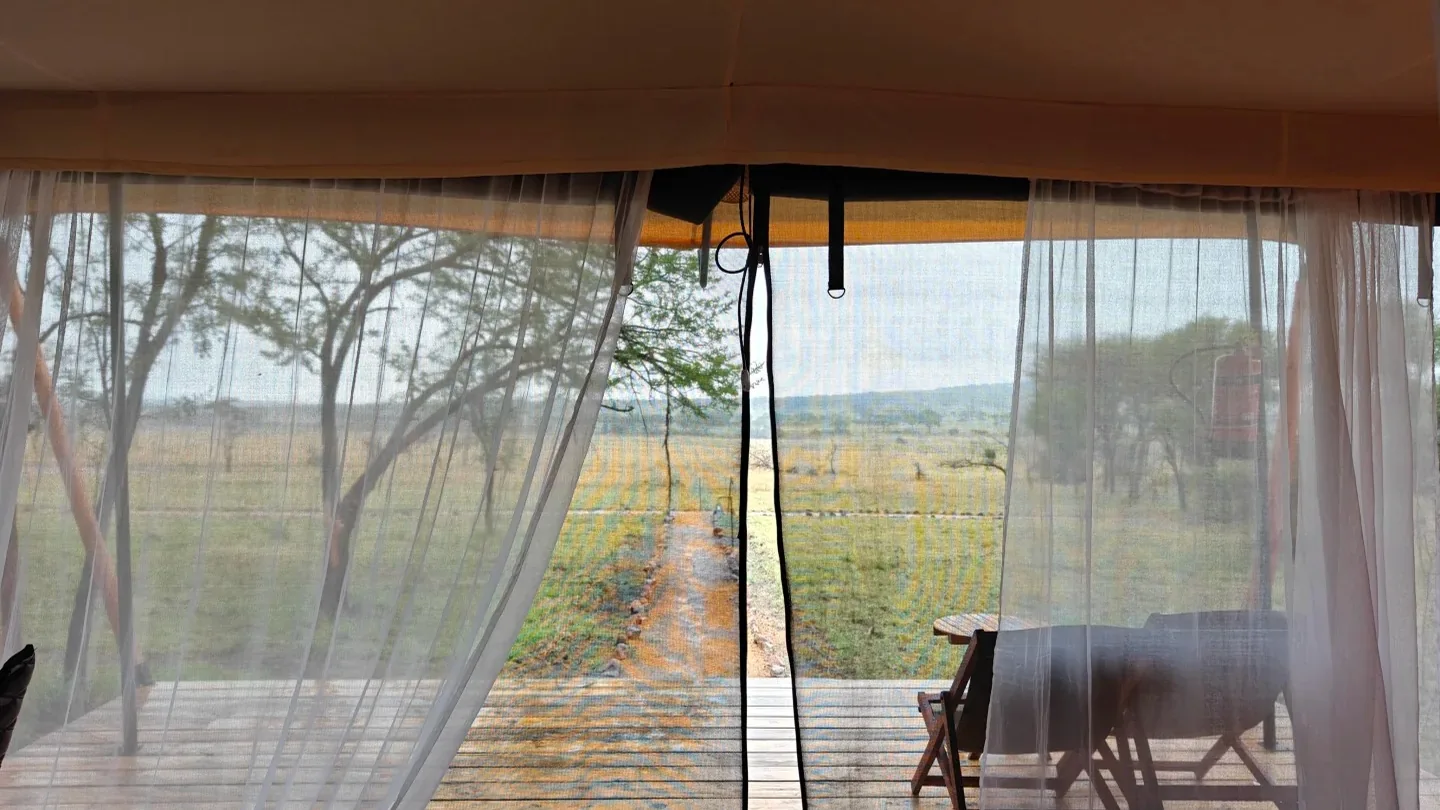
At $10,000, privacy begins with space between the bed and the horizon. The Safari Atlas
The quick answer
Around $10,000 per person, land only, buys a full luxury week: small private camps, fly-in transfers, top guides and private concessions with night drives and walking safaris the public parks don't allow. Or, spent as a couple, it funds a superb private mid-range trip for two with room to add a beach or a second region.
Nothing about it changes the wildlife – the animals are the same as on a $3,000 trip. What $10,000 buys is comfort, exclusivity, remoteness and access. The smart move at this tier is to spend on time, guiding and one or two exceptional camps, not on wall-to-wall opulence you'll stop noticing by day three.
Key facts
- Solo/luxury: about a 7-day luxury fly-in safari at $800–$1,500 per person per day.
- As a couple: a private mid-range trip for two, often with a beach or second region added.
- Unlocks: private concessions with night drives and walking safaris, remote fly-in camps, top guiding.
- The wildlife is unchanged – the money buys exclusivity, comfort and access, not more animals.
- Still on top: international flights, typically $800–$1,500, plus tips and premium extras.
- Best spent on: time, a great guide and one or two standout camps – not blanket luxury.
Three ways to spend $10,000
Unlike tighter budgets, $10,000 doesn't dictate a single shape – it offers three good ones, and the choice matters more than the number. The luxury week: spent on one person, it funds a seven-day fly-in safari at the top tier – $800 to $1,500 a day – staying in small, exclusive camps and flying between them. The couple's trip: split between two, $10,000 comfortably covers a private mid-range week for both, often with a Zanzibar or Diani beach finish. The big combination: for one person, it can stretch to a longer trip linking two ecosystems – the calving grounds and the crossings, or two countries.
Each is excellent; none is wrong. The one thing to settle first is whether this is a per-person luxury budget or a shared couple's budget, because that single fact reshapes everything downstream, and it's the question we always ask first.
See luxury fly-in safaris → Private camps and light-aircraft routes around the $10,000 mark. Check datesWhat the top tier unlocks
Above the mid-range, the extra money buys things that are genuinely unavailable lower down – and unlike the jump to plain luxury, some of them do change the wildlife experience. Private concessions and conservancies cap vehicle numbers and permit night drives that the crowded public parks forbid, plus relaxed walking safaris, so you get quieter sightings and activities you simply can't do in the Serengeti or Mara reserve proper. Remote fly-in camps reach corners most travellers never see, thinning the crowds to almost nothing. And the best guides gravitate to the top camps, which matters more to your day than any tent.
So this is the tier where spending up isn't only about comfort. If uncrowded sightings, walking safaris and reaching the wild edges are what you want, $10,000 buys a materially different trip – not just a plusher one. That's the honest case for the top tier, and it's a real one, as our budget vs luxury guide sets out.
Where the $10,000 goes
At the luxury end the split inverts from a budget trip: park fees become a small slice, and the great majority goes on premium camps and the fly-in logistics that reach them. That's worth seeing plainly, because it's also where the tier's one trap lives – a huge share of your money is buying the camp and the exclusivity, not the wildlife or even the guiding.
Roughly where a $10,000 budget goes · illustrative 7-day luxury trip
Want a $10,000 trip designed around what you value?
At this tier the design matters more than the budget. Tell us whether it's for one or two, your dates, and what you most want – exclusivity, remoteness, a beach, two ecosystems – and our safari planning team will build a costed itinerary that spends it well. No obligation.
The exclusivity trap
Here's our hill to die on at this tier: the most expensive camp is rarely the best use of a $10,000 budget, and blanket top-end luxury is the classic over-spend. Beyond a certain point you're paying for design, thread count and a name – things that impress for a night and then fade into the background while you're out watching lions. The wildlife, the light, the thrill of a sighting: identical whether your tent cost $600 or $1,800.
What genuinely elevates a trip at this budget is a great guide, enough time on the ground, and one or two exceptional camps rather than seven merely expensive ones. Our steer is to concentrate the splurge – a couple of standout nights in a private concession – and spend the rest on strong-but-sensible camps, more days, and the best guiding you can get. If you specifically want to live in wall-to-wall luxury and that's the dream, fair enough – but buy it knowing it's the comfort you're paying for, not the safari.
Solo luxury vs a couple's trip
The biggest single decision is whether $10,000 is one person's luxury budget or a couple's shared pot, because the trips look nothing alike. As a per-person luxury budget, it funds the full top-tier fly-in week – exclusive camps, private concessions, the works. As a couple's combined budget ($5,000 each), it buys a superb private mid-range week for two, usually with enough left for a Zanzibar or Diani beach add-on to turn the wildlife trip into a proper holiday.
For most couples, we'd gently argue the second is the smarter trip: the private mid-range experience captures the vast majority of the magic, and adding a beach or a second region does more for the memory than upgrading both tents to the top tier. For a milestone – a big anniversary, a honeymoon of a lifetime – pooling toward one genuinely luxurious shared week is a fair and lovely call. Either way, decide the framing first; our $5,000 guide covers the per-person mid-range half of the equation.
Browse honeymoon & luxury safaris → Private trips and standout camps for a milestone journey. See optionsFive questions to ask before you book
- Is this per person or for two? It's the decision that reshapes the whole trip – settle it first.
- What am I actually buying up here? Access and exclusivity can change the trip; plain opulence mostly doesn't.
- Is the guiding genuinely top-tier? A great guide does more for your days than a plusher tent.
- One splurge or blanket luxury? Concentrating the spend usually beats seven equally expensive nights.
- Beach or second region? As a couple, adding one often beats upgrading the camps further.
So how should you spend it?
A seven-day fly-in trip in small private camps and concessions, with night drives, walking safaris and top guides. The full top-tier experience – buy it deliberately for the access and remoteness, not just the opulence.
Our pick for most couples. A private mid-range week for two plus a beach or second region – most of the magic, and a more varied, memorable journey than upgrading both tents to the top.
Link two ecosystems or countries – calving and crossings, or a wildlife-and-gorilla trip. Best for the traveller who wants breadth and has the days; concentrate the luxury on one or two nights.
Ten thousand dollars removes the budget excuse and replaces it with a design problem – a nicer problem, but a real one. Spend it on time, guiding and a couple of unforgettable camps, and it buys a trip you'll talk about for years. Spread it thin across blanket luxury and you'll have paid a great deal for the same lions.
Costs are typical 2026 figures, per person and land only, and vary by country, season, camp standard and operator. Park fees follow official schedules current at July 2026. The budget breakdown is illustrative – confirm exact inclusions and current fees with your operator before booking.
Sources & price notes
Luxury and mid-range day-rates are typical 2026 figures that vary by operator, season and route. Park fees checked against the TANAPA tariff schedule (Serengeti, VAT included), the Ngorongoro Conservation Area Authority (conservation fee per person; crater service fee per vehicle), and the Maasai Mara schedule (Narok County). The budget split is illustrative for a seven-day luxury trip – confirm current fees and inclusions with your operator before booking.