Planning guides · When to go
Peak vs Shoulder Season: Is the Price Difference Worth It?
Peak season isn't better wildlife – it's better odds and worse crowds, at a real premium. Shoulder season sits a few weeks either side of it, and quietly hands you most of the same conditions for a good deal less. The question isn't which season is "best". It's whether the extra you pay in peak buys enough certainty to justify itself, or whether shoulder season is the smarter buy hiding in plain sight.
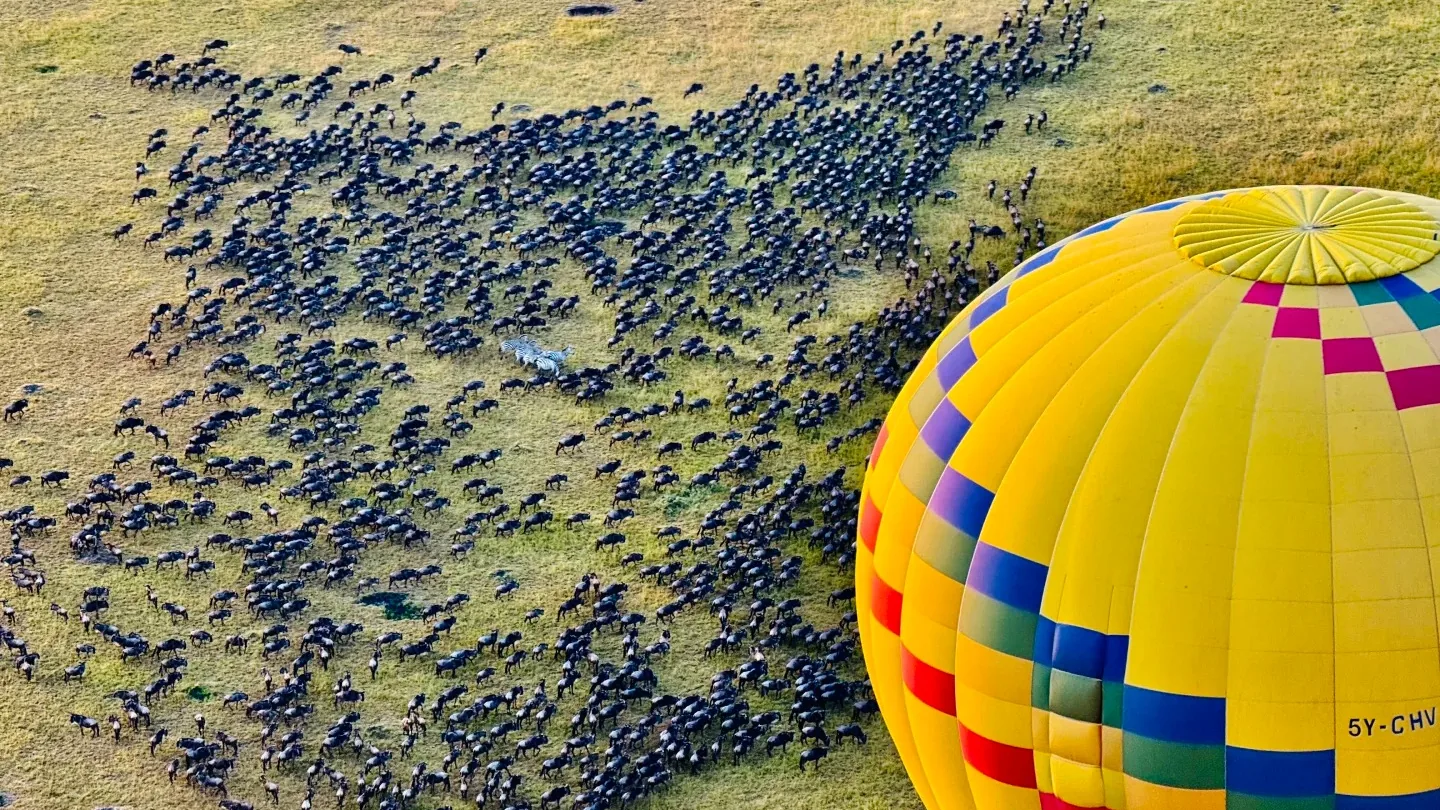
From the air, the scale of the Great Migration finally comes into view. The Safari Atlas
The quick answer
Peak season – the height of the dry season, roughly July to October in East Africa – gives the easiest game-viewing and the marquee events like the Mara crossings, but at the highest prices and the biggest crowds. Shoulder season – the weeks either side, such as June and November – typically costs 20 to 30 percent less with conditions that are still very good.
For most travellers, shoulder season is the value sweet spot: nearly all the wildlife quality, noticeably fewer people, and a real saving. Pay the peak premium only if you specifically need the marquee event or the absolute surest conditions on a single short trip.
Key facts
- Peak (East Africa): roughly July–October – dry season, the Mara crossings, easiest spotting, highest prices.
- Shoulder: the weeks either side (e.g. June, November, sometimes late Jan–Feb) – good conditions, lower prices.
- Price gap: a mid-range trip commonly runs 20–30% more in peak than in shoulder.
- Crowds: peak sightings can draw many vehicles; shoulder season is noticeably quieter.
- Kenya swing: the Maasai Mara fee drops from $200 (Jul–Dec) to $100 (Jan–Jun) per person.
- Wildlife is present year-round – peak buys ease and events, not different animals.
Peak, shoulder and low, defined
Three bands, and the labels are about demand and conditions, not hard dates. Peak is the dry-season high point when conditions are easiest and a marquee event is on – in East Africa, roughly July to October, when the bush is sparse, animals cluster at water, and the Mara River crossings happen. Shoulder is the buffer either side – June, November, and in some regions late January to February – still dry or mostly dry, still good, but off the demand peak. Low or green season is the rains, cheapest of all.
This guide is about the peak-versus-shoulder decision specifically, because that's where the money question is sharpest: the conditions are genuinely close, but the prices aren't. (If you're weighing the full rains instead, our green season guide covers that trade.) Exact months shift by country and park, so treat these as a framework, not a calendar – the detail lives in our best time to go guide.
The price gap
Here's the number that drives the decision: a comparable mid-range safari commonly costs 20 to 30 percent more in peak than in shoulder season. On a trip that might run $4,000 to $6,000 a head, that's a four-figure difference – real money that could fund extra nights, a better camp, or simply stay in your pocket. Lodge rates climb in peak, availability tightens (so you book earlier and have less choice), and in Kenya the Maasai Mara gate fee itself doubles from $100 to $200 per person between the January-to-June and July-to-December windows.
The point is that the premium is steep and specific, not vague. You're paying materially more for a few weeks of peak demand. Whether that's worth it turns entirely on what those weeks give you that the shoulder doesn't – which is a shorter list than the price suggests, as we'll see.
See shoulder season safaris → Great conditions at 20–30% below peak, fees included. Check datesWhat peak actually buys
Be precise about the upgrade, because it's narrower than the price implies. Peak season buys two genuine things. First, the surest, easiest game-viewing: at the height of the dry season the vegetation is thin and animals concentrate around shrinking water, so sightings are more frequent and less effortful – valuable on a single short trip with no room for a quiet day. Second, the marquee events: above all the Mara River crossings of the Great Migration, which are a dry-season, July-to-October phenomenon and simply don't happen at other times.
If either of those is your reason for going – you have one week and want maximum certainty, or you've flown across the world specifically for the crossings – then peak is worth its premium and the rest of this guide doesn't apply to you. That's a real and honest case. It's just a narrower one than the "peak is best" reputation suggests.
Is peak worth it for your trip, or is shoulder the smarter buy?
It depends on whether you need a specific event and how tight your dates are. Tell us your rough dates and what you most want to see, and our safari planning team will price a peak and a shoulder-season version side by side, so you can see exactly what the premium buys. No obligation.
What shoulder gives up – and doesn't
Here's our hill to die on: for most travellers, shoulder season is the smarter buy, and the peak premium is money you don't need to spend. In the shoulder weeks the conditions are still very good – largely dry, sparse enough bush, animals still reliably found – but the parks are noticeably quieter, so you share sightings with fewer vehicles, and you pay 20 to 30 percent less for the privilege. The wildlife doesn't know it's not peak; the crocodiles and lions are exactly where they'd be a fortnight later.
What you give up is a sliver of certainty and, crucially, the marquee event if your dates fall outside its window. That's the honest cost. But for a traveller who isn't laser-focused on the crossings and can accept that one drive in ten might be a touch quieter, shoulder season delivers something close to the peak experience with a smaller crowd and a smaller bill. Put the saving toward an extra night or a stronger camp and you're often better off than you'd be in peak, as our saving money on safari guide argues.
The seasons at a glance
The three bands side by side. Read the price and crowds rows against the conditions row – that gap is the whole argument for shoulder.
Peak vs shoulder vs low · the trade
| Factor | Peak | Shoulder |
|---|---|---|
| Price | Highest | 20–30% less |
| Conditions | Easiest | Still very good |
| Crowds | Busiest | Quieter |
| Marquee events | Yes (crossings) | Often just outside |
| Best for | Certainty, the crossings | Value, fewer crowds |
Who should pay for peak
Peak earns its premium for a specific few. If you're travelling specifically for the Great Migration's river crossings, they only happen in the peak window, full stop – pay it. If it's your one short safari of a lifetime and you want the surest possible game-viewing with no tolerance for a quiet drive, the extra certainty is worth buying. And if your dates are fixed to a school holiday that happens to fall in peak, you may have no choice – in which case, book early, because peak sells out first.
Everyone else – the flexible, the value-conscious, the repeat visitor, the traveller happy to trade a sliver of certainty for a quieter park and a fatter wallet – is usually better served by the shoulder. That's not a downgrade; it's a smarter allocation of the same money, and it's the recommendation we'd give most first-timers who aren't wedded to the crossings.
Read: the Great Migration month by month → Exactly when the crossings justify a peak-season trip. See the calendarFive questions to ask before you pick a season
- Do I need a marquee event? The river crossings are peak-only – if that's the goal, pay for peak.
- How much certainty do I need? One short trip with no room for a quiet drive leans peak.
- Are my dates flexible? If so, shoulder season saves 20–30% for near-identical conditions.
- How much do crowds bother me? Peak sightings can be busy; shoulder is quieter.
- What would the saving buy? An extra night or a better camp often beats a peak-season date.
So which should you book?
If you're chasing the river crossings, want the surest conditions on a single once-in-a-lifetime trip, or are locked to a holiday that falls in peak. The premium buys certainty and the marquee event – book early.
Our pick for most travellers. Near-peak conditions, noticeably fewer crowds, and 20–30% off – a saving best spent on an extra night or a stronger camp. The value sweet spot of the safari calendar.
If your must-see event happens to fall in peak, that settles it; if it doesn't, shoulder wins on value. Start from the wildlife you want and the dates you have, and the season follows.
Don't pay a peak premium out of habit. Work out whether you actually need the marquee event or the extra certainty – and if you don't, the shoulder season hands you almost the same safari for meaningfully less. For most people, most of the time, that's the trip to book.
Season windows and price gaps are typical 2026 figures and vary by region, park and year. Park fees follow official schedules current at July 2026. Confirm current rates, availability and the exact timing of seasonal events with your operator before booking.
Sources & price notes
Seasonal price gaps and conditions are typical 2026 figures that vary by region and year. The Maasai Mara seasonal fee split ($100 Jan–Jun, $200 Jul–Dec) follows the official Maasai Mara schedule (Narok County). The 20–30% peak premium is a typical mid-range figure that moves with region, camp and demand – confirm current rates and availability before booking.