Accommodation guides · Migration
Great Migration Camps Compared: Which One to Book
The single biggest mistake people make chasing the migration is booking a beautiful camp in the wrong place. The herds move a thousand kilometres a year; a fixed lodge does not. So the camp that puts you among the wildebeest in February is a day's drive from them in August. Getting a migration camp right is less about luxury than about one question – does it move, and is it where the herds will be when you are?
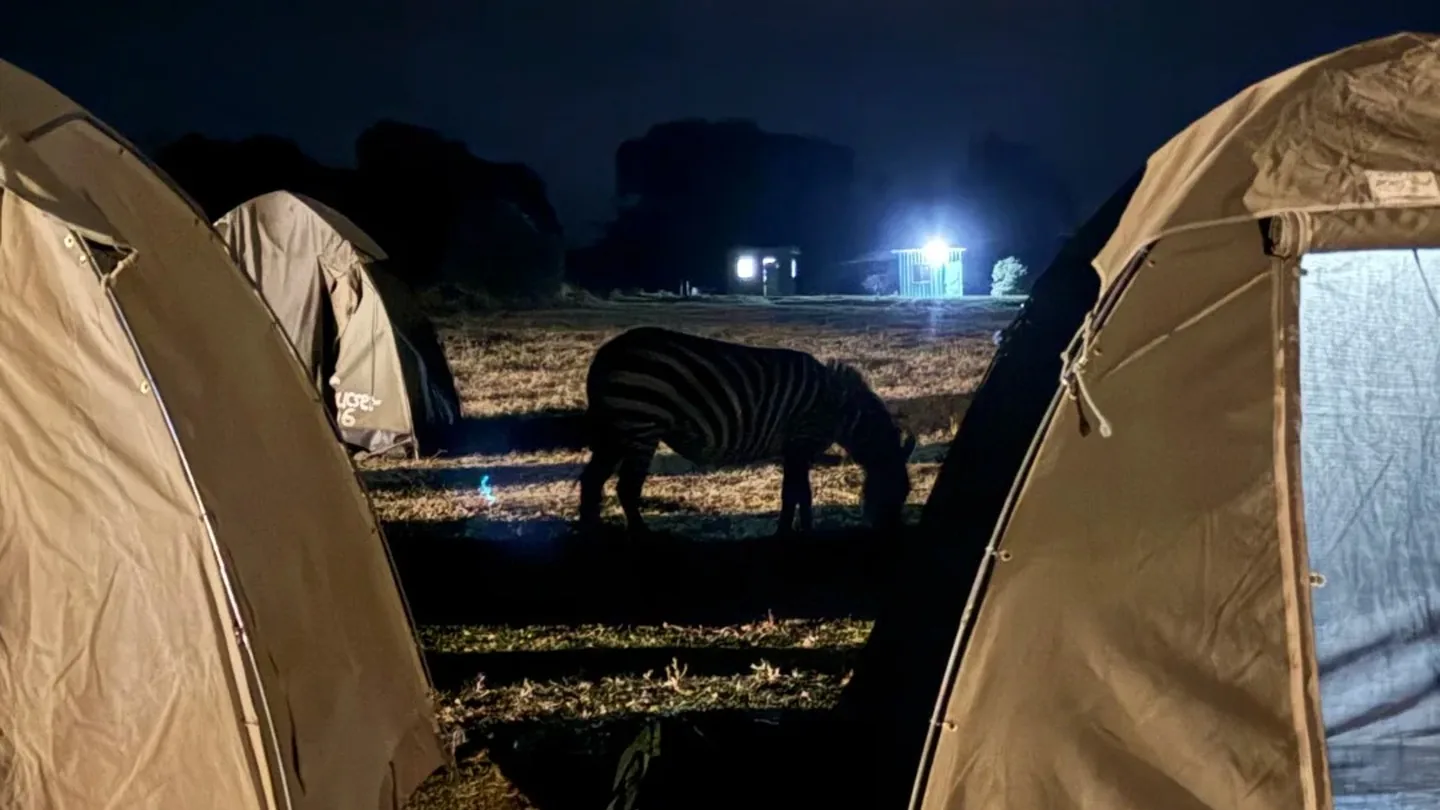
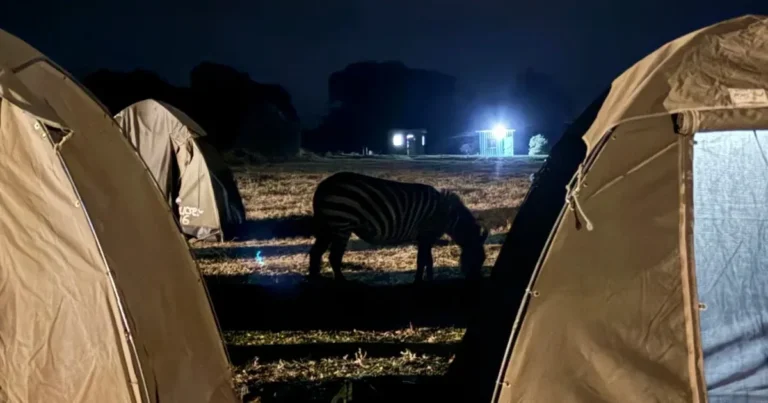
A migration camp earns its price when the plains stay active after the game-drive vehicle stops. The Safari Atlas
The quick answer
For the migration, a mobile (or seasonal) camp is usually the smart choice: it's struck and relocated through the year to follow the herds, so it's positioned near the action – the calving in the south around December to March, the river crossings in the north around July to October. A permanent lodge is more comfortable and consistent, but it stays put, so it's only near the migration when the herds happen to be passing.
So book a mobile camp in the right region for your dates, or a permanent one that's well placed for your travel window. Either way, region and timing beat luxury – a plush camp in the wrong place is a long drive from the show.
Key facts
- Mobile camps move with the herds, repositioning seasonally to stay near the action.
- Permanent lodges stay put – near the migration only when the herds are passing their location.
- South (Ndutu): calving camps, roughly December to March – newborns and predators.
- North (Kogatende): river-crossing camps, roughly July to October.
- Timings shift yearly with the rains – the herds follow no fixed calendar.
- Position over polish: a well-placed simple camp beats a luxurious one far from the herds.
Why position beats luxury
Start with the fact that governs everything: the migration is always moving, in a great year-round loop chasing the rains and fresh grass across the Serengeti–Mara ecosystem. A camp's location, therefore, is only useful relative to the herds at a given moment. The most luxurious lodge on earth is worthless for the migration if it sits three hours' drive from where the wildebeest are that week – you'll spend your mornings commuting instead of watching a crossing.
So when you choose a migration camp, you're really choosing a position in space and time, and comfort is secondary. This is the same principle as our inside vs outside the park guide, sharpened by the fact that here the target keeps moving. Get the position right – via a camp that either moves or is well placed for your dates – and even a simple tent delivers the trip; get it wrong and no amount of luxury saves it.
Mobile camps
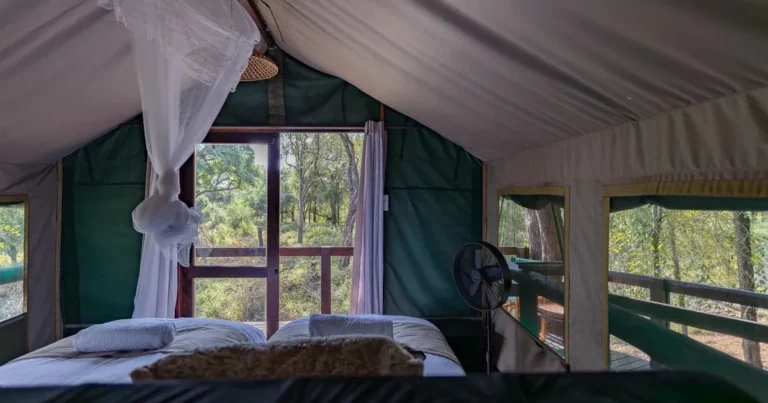
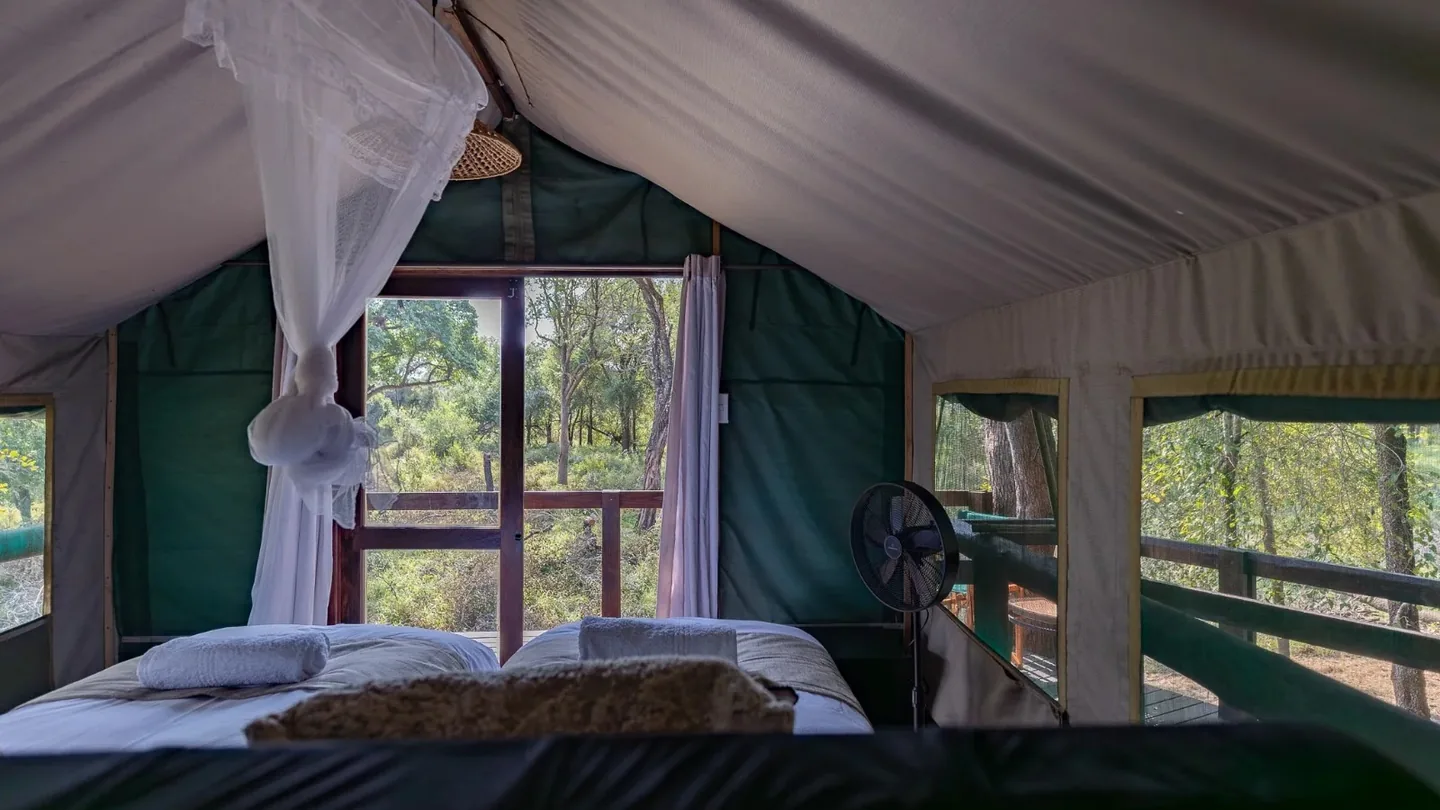
The mobile, or seasonal, camp is purpose-built for this problem. It's a lighter, semi-permanent operation that is struck and rebuilt a few times a year, migrating with the herds – down to the southern plains for calving, up to the north for the crossings – so it's always positioned near the current action. Facilities are a touch simpler than a permanent lodge (though still comfortable: proper beds, en-suite bucket showers, good food), and the footprint on the land is lower.
The payoff is placement: a good mobile camp means you wake up close to the herds and can be at a crossing or amid the calving within a short drive, catching the best light without a long commute. For a migration-focused trip, this is usually the right call – you're paying for position, which is exactly what the migration rewards. It's the same trade our accommodation guide draws between camp types, tilted toward mobility.
See mobile migration camps → Seasonal camps that reposition with the herds, by month. Check datesPermanent lodges
Permanent lodges – solid or fixed structures that stay in one place year-round – have real advantages, just not mobility. They're typically more comfortable and consistent, with fuller amenities (pools, spas, wider menus), and because they're established they can occupy prime, reliable positions such as the central Serengeti's resident-wildlife heartland. For part of the year, when the migration passes their region, a well-sited permanent lodge puts you right in the thick of it.
The limitation is obvious: a permanent lodge is only near the migration when the herds are near it. Book one in the north for August and you're perfectly placed for the crossings; book the same lodge for February and the herds are hundreds of kilometres south. So a permanent lodge works for the migration when your dates align with its location – and it's an excellent choice for a trip that mixes migration with reliable resident game, as our where to stay in the Serengeti guide details region by region.
By region and season
Whichever type you choose, the region has to match your travel month, because that's where the herds will be. In the south, around Ndutu, the calving unfolds roughly December to March – camps here (often mobile) put you among newborns and the predators cashing in. In the north, around Kogatende near the Mara River, the crossings happen roughly July to October – camps here are your base for that drama. The central Serengeti holds superb resident wildlife year-round and works as a reliable anchor whenever the migration highlight isn't your sole focus.
So the booking logic runs: fix your dates, find the herds' likely region, then choose a camp – mobile or well-placed permanent – in that region. Because the timings shift each year with the rains, a good operator books you into the camp that will be right for your specific window, not last year's. This is the same fix-dates-then-find-herds order as our migration month-by-month guide.
Want a migration camp that'll be near the herds on your dates?
The right camp depends entirely on when you travel and where the herds will be. Tell us your dates and whether you want the calving or the crossings, and our safari planning team will book you into a camp – mobile or well-placed – positioned for the action. No obligation.
Mobile vs permanent at a glance
The two camp types side by side. Read the "near the herds" row first – for the migration, it's the one that matters most.
Mobile vs permanent · for the migration
| Factor | Mobile camp | Permanent lodge |
|---|---|---|
| Near the herds | Yes, follows them | Only in season |
| Comfort | Comfortable, simpler | Fuller amenities |
| Consistency | Seasonal | Year-round |
| Feel | Adventurous, intimate | Established, polished |
| Best for | Migration-focused trips | Comfort + resident game |
Booking a migration camp
Two practicalities decide a good migration booking. First, book early: the best-positioned camps for the crossings (July to October, the north) and calving (December to March, the south) are limited and sell out a year or more ahead, so this is not a trip to leave late. Second, ask the specific question before you commit – where will this exact camp be on my dates, and how far from the herds' expected position? A reputable operator will answer plainly; a vague reply is a warning.
Because the herds follow the rains, not a calendar, no one can promise you a crossing on a given day – the migration is unpredictable by nature. What a well-chosen camp does is stack the odds: it puts you in the right region, close to where the action should be, with enough nights to give it a real chance. Manage expectations, give it a few days, and choose position over luxury, and a migration camp delivers one of the great wildlife experiences on earth. Our how far in advance to book guide covers the timing.
Browse migration safaris → Camps and routes positioned for the calving and the crossings. See optionsFive questions to ask before you book
- Does the camp move, or is it fixed? A mobile camp follows the herds; a lodge only works in its season.
- Where will it be on my dates? Ask the specific position, not just the park – and the drive to the herds.
- Calving or crossings? South (Dec–Mar) for calving; north (Jul–Oct) for the river crossings.
- Have I booked early enough? The best-placed camps sell out a year or more ahead.
- Am I choosing position over polish? A well-placed simple camp beats a luxurious one far from the action.
So which should you book?
For a migration-focused trip. It repositions with the herds, so you wake up near the calving or the crossings and reach the action without a long drive. Position is what the migration rewards.
When your dates align with its region, or you want more comfort and resident game alongside the migration. Great in season – just make sure the herds will be near it on your dates.
Pair a mobile camp near the herds with a comfortable base for resident game, fly between regions, and reserve well ahead. The surest way to be in the right place at the right time.
Judge a migration camp by where it puts you, not how plush it is. Choose a mobile camp for position or a permanent one whose region matches your dates, ask exactly where it'll be, and book early. Do that and you give yourself the best possible odds of witnessing the greatest show on the plains.
Camp types, regional windows and migration timings are typical 2026 patterns and shift year to year with the rains – no crossing can be guaranteed on a given date. Confirm the exact position of any camp for your dates, and the likely position of the herds, with your operator before booking.
Sources & notes
Regional migration windows (south/Ndutu calving Dec-Mar; north/Kogatende crossings Jul-Oct) are indicative and shift each year with the rains. Timings shift each year with the rains and are indicative, not fixed – confirm the exact position of any camp for your dates and the herds' likely location with your operator before booking.