Planning guides · When to go
Masai Mara in August: The Crossings, the Crowds and the Cost
August is the month everyone means when they picture the Masai Mara: the wildebeest piling up on the riverbank, the plunge into the crocodile-filled water, the dust and the drama. It is the peak of the Great Migration in Kenya, and it is spectacular. It's also the most expensive, most crowded month of the year, with the gate fee at its highest. August is the Mara at full volume – worth it, if you go in with clear eyes.
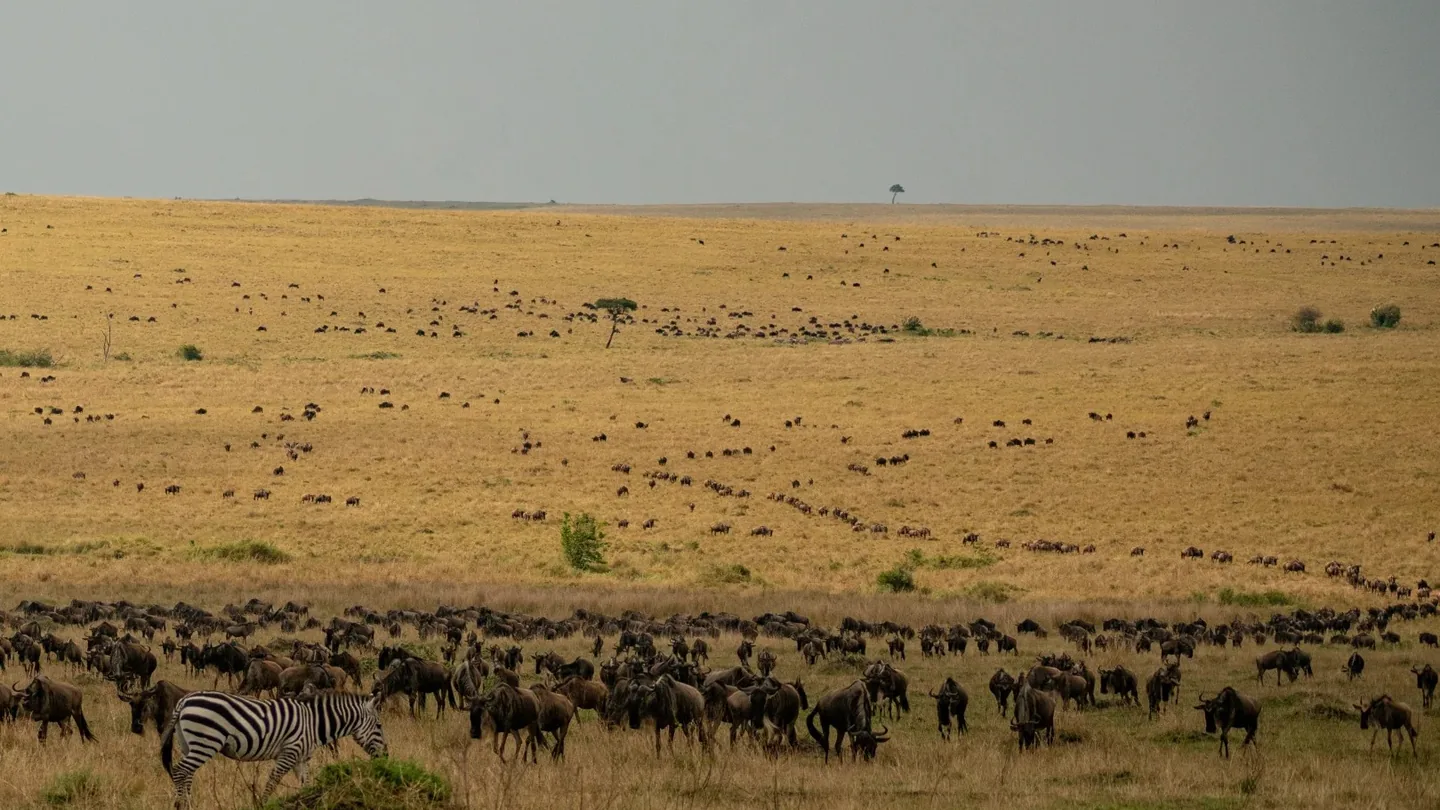
In August, the Mara's open plains reveal the migration at its most immense. The Safari Atlas
The quick answer
August is peak migration in the Masai Mara: the herds have crossed from the Serengeti and the Mara River crossings are at their most frequent, alongside superb dry-season big-cat action. It's the best month to witness the crossings – and the priciest and busiest, with the non-resident gate fee at its $200 per person high-season rate.
Go in August if the crossings are your dream and you'll book early and pay peak rates. If you want the Mara's wildlife without the crowds and cost, the shoulder months or a private conservancy alongside the reserve are the smarter play.
Key facts
- Migration: the herds are in the Mara; river crossings are at their peak frequency in August.
- Weather: dry season – sunny, cool mornings, sparse bush and excellent all-round game viewing.
- Park fee: $200 per non-resident adult (Jul–Dec high season), each ticket valid 12 hours.
- Crowds: the busiest month – crossing points can draw many vehicles at once.
- Cost: peak pricing; book the best camps a year or more in advance.
- Conservancies bordering the reserve cap vehicle numbers and offer a quieter alternative base.
The crossings in August
August is the crossings' headline month, and it's what draws travellers from every corner of the world. Having moved up from the Serengeti, the wildebeest and zebra mass on the southern bank of the Mara River and, in unpredictable surges, pour across – a churning, dust-and-water spectacle with crocodiles waiting in the current. When it happens in front of you, it's one of the most visceral wildlife experiences on earth, and August offers the best odds of the year of seeing it.
Two honest caveats. Crossings are unpredictable: the herds cross on their own schedule, sometimes waiting days, so a few nights in the right place gives you the best chance rather than a guarantee. And to be near the river you need to base in the right part of the reserve or a bordering conservancy – the crossing points are specific, not the whole Mara. Give it time and position, and August delivers, as our Serengeti vs Maasai Mara guide explains for the crossing story.
Weather and wildlife
Beyond the crossings, August is simply a superb month to be in the Mara. It's the dry season: sunny days, cool mornings that call for a fleece on the dawn drive, little rain, and sparse vegetation that makes wildlife easy to spot. Even setting the migration aside, the Mara's resident big cats – its famous lions, cheetahs and leopards – are at their most visible, so the game viewing is excellent all round, not just at the river.
That's worth remembering if you don't catch a crossing on a given day: the Mara in August is packed with wildlife regardless, so a "quiet" morning here would be a highlight anywhere else. The dry-season conditions are the same easy, reliable ones that make July across the border so good – you're not gambling on weather, only on the herds' timing at the water.
See August Masai Mara safaris → Crossing-season trips positioned near the Mara River. Check datesCost and the $200 fee
August is peak, and the price reflects it – starting with the gate. The Maasai Mara's non-resident entry fee rises to $200 per person in the July-to-December high season (up from $100 in the first half of the year), and each ticket is valid for just 12 hours, so on a multi-day trip the fees alone become a substantial line. Lodge and camp rates are at their annual highest too, and availability is tightest, so August is materially more expensive than the shoulder months for the same trip.
That premium is the price of the spectacle, and if the crossings are your reason for coming, it's money well spent. But it is a real premium: budget for the $200 daily fee per person, expect peak lodge pricing, and confirm that fees are included in any quote – a "from" price that leaves them out understates an August trip badly, as our hidden costs guide warns. If value matters more than the crossings, the maths points to other months.
Want an August Mara trip positioned for the crossings?
August books out early and the crossing points are specific. Tell us your August dates and budget, and our safari planning team will build a costed itinerary positioned near the river – reserve or conservancy – with the $200 fees included, and flag what's still available. No obligation.
The crowds – and the fix
The uncomfortable truth about August is the traffic. The Mara's popularity peaks with the migration, and a river crossing can draw a long line of vehicles jostling for position – a scene that, for some, dents the wilderness magic they came for. In the main reserve at peak crossing time, you will not be alone at the good sightings, and it's fairer to expect that than to be disappointed by it.
The best fix is where you base. Kenya's private conservancies bordering the Mara – on land the wildlife moves onto freely – cap vehicle numbers at sightings and allow activities the reserve doesn't, so you can watch game in relative solitude and still drive into the main reserve for the crossings by day. Staying in a conservancy and visiting the river, rather than staying on top of the crossing points, is how experienced travellers get August's drama without August's crowds, as our inside vs outside the park guide covers.
The August trade at a glance
What August gives, and what it costs. The crossings sit on one side of the scale; the fees and crowds on the other.
Masai Mara in August · the trade
Booking August
August is the hardest month in the Mara to book late, so plan a year or more ahead for the best-located camps – especially those near the crossing points and the top conservancies, which fill first. Leaving it late in August usually means paying more for worse positions, or missing out entirely. If your dates are fixed to August, treat early booking as non-negotiable.
Give the crossings enough time, too: because they're unpredictable, a single night at the river is a gamble, while three or four nights well positioned turns the odds firmly in your favour. And decide up front whether you'll base in the reserve for proximity or a conservancy for peace – that choice shapes both your experience and your budget. Our how far in advance to book guide covers the timing for peak-season trips like this.
Browse Mara conservancy camps → Capped-vehicle bases for the crossings without the crowds. See optionsFive questions to ask before booking August
- Are the crossings my priority? If yes, August is the month – and position near the river matters.
- Am I ready for the $200 fee and peak prices? Budget the daily gate fee per person on top of camps.
- Reserve or conservancy? The reserve for proximity to crossings; a conservancy for fewer crowds.
- How many nights at the river? Three or four beats one – crossings run on the herds' schedule.
- Have I booked early enough? The best August camps go a year or more ahead.
So should you go in August?
August is the best month to witness the Mara River crossings, with excellent dry-season game viewing around them. Book early, base near the river, give it enough nights, and pay the peak premium gladly.
If you want the Mara's wildlife without the peak fee and the traffic, the green and shoulder months deliver superb resident game for far less – you just miss the crossings. A fair trade for many travellers.
Stay in a private conservancy bordering the Mara for capped-vehicle peace, and drive into the reserve for the crossings. The way to have August's drama without living in August's crowds.
August is the Masai Mara at its most thrilling and its most demanding – the crossings are unmatched, but so are the fees, the prices and the crowds. If the river drama is what you came for, it's worth all of it; base in a conservancy, book early, and give the herds time to do their thing.
Migration timing, weather and prices are typical 2026 patterns and shift year to year with the rains. Park fees follow official schedules current at July 2026. No crossing can be guaranteed on a given date – confirm current conditions, camp positions and rates with your operator before booking.
Sources & price notes
The crossings peak in August but run on the herds' schedule and shift yearly; August positioning and peak pricing are indicative, not fixed. The Maasai Mara high-season fee ($200 per non-resident adult, Jul–Dec, valid 12 hours) follows the official Maasai Mara schedule (Narok County). Prices move with camp and demand – confirm current rates and availability before booking.