Planning guides · Itineraries
How to Build an African Safari Itinerary
A great safari itinerary isn't a list of famous parks strung together – it's a sequence that respects how far apart they are and how little time you really have. Most first drafts try to see too much and end up mostly in transit. The skill is in what you leave out: fewer places, more nights, and a route that flows in one direction rather than doubling back. Build it in the right order and it almost designs itself.
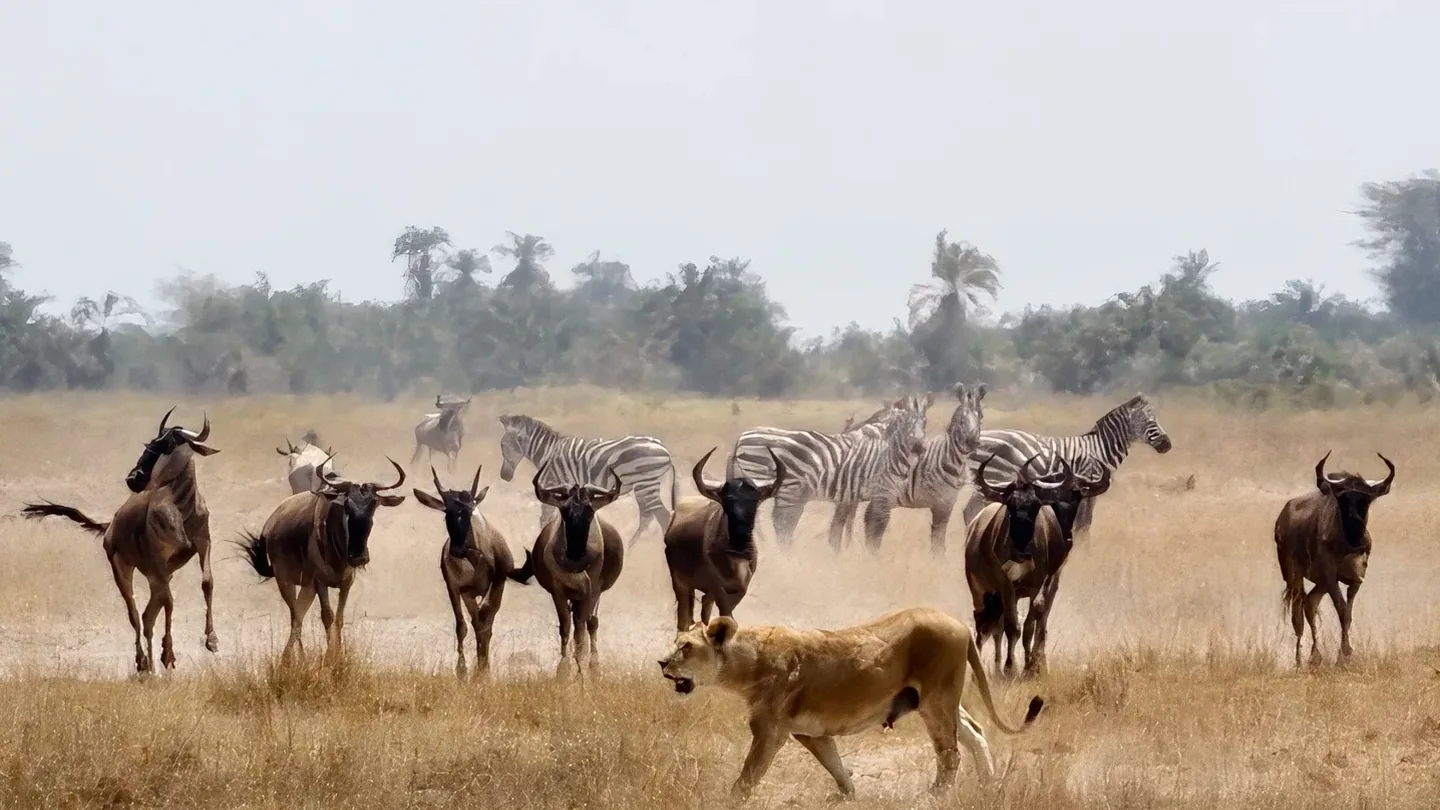
A good itinerary connects moments like this without turning every day into a transfer. The Safari Atlas
The quick answer
Build it in this order: fix your nights (strip out the flying days), choose the destination and season, then pick two or three parks – not five – and sequence them to flow in one direction, usually saving the headline park for last. Set the pace (more nights in fewer places beats a park-a-day dash), then match transfers (drive short legs, fly long ones) and camps (location first) to the route.
The commonest mistake is cramming in too many parks. A tight, well-sequenced route through two or three areas, with real time in each, beats a frantic tour of five every time.
Key facts
- Start from nights, not days: subtract international-flight days – a "7-day" trip is often 5 nights in camp.
- Fewer parks, more nights: 2–3 areas done well beats 5 in a rush – each park adds fees and transfers.
- Sequence one way: a route that flows in a single direction avoids backtracking and wasted hours.
- Save the best for last: ending on the headline park sends you home on a high.
- Match transport to distance: drive short scenic legs, fly long or rough ones.
- Location before luxury: a well-placed camp does more for the trip than a plusher, worse-sited one.
The six-step framework
Almost every good itinerary is built in the same order. Work through these six steps in sequence – each one narrows the next – and a coherent route falls out the other end, rather than the tangle you get from starting with a wish-list of parks.
Fix your nights on the ground
Take the days you can be away and subtract the international-flight days. That's your real budget of nights in camp – usually fewer than the brochure "days" suggest.
Choose the destination and season
Match the country and month to what you most want to see – the migration, gorillas, a malaria-free family trip. Season often decides the destination for you.
Pick two or three parks, not five
Choose a small set of complementary areas – different habitats, the headline wildlife – and resist adding a fourth or fifth just because it's famous.
Sequence them to flow one way
Order the parks so the route runs in a single direction with no backtracking, and save the headline park for the end.
Set the pace
Give each park enough nights to settle in – two minimum in the headline park. Fewer places with more time beats a park-a-day sprint.
Match transfers and camps
Drive the short, scenic legs and fly the long or rough ones; then choose camps by location first, luxury second.
Steps 1–2: nights and destination
Everything starts with an honest count of nights on the ground. A brochure "7-day safari" often means five nights of actual game viewing once the long-haul flights are subtracted, and even internal transfers eat time. So begin by working out how many nights you truly have in camp – that single number caps how much you can sensibly include, and it's why our how many days on safari guide is the natural first read before this one.
Next, fix the destination and season together, because they're entangled. What you most want to see – the Mara crossings, the calving, gorillas, a malaria-free family trip – points to both a country and a time of year, and often the month you can travel decides the destination for you. Settle these two before touching the map: the wrong season in the right country can mean a day's drive from the action, as our best destinations and best time to go pillars both stress.
Steps 3–4: parks and sequence
Now the map – and here's where discipline pays. Pick two or three parks, not five. Each additional reserve brings a fresh set of per-person gate fees, another transfer, and often another flight, and it steals nights from the places you'll remember. Choose a small set that complement each other: different habitats, and the headline wildlife you came for. In Tanzania that's Tarangire, Ngorongoro and the Serengeti; in Kenya, Amboseli, Nakuru and the Mara.
Then sequence them to flow in one direction. A route that runs as a loop or a line – never doubling back – wastes no hours retracing ground, and the classic move is to save the headline park for last, so the trip builds to a climax and sends you home on a high rather than winding down. Front-load the supporting parks; end on the star. This shape underpins the tried routes in our 7-day Kenya itinerary.
Want your itinerary built around your nights and priorities?
The best route depends on your time, season and what you most want to see. Tell us how many nights you have, your dates and your priorities, and our safari planning team will design a sequenced itinerary – parks, pace, transfers and camps – and cost it. No obligation.
Steps 5–6: pace and logistics
Pace is where good itineraries and rushed ones part ways. Give each park enough nights to settle in and absorb a slow drive – two minimum in the headline park, and resist the single-night stopovers that mean you spend more time packing than watching wildlife. Our steer, and a hill we'll die on: a slower route through fewer parks, with three or four nights in the best ones, beats a park-a-day dash almost every time. The itch to "see it all" is the enemy of a good trip.
Finally, match the logistics to the route. Drive the short, scenic transfers where the road is part of the experience, and fly the long or rough legs where a road day would cost you a game drive – the trade our fly-in vs driving guide weighs. Then choose your camps by location first: a well-placed simple camp deep in the reserve beats a plush one an hour from the gate, because location is time and time is wildlife, as our inside vs outside the park guide argues.
A route that flows
Here's the shape of a well-built itinerary versus a badly-built one – same region, same length, very different trip. The good route flows one way and ends on the star; the bad one zig-zags and burns days in transit.
A route that flows vs one that backtracks
The mistakes to avoid
Three errors sink most home-made itineraries. The first and biggest is cramming in too many parks – the "we've come all this way, let's see everything" trap that leaves you exhausted and mostly on the move. The second is miscounting the days, planning as if the flying days were game-viewing days and ending up with a rushed, over-stuffed schedule. The third is booking on price or luxury before location, ending up in a lovely camp that's an hour from the wildlife.
The fix for all three is the same discipline: fewer places, honest night-counting, and location before luxury. If you build the route around those, and lean on the tried single-country templates rather than inventing a five-park epic, you'll have an itinerary that flows – and time actually spent with the animals rather than getting to them. When in doubt, cut a park and add a night.
Browse ready-made itineraries by length → Well-sequenced 5, 7 and 10-night routes to adapt to your trip. See optionsFive questions to ask as you build
- How many nights, really? Strip out the flying days before you plan anything else.
- Am I trying to see too much? Two or three parks done well beats five in a rush – cut, don't add.
- Does the route flow one way? Avoid backtracking; save the headline park for the finale.
- Is the pace humane? Two nights minimum in the star park; skip single-night stopovers.
- Are the camps well located? Choose position over polish – location is game-drive time.
So how should you build yours?
For most first safaris. Two or three complementary parks in one country, sequenced one way, headline park last – the classic Kenya or Tanzania route. The simplest route to get right.
For 10+ nights with the budget for it. Add a beach, a second ecosystem, or a second country – but only with intent, and with flights on the long legs so the extra days are spent well.
For repeat visitors, photographers and anyone who values depth. Fewer parks, more nights in each, following the wildlife rather than the checklist. Often the most rewarding shape of all.
Build from your nights, not your wish-list; choose fewer parks and give them more time; let the route flow one way to a finale. Do that and the itinerary stops being a logistics puzzle and becomes a trip. Next in your planning: choosing the operator who'll turn the route into a booked, costed reality.
Route-building guidance is typical 2026 best practice and varies by destination, season and budget. Park fees, transfer times and camp locations differ widely. Confirm the specifics of any itinerary – nights, transfers, fees and inclusions – with your operator before booking.
Sources & notes
The fewer-parks-more-nights rule, one-directional sequencing, and location-before-luxury guidance are standard itinerary-building principles. Specific routes, fees and transfer times vary by destination and season – confirm the details of any itinerary with your operator before booking.