Planning guides · Itineraries
7-Day vs 10-Day Tanzania Safari: Which Is Worth It?
The real question isn't seven days or ten. It's what you'd do with the extra three. A well-built seven-day northern-circuit safari already sees the Serengeti, the Ngorongoro Crater and the Big Five – so the ten-day version isn't about seeing more parks by default. It's about buying depth, a beach, or a wilder corner most people never reach.
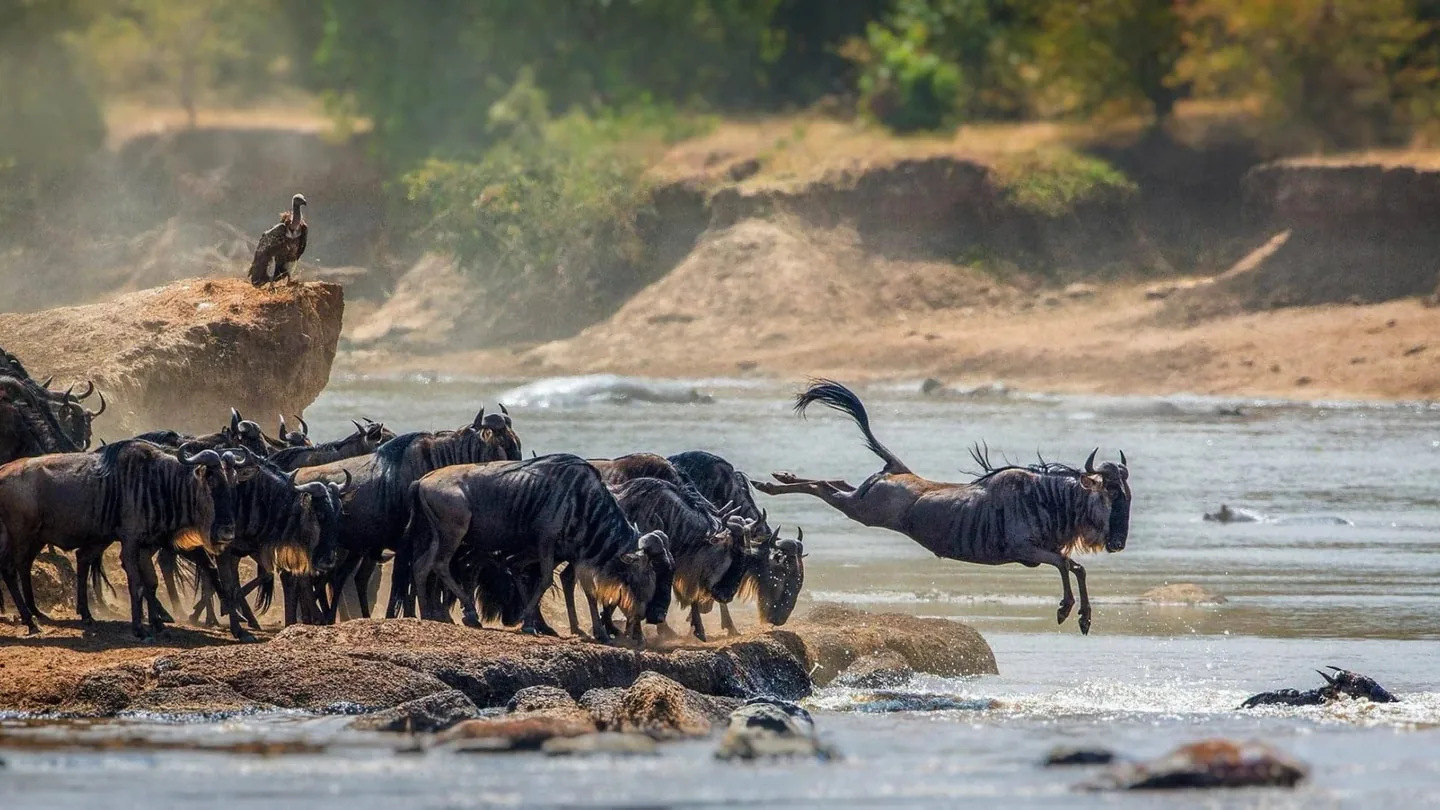
A longer itinerary buys patience—the chance to wait for the crossing instead of racing the clock. The Safari Atlas
The quick answer
Seven days is the sweet spot for most first-timers: Tarangire, the Ngorongoro Crater and three nights in the Serengeti, enough for the Big Five and real time on the plains without feeling rushed. Ten days is worth it if you'll use the extra time deliberately – more Serengeti, a Zanzibar beach finish, or a flight to the wild southern circuit – and the per-day rate actually drops a little as fixed costs spread out.
If the extra three days would just mean more of the same parks at a slower pace and you're on a tight budget, seven is plenty. If you've come this far and want to go deeper, ten rarely disappoints.
Key facts
- 7 days: the classic northern circuit – Tarangire, Ngorongoro Crater and 3 nights in the Serengeti; enough for the Big Five.
- 10 days: the same core plus 3 nights of either deeper Serengeti, a Zanzibar beach, or the wild southern circuit.
- Typical cost: about $4,000–$6,000 (7 days) and $6,000–$8,000 (10 days) per person, mid-range.
- Per-day rate falls with length: 10 days usually costs only about 35–40% more than 7, not 43%.
- Season matters: extra Serengeti nights pay off most in calving (Jan–Mar) and crossing (Jul–Sep) seasons.
What does a 7-day Tanzania safari look like?
The classic seven-day northern circuit is popular because it works. The most common shape is one night in Tarangire, one at Lake Manyara or the Ngorongoro highlands, one on the crater rim with a full crater-floor day, and three nights in the Serengeti. Some operators drop Manyara to add a Serengeti night, which we'd usually endorse.
That routing hits three distinct ecosystems – Tarangire's baobabs and elephant herds, the Ngorongoro Crater's dense concentration of big game, and the endless Serengeti – with enough game drives to realistically see all of the Big Five and settle into the rhythm of a place rather than just passing through. Seven days consistently delivers the best satisfaction-to-cost ratio: long enough for variety and depth, short enough to hold your energy and your budget.
Where seven days runs thin is margin. Lose a morning to a flat tyre or a slow border of weather and there's little slack to absorb it, and a single big Serengeti region is really all you'll cover well.
7-day northern circuit
3 parks, Big Five
Tarangire · Ngorongoro Crater · 3 nights Serengeti. The efficient classic.
10-day safari
4–5 regions
Everything above, plus depth, a beach, or the southern circuit.
What do the extra 3 days actually buy?
Ten days doesn't just stretch the same trip. It opens three genuinely different directions, and picking the right one matters more than the extra nights themselves.
Go deeper in the Serengeti. The most wildlife-rich use of the time: add nights in a second Serengeti region – Ndutu in the south for the calving season, or Kogatende in the north for the Mara River crossings – so you follow the migration instead of hoping it's near your one camp. This is the photographer's and repeat-visitor's choice.
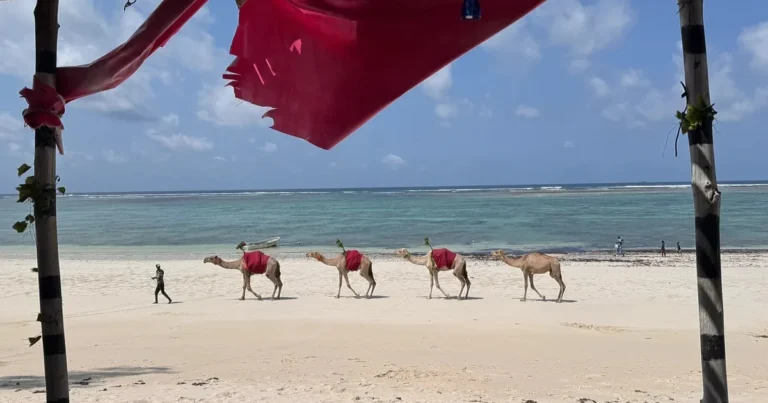
Add Zanzibar. Fly from the Serengeti to the coast for three nights of beach to decompress after the early starts. It turns a wildlife trip into a proper holiday, which is exactly right for honeymooners and families, and completely beside the point if you came purely for animals.
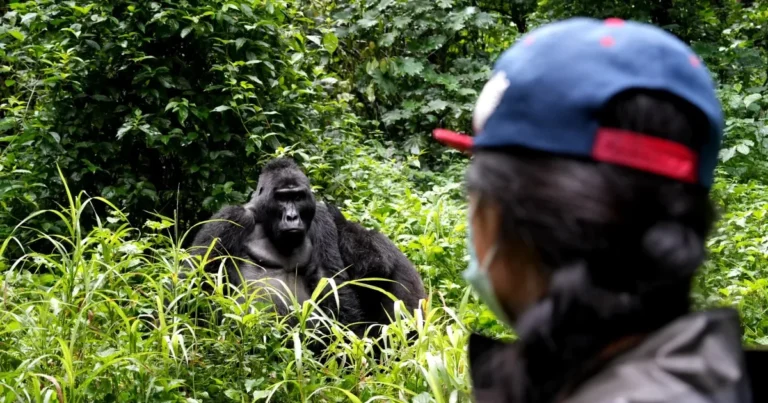
Fly south. Trade a slice of the famous north for the remote southern circuit – Ruaha or Nyerere – where the crowds thin to almost nothing and you've a real chance at wild dog. Wilder, quieter, and not the right first-safari move for everyone.
Browse 10-day itineraries → Deeper Serengeti, Zanzibar add-ons, and southern-circuit routes. See options
The two itineraries side by side
Here's how the nights typically fall. The seven-day route front-loads the Serengeti; the ten-day version keeps that core and spends the extra time on whichever direction you choose.
Where the nights go · typical mid-range routing
How much more does a 10-day safari cost?
Longer costs more in total but less per day, and that surprises people. At the mid-range level, expect very roughly $600 to $900 per person per day, so a seven-day trip lands around $4,000–$6,000 and a ten-day around $6,000–$8,000 – ranges that swing widely with season, camp standard, and whether internal flights are included.
The reason the per-day figure drops is economy of scale. Fixed costs – vehicle prep, fly-in transfers, arrival briefings, the first and last travel days – are spread across more nights, so a ten-day safari typically works out only about 35 to 40 percent more than a seven-day one, not the ~43 percent a straight day-count would suggest. You're buying the extra days at a slight discount.
Two lines to confirm in writing before comparing quotes: whether park fees are included (they're substantial in Tanzania), and whether any internal flights – common on the ten-day routes, especially Serengeti-to-Zanzibar – are in the price or bolted on after.
Want the real number for your dates?
Tell us your rough dates, budget and which direction tempts you – deeper Serengeti, Zanzibar, or the wild south. Our safari planning team will send back a costed seven-day and ten-day version so you can compare like for like. No obligation.
Does the season change the answer?
Whether the extra days are worth it depends partly on when you go, because the migration rewards depth unevenly through the year.
In calving season, January to March, the action concentrates on the southern Serengeti's Ndutu plains – a ten-day trip that parks you there for extra nights pays off in predator drama a seven-day loop can miss. During the July-to-September crossings, the herds are up north at Kogatende, and the extra nights let you wait out a river crossing instead of gambling everything on one morning. Outside those peaks, a well-run seven-day safari captures the highlights just fine, and the case for ten leans more on Zanzibar or the southern circuit than on the wildlife itself.
Who should add the extra days?
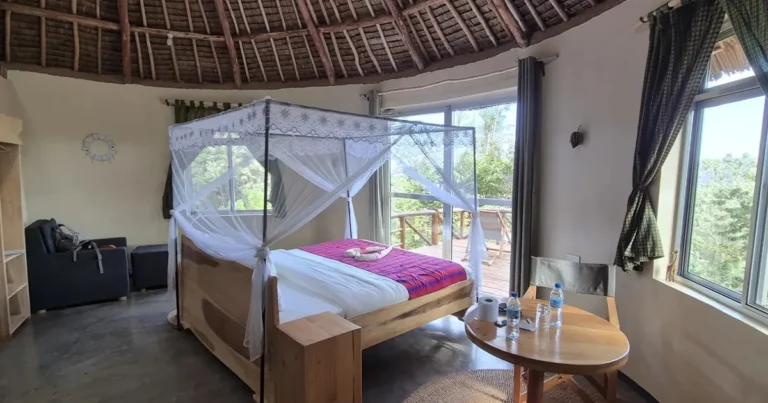
Here's our hill to die on: for a first-timer on a fixed budget who mainly wants to see the Big Five and the Serengeti, seven days is not a compromise – it's the right answer, and the money saved is better spent on a better camp than on three more days of the same. The extra nights earn their keep for photographers, repeat visitors, migration chasers, and anyone adding a beach or the south. If that's you, ten days rarely disappoints. If it isn't, don't let a round number talk you into it.
Talk to a Tanzania specialist → Operators who'll build both versions around your dates and budget. Get a proposalFive questions to ask before you decide
- What would the extra three days actually be? Deeper Serengeti, a beach, or the south are three different trips. If you can't name it, you probably don't need the days.
- Are park fees and internal flights included? Get both in writing – they're the lines that make two quotes look artificially far apart.
- Which season am I travelling in? Calving and crossing seasons reward extra Serengeti nights far more than the quieter months do.
- Is the priority wildlife, or a rounded holiday? Wildlife points to deeper Serengeti; a rounded holiday points to Zanzibar.
- Would the money be better spent on camp quality? Sometimes a better camp for seven days beats a plainer one for ten.
So which should you book?
If it's your first safari, the budget is fixed, and the Big Five plus real Serengeti time is the goal. Efficient, complete, and easier on both energy and wallet. Spend the savings on a better camp.
If you'll use the extra time with intent – deeper Serengeti for the migration, or the wild southern circuit. Better per-day value, and the depth photographers and repeat visitors are really after.
If you want a rounded trip, not just a wildlife sprint. Seven days on the northern circuit, then fly to Zanzibar for three – ideal for honeymooners and families winding down after the early mornings.
Both are good trips. The seven-day is the efficient classic; the ten-day is the one you build around a specific reason. Name the reason first, and the choice makes itself.
Itinerary shapes and price ranges are typical mid-range figures for planning only; actual routing, inclusions and cost vary by operator, season and camp standard. Confirm exact nights, park fees and internal flights with your operator before booking.