Planning guides · First safari
What Actually Happens on a Typical Safari Day?
Forget the idea of driving around all day hoping to spot something. A safari day has a shape, and it's built around the animals, not your watch. The wildlife is active in the cool hours at each end of the day and dozes through the heat in the middle – so your day does the same. Two drives, a long lazy gap, and a rhythm that turns out to be one of the trip's quiet pleasures.
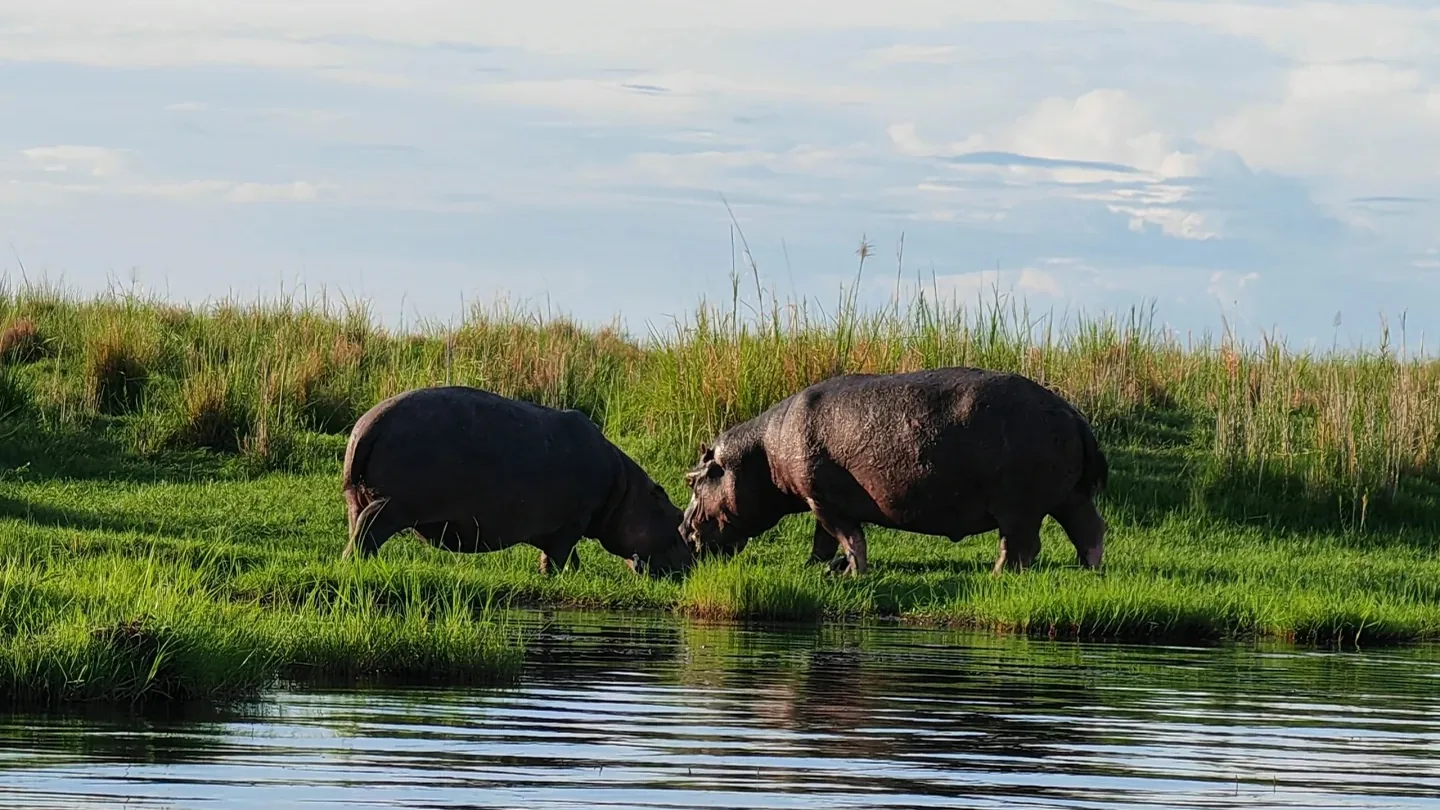
A safari day is built around the animals' rhythm, with long quiet stretches between the moments that matter. The Safari Atlas
The quick answer
A typical safari day runs on two game drives. You're woken before dawn for a morning drive from around 6:00 to 9:00am, when predators are still active, then return for a big breakfast. The middle of the day – roughly 11:00am to 3:00pm – is downtime at camp while the animals rest in the shade. An afternoon drive from about 3:30 to 6:30pm catches the second burst of activity and the sunset, often with a drink out on the plains.
The exact clock shifts by park and season, but the pattern – cool hours out, hot hours in – holds almost everywhere. You are not in the vehicle all day, and that surprises most first-timers pleasantly.
Key facts
- Two drives a day: a dawn drive (about 6:00–9:00am) and an afternoon drive (about 3:30–6:30pm).
- Early start: wake-up is often 5:15–5:45am, because the best light and activity come first.
- Midday is downtime: roughly 11:00am–3:00pm at camp for lunch, a rest or the pool.
- Park hours: most reserves bar driving before 6:00am and require you off the roads by dark, around 6:30–7:00pm.
- Full-day option: you can swap two short drives for one long drive (about 10:00am–4:00pm) with a packed lunch.
- Night drives and walks: night drives are only allowed in private conservancies and some concessions; walking safaris run inside some parks (e.g. the Serengeti) as booked, ranger-led activities, and freely in conservancies.
Why the day has this shape
Everything about the routine follows the animals. Big cats and other predators hunt in the cool of early morning and late afternoon, then lie up in the shade through the heat of the day. Get out at first light and you catch lions still on the move, a leopard heading for cover, the plains busy before the sun forces everyone into the shadows. Sit at camp at 6:00am and you miss the best hour of the day.
Park regulations reinforce it. Most national parks don't let vehicles onto the roads before 6:00am and require you to be off them by dark, which in practice means back by about 6:30 or 7:00pm. So the day is bracketed by the light and by the rules, and the long midday gap isn't laziness – it's when there's genuinely least to see. Understanding this shape is half of knowing what to expect on a first safari; the rest is in our guide to planning a first safari.
Before dawn and the morning drive
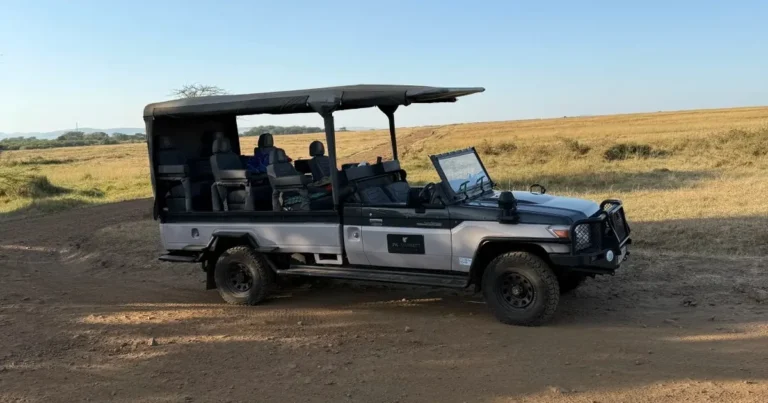
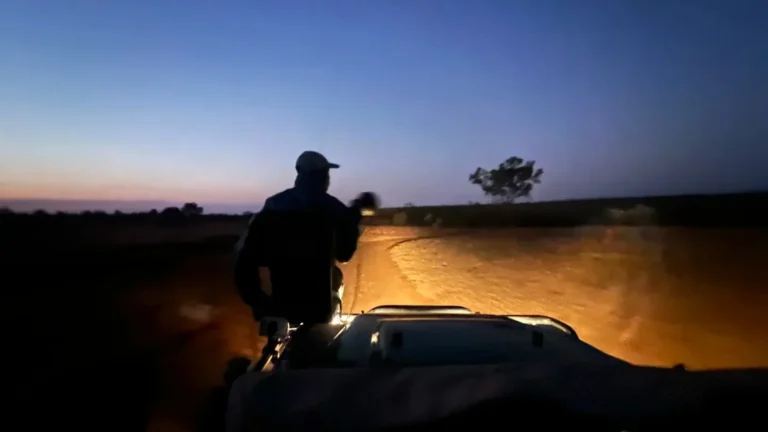
The wake-up call is early – often a soft knock or a radio crackle at around 5:15 to 5:45am, sometimes with coffee and a biscuit brought to your tent. You'll want a fleece or jacket: the open vehicle is genuinely cold at dawn, even when the afternoon will hit thirty degrees. You roll out of camp as the sky is greying and the first drive runs roughly 6:00 to 9:00am.
This is prime time. The air is cool, the light is low and golden, and the predators are still working. Your guide reads tracks in the dust, listens for alarm calls, and follows the morning's story across the plains. Somewhere in there you'll often stop for a flask of coffee on the bonnet as the sun clears the horizon – a small ritual that people remember long after the individual sightings blur. Then it's back to camp, hungry, for a proper breakfast.
See first-safari tours → Well-paced trips built around the morning-and-afternoon rhythm. Check datesBrunch and the midday lull
Back at camp by mid-morning, the day slows right down. You eat a large, unhurried breakfast or brunch, and then the middle of the day – from roughly 11:00am to 3:00pm – is yours. The animals are resting in the shade and so, sensibly, are you. This is when people nap, read, sit by the pool if the camp has one, sort through the morning's photos, or just watch whatever wanders past the waterhole in front of camp.
First-timers often expect to be out chasing wildlife every waking hour and are quietly relieved to find they're not. The midday lull is part of what makes a safari restful rather than exhausting, and it's why even the early 5:30am starts don't leave you wrecked by day three. Lunch is usually a relaxed affair back at camp, though on a full-day drive it becomes a packed picnic eaten at a designated spot in the park.
The afternoon drive and sundowners
Around 3:30 or 4:00pm, once the worst of the heat has passed, you head out again. Some camps offer tea and cake before you go. The afternoon drive runs until about 6:30pm, tracking the day's second surge of activity as the animals stir, drink and begin to hunt again in the softening light.
The classic ending is a sundowner – the guide parks somewhere with a view, breaks out cold drinks and snacks, and you watch the sun drop while the plains turn gold and then blue. Where the rules allow it, the drive back to camp after dark can turn up nocturnal animals in the spotlight; inside the main national parks, though, you'll usually be back at the gate before the light's fully gone. Dinner follows, often communal, and after a 5:30am start most people are gladly in bed by nine.
A typical safari day · hour by hour
Want a day that fits how you like to travel?
Some travellers love the 5:30am starts; others want a gentler pace, longer lie-ins or full-day drives with a picnic. Tell us your ideal rhythm and our safari planning team will match you to camps and a route that run that way, and send back a costed outline. No obligation.
Full-day drives, walks and night drives
The two-drive day is the default, not the only option. When a special sighting is a long way off – a river crossing during the migration, say – you can do a full-day drive, heading out mid-morning with a packed lunch and staying in the park until late afternoon. It's a longer, more tiring day, but it opens up ground you can't reach on a short morning loop.
Two experiences people often want aren't available everywhere, and this is a genuine dividing line. Night drives are generally not permitted inside the major national parks, and walking is more restricted than free: the Maasai Mara reserve proper and the Ngorongoro Crater do not allow it, but the Serengeti does, as a booked ranger-led activity – the Serengeti, the Maasai Mara reserve proper, the Ngorongoro Crater. They are allowed in the private conservancies and concessions that border many of those parks, where vehicle numbers are capped and the rules are more flexible. If a guided bush walk or a spotlit night drive is high on your list, that should steer where you sleep, not just where you visit – something our Kenya versus Tanzania comparison digs into for the conservancy angle.
Browse conservancy camps → Where night drives and walking safaris are on the menu. See optionsFive questions worth asking before you book
- How early are the starts? Most camps wake you before dawn – check if that suits you, or ask about a gentler option.
- Two drives or full-day? Some routes lean on long full-day drives; know which style your itinerary uses.
- Are night drives or walks offered? Night drives are conservancy-only; walking is available in some parks as a booked activity, and freely in conservancies – not inside the main parks.
- Is lunch at camp or a picnic? It signals whether your days are the classic two-drive shape or longer outings.
- How far is the camp from the action? A camp deep in the reserve means less driving to reach the wildlife each morning.
Which rhythm suits you?
Dawn and late-afternoon drives with a long midday rest. The best balance of great light, active wildlife and actual downtime – right for almost every first safari.
For the migration, remote sightings, or the keen photographer. More time in the field and more ground covered, at the cost of a longer, more tiring day and a picnic lunch.
If a bush walk or a spotlit night drive matters to you. Base yourself in a private conservancy or concession, where the rules allow what the main parks don't.
However your days are built, the underlying rhythm is the same – out in the cool, in through the heat – and it's worth leaning into rather than fighting. The early starts feel brutal for exactly one morning, and then the dawn drive quietly becomes the part you'd get up for anyway.
Drive times, wake-up calls and park hours are typical 2026 patterns and vary by park, camp, season and operator. Night drives and walking safaris are subject to each park or conservancy's own rules – confirm what's permitted where you're staying before booking.
Sources & notes
The pre-6:00am driving ban and dusk cut-off are standard national-park regulations; game-drive timings vary by camp and park. Walking-safari and night-drive rules differ by park and conservancy – confirm the specific rules for your camp with your operator before booking.