Planning guides · Comparisons
South Africa vs Kenya for a First Safari
This isn't really a fight about wildlife – both deliver the Big Five in spades. It's a fight about ease. South Africa is the country that made the safari beginner-proof: self-drive roads, malaria-free reserves, low fees and short flights from home. Kenya answers with something South Africa can't touch – the raw drama of the Great Migration on the open Mara plains. Your first safari comes down to which of those matters more to you.
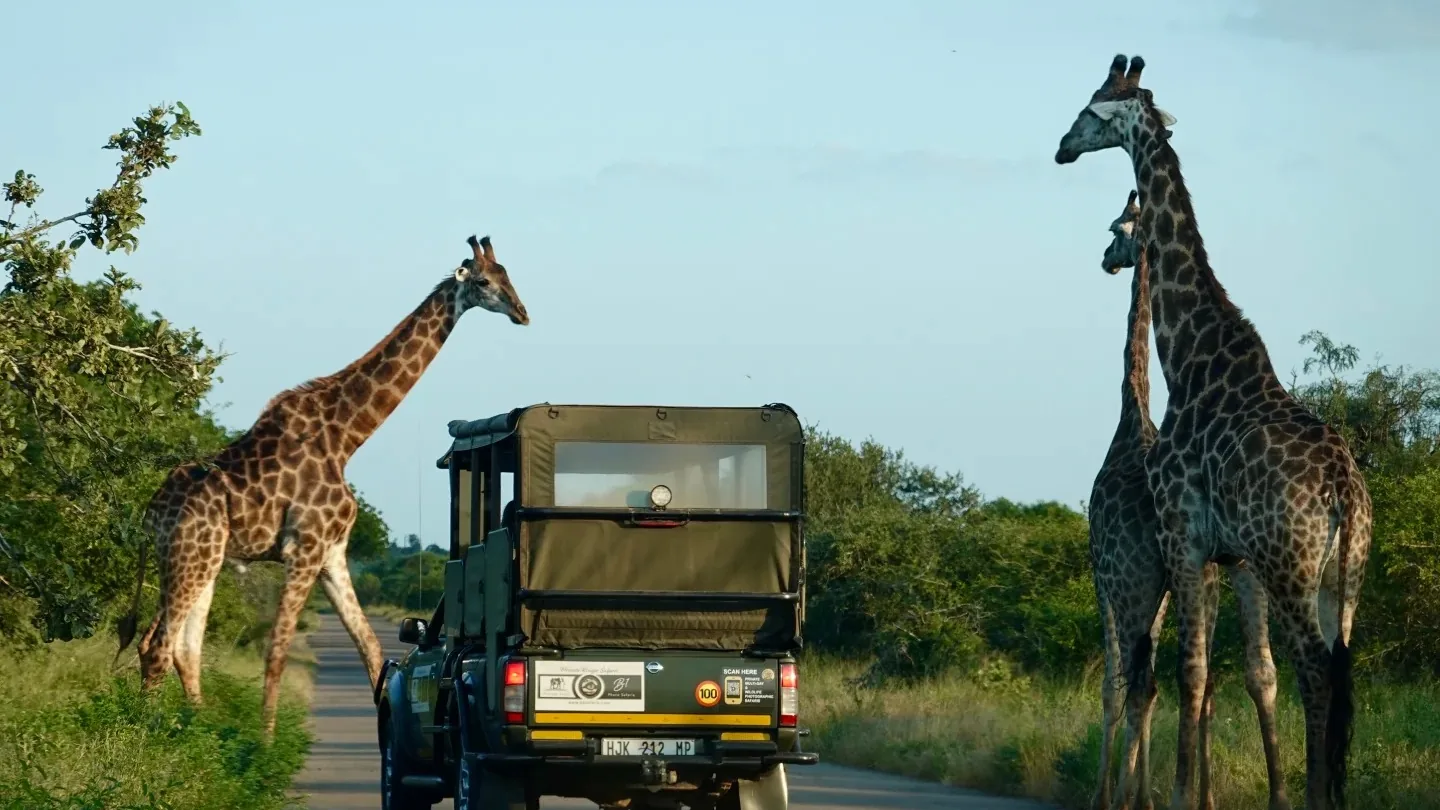
A Kruger traffic jam of the kind nobody minds waiting for. The Safari Atlas
The quick answer
South Africa is the easier, cheaper, lower-stress first safari: self-drive parks, park fees a fraction of Kenya's, malaria-free Big Five reserves, and a country that doubles as a full holiday with beaches and wine country. Kenya is the more classic, wildlife-theatre trip: the Maasai Mara, the Great Migration crossings, and the open-plains scenery that defines the word "safari".
For a first safari with young children, a tight budget, or nerves about malaria, we lean South Africa. For the migration, the iconic scenery, and a bucket-list feel, we lean Kenya. Both are superb starts – the choice is ease versus spectacle.
Key facts
- Cost: comparable Big Five trips run roughly 30–60% more in Kenya than in South Africa at similar tiers.
- Park fees: Kruger about R396 (roughly $28) per day for international visitors; Maasai Mara $100–$200 pp.
- Self-drive: South Africa is uniquely set up for it; Kenya's major parks are guided-only.
- Malaria: South Africa has extensive malaria-free Big Five reserves; all Kenya's main parks carry malaria risk.
- The migration: Kenya's Mara crossings (Aug–Sep) are a spectacle South Africa simply doesn't have.
- Flights: South Africa suits travellers from Europe on overnight flights; Kenya is quicker from some hubs.
Ease and self-drive
Start with the single biggest practical difference: South Africa lets you drive yourself. Kruger and Pilanesberg have paved and gravel roads, rest camps and signage built for private vehicles – you can hire a car, set your own pace, and go looking for wildlife with total independence. No other safari country has scaled this. It makes South Africa uniquely flexible and self-directed, and a soft landing for anyone anxious about the logistics of a first trip.
Kenya's major parks, by contrast, are guided-only – you'll be with a driver-guide in a 4x4, which is more expensive but also more expert: a good guide finds far more than you would alone. So the choice here is independence and lower cost against expertise and less effort. If the idea of steering your own safari appeals, that's a genuine, South-Africa-only draw; if you'd rather be driven and taught, Kenya's model suits you, as our Kenya vs Tanzania guide also explores for the East African style.
Which is cheaper?
South Africa, clearly, and it's not especially close at the budget and mid-range end. Comparable Big Five trips typically cost 30 to 60 percent more in Kenya than in South Africa for a similar lodge tier – a gap driven by a weaker rand, cheaper park fees, established self-drive infrastructure, and a much larger volume of accommodation at every price point. The park fees alone tell the story: Kruger charges international visitors around R396 a day (roughly $28), against the Maasai Mara's $100 to $200 per person.
A self-drive Kruger trip with rest-camp accommodation can run as little as $50 to $100 per person per day all-in – a figure Kenya can't approach. Kenya narrows the gap at the luxury end, where lodge quality and exclusivity converge, but for value-focused first-timers South Africa is the highest-value major safari destination in Africa, full stop. If budget is your first filter, that points one way.
See South Africa safaris → Self-drive Kruger and malaria-free Big Five reserves. Check datesMalaria and families
Here's where South Africa holds a card Kenya can't play at all. South Africa has extensive, high-quality malaria-free Big Five reserves – Madikwe, Pilanesberg, the Eastern Cape, the Waterberg – where you can see lion, leopard, elephant, rhino and buffalo without taking anti-malarial medication. For families with young children, pregnant travellers, or anyone who'd rather not take prophylactics, that's not a minor convenience; it can be the deciding factor.
Kenya has no equivalent: all of its primary wildlife areas carry some malaria risk, so anti-malarials and bite precautions are part of the trip. That's entirely manageable for most adults – millions do it every year – but it changes the calculus for young families. If a malaria-free first safari matters to you, South Africa is effectively the only major choice, a point we make in our safari vaccinations and malaria guide.
Torn between the easy option and the migration?
Tell us who's travelling, your budget and what matters most – a malaria-free family trip, the lowest cost, or the Great Migration – and our safari planning team will tell you which country fits and send back a costed itinerary for it. No obligation.
Wildlife and the migration
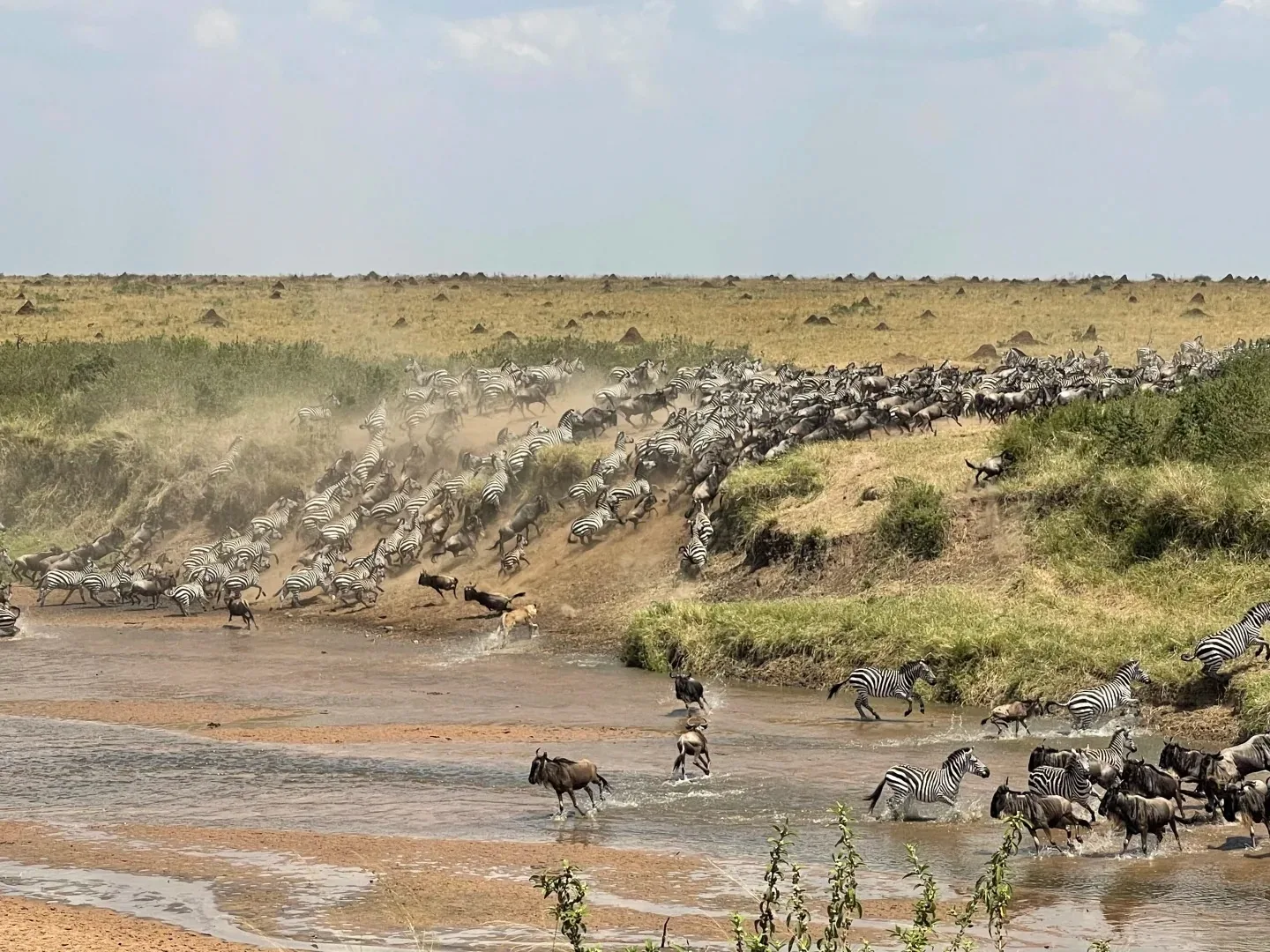
Now Kenya's turn, because on spectacle it wins. Both countries deliver the Big Five reliably – that's a wash. What Kenya has and South Africa doesn't is the Great Migration: over a million wildebeest, and the dramatic Mara River crossings in August and September, when the herds pour across the water against the crocodiles. It's one of the greatest wildlife events on earth, and it happens on the open, cinematic plains of the Maasai Mara that most people picture when they imagine a safari.
South Africa's landscapes are more varied but less iconic in that classic-savanna sense – bushveld, rather than endless golden plains. Its private reserves bordering Kruger, like the Sabi Sands, offer superb, close-up big-cat sightings that rival anywhere. So if it's the archetypal safari image and the migration drama you're chasing, Kenya delivers it and South Africa can't; if it's reliable, close, comfortable Big Five viewing, both excel.
Side by side
The whole comparison on one screen. Read the malaria and migration rows first – they're the two places one country simply can't match the other.
South Africa vs Kenya · first safari · 2026
| Factor | South Africa | Kenya |
|---|---|---|
| Cost | Lower | 30–60% more |
| Self-drive | Yes | Guided only |
| Malaria-free option | Yes | No |
| The migration | No | Yes (Aug–Sep) |
| Best for | Families, value, ease | Spectacle, bucket-list |
Beyond the safari
One more thing tilts the decision for many first-timers: what surrounds the wildlife. South Africa is a fully-formed holiday destination in its own right – Cape Town, the Garden Route, the Winelands – so a safari can be one chapter of a varied two-week trip with beaches, cities and food. That versatility makes it especially appealing if not everyone in the party is safari-obsessed.
Kenya pairs beautifully with its Indian Ocean coast – Diani Beach and the like – for a safari-and-beach combination, but the country is more single-mindedly a wildlife destination. So if you want the trip to be more than a safari, South Africa's breadth is a real advantage; if the wildlife is the whole point and a beach finish is a bonus, Kenya's simplicity serves you fine. Our Kenya and Diani Beach itineraries show the latter.
Browse Kenya safaris → Maasai Mara migration trips and safari-and-beach combinations. See optionsFive questions to ask before choosing
- Am I travelling with young children? South Africa's malaria-free reserves are a decisive advantage.
- How tight is my budget? South Africa is 30–60% cheaper at comparable tiers – the value winner.
- Do I want to drive myself? Only South Africa offers a true self-drive safari; Kenya is guided.
- Is the migration a must? If yes, it's Kenya – South Africa has no equivalent.
- Do I want a broader holiday? South Africa adds cities, coast and wine; Kenya is more purely wildlife.
So which should you choose?
For an easier, cheaper, lower-stress first safari – especially with kids or a nervous traveller. Self-drive freedom, malaria-free Big Five reserves, strong value, and a country that doubles as a full holiday.
For the classic, iconic safari and the Great Migration. Open Mara plains, river crossings in August and September, and the bucket-list feel – the trip that looks like the safari of your imagination.
If neither malaria nor the migration is decisive, you'll have a wonderful first safari in either. Let budget and the surrounding holiday break the tie – South Africa for value and variety, Kenya for spectacle.
Be honest about what your first safari needs to be. If it has to be easy, cheap and malaria-free, South Africa is built for exactly that. If it has to feel like the safari – the plains, the crossings, the sheer theatre – Kenya is the one that delivers it. Both send you home thrilled; they just get you there differently.
Costs, fees and characteristics are typical 2026 figures and vary by park, season and operator. Park fees follow official schedules current at July 2026; Kruger's international rate is set in rand and shifts with the exchange rate. Confirm current rates and inclusions with your operator before booking.
Sources & price notes
Cost comparisons and characteristics are typical 2026 figures that vary by operator, season and route. Kruger conservation fees follow the SANParks tariff schedule (international daily conservation fee, set in rand); Maasai Mara fees follow the official Maasai Mara schedule (Narok County). Malaria-free reserve status and the 30-60% cost gap are consistent across independent sources. Figures move with season and exchange rates – confirm current rates before booking.