Planning guides · When to go
Tanzania Safari in July: What to Expect and What It Costs
July is when Tanzania is at its most postcard-perfect – dry, sunny, the Serengeti thick with wildebeest edging toward the crossings – and also when it's most expensive and most crowded. It's peak season for a reason, and for a reason worth paying: the game viewing is the easiest of the year and the migration is building to its climax. The only real question is whether the premium and the crowds are a price you're happy to pay.
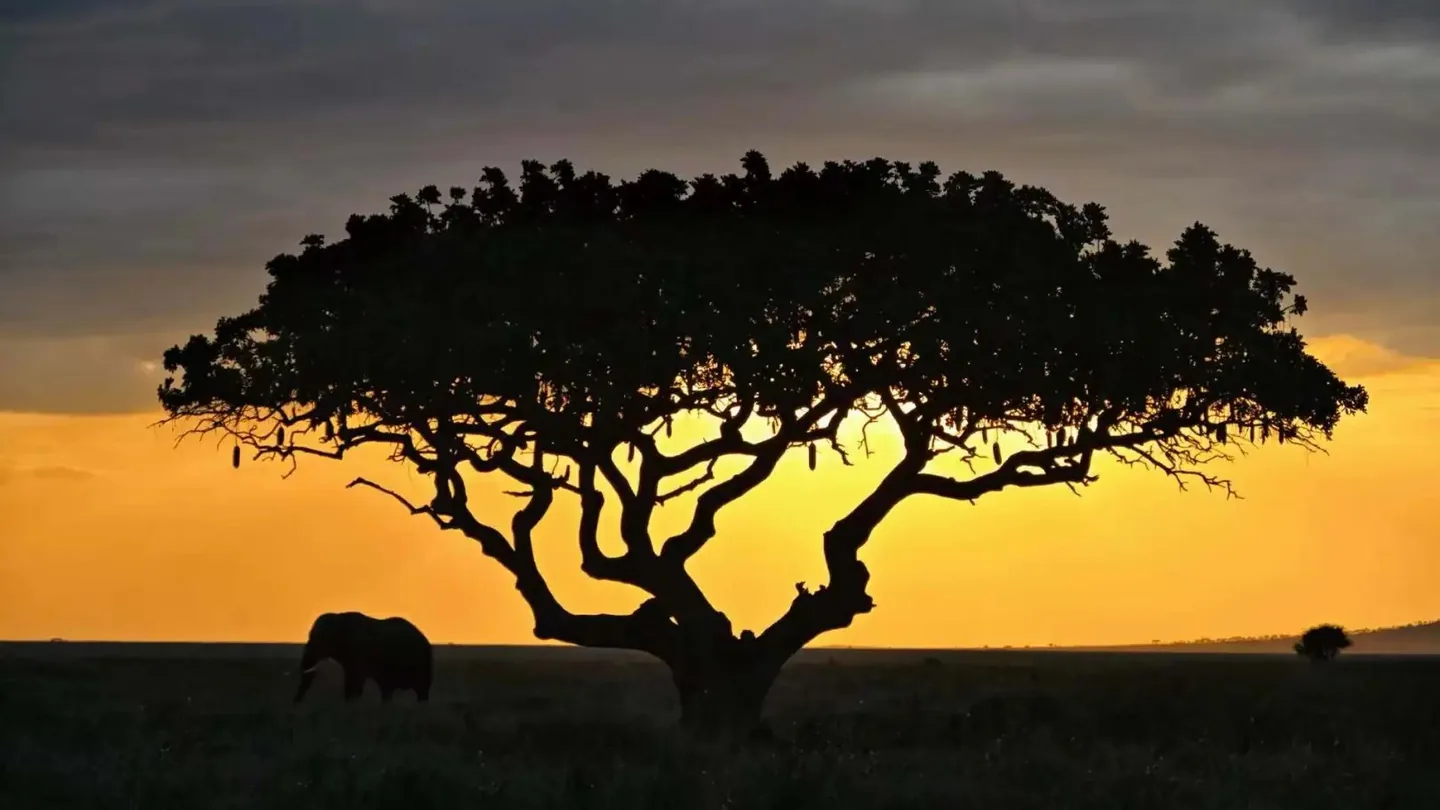
July's dry-season light turns the Serengeti into silhouette. The Safari Atlas
The quick answer
July is peak dry season in Tanzania: little to no rain, sparse bush and animals clustered at water, so game viewing is at its easiest all year. The migration is heading north through the western and northern Serengeti, with the first Mara River crossings often starting late in the month. It's superb – and it's the priciest, busiest window, with mid-range trips running roughly $600–$900 per person per day.
Go in July if you want the surest conditions and the building migration drama, and don't mind peak prices and crowds. If you're flexible and value-focused, the June or October shoulders give much of the same for less.
Key facts
- Weather: peak dry season – sunny, little rain, cool mornings; the easiest game viewing of the year.
- Migration: herds in the western/northern Serengeti; first Mara River crossings often begin late July.
- Cost: peak pricing – mid-range roughly $600–$900 pp/day; book well ahead.
- Crowds: the busiest month, especially at crossing points and the Ngorongoro Crater.
- Serengeti fee: about $83 per person per day (24h, VAT included); Ngorongoro adds its conservation and crater fees.
- Book early: the best-placed camps sell out a year or more in advance for July.
The weather in July
July sits in the heart of the long dry season, and the conditions are close to ideal for a safari. Rain is unlikely, days are sunny and comfortably warm rather than baking, and mornings and evenings are genuinely cool – you'll want a fleece for the dawn game drive. Crucially, the dry weather does the game viewing a favour: the vegetation has thinned, the grass is low, and animals concentrate around the remaining water, so wildlife is easier to spot and the sightings come thick and fast.
This is exactly the "peak dry season" that makes July a first-timer's dream – you're not gambling on conditions, and a quiet drive is rare. It's the surest, most reliable game viewing on the Tanzania calendar, which is a big part of why the month commands its premium, as our peak vs shoulder season guide explains.
Where the migration is
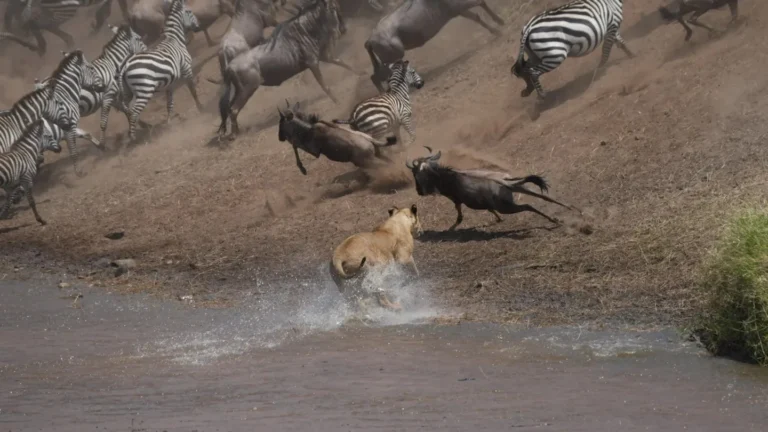
In July the Great Migration is on the move north, and this is what pulls so many travellers to Tanzania in this month. The herds are generally working through the western and northern Serengeti, grazing toward the Mara River, and the first dramatic river crossings often begin late in the month – the wildebeest massing on the banks and plunging across the crocodile-filled water. Catch that and you've seen one of the greatest wildlife spectacles on earth.
Two caveats keep expectations honest. First, the migration follows the rains, not a calendar, so the exact position and the timing of the first crossings shift year to year – late July is promising but not guaranteed. Second, to be near the crossings you need to base in the north, around Kogatende, not the central Serengeti; the region matters as much as the month, as our where to stay in the Serengeti guide sets out. Book the right region and July gives you a real shot at the drama.
See July Tanzania safaris → Peak-season trips positioned for the building migration. Check datesWhat it costs
July is the top of the price ladder, and there's no way around it: it's peak season, demand is highest, and rates rise accordingly. A mid-range Tanzania safari in July runs very roughly $600 to $900 per person per day, so a seven-day trip lands around $4,000 to $6,000-plus, before international flights. Park fees add up on top – the Serengeti is about $83 per person per day (VAT included), and the Ngorongoro Crater carries its own conservation fee plus a per-vehicle crater service fee.
Compared with the shoulder months, expect to pay roughly 20 to 30 percent more for the same trip in July, and to book much further ahead for the best camps. That premium buys the surest conditions and the migration's momentum – genuinely valuable if that's what you came for. But it is a premium, and if your dates are flexible the maths may point elsewhere, as our safari cost guide breaks down.
Want a July Tanzania trip costed and positioned for the migration?
July books out early and the region matters as much as the month. Tell us your July dates and budget, and our safari planning team will build a costed itinerary positioned for the building crossings – fees included – and flag what's still available. No obligation.
Crowds and how to dodge them
The flip side of peak season is people. July draws the biggest crowds of the year, and it shows most at the famous bottlenecks – the Mara River crossing points and the floor of the Ngorongoro Crater can see many vehicles at a single scene. For some travellers that barely registers; for others it dents the sense of wilderness they came for. It's worth being honest with yourself about which camp you're in before you book.
The good news is that Tanzania's scale offers real escapes. Get away from the northern crossing points and the central Seronera hub and the Serengeti swallows the crowds whole; and private concessions bordering the parks cap vehicle numbers at sightings. Basing thoughtfully – a mobile camp near, but not on top of, the crossing hotspots – lets you have the July drama without the July traffic. A good operator plans exactly this, and our migration camps guide covers the positioning.
The July trade at a glance
What July gives, and what it costs. Weigh the top row against the bottom – that's the whole decision.
Tanzania in July · the trade
Booking July
If July is your window, the single most important thing is to book early – and early means a year or more ahead for the best-positioned camps, especially the mobile camps near the northern crossings. Peak season sells out first, and leaving it late usually means either compromised locations or inflated prices, or both. This is not the month for a spontaneous trip.
The second thing is to get the region right for what you want: base in the north for the best shot at the crossings, or in the central Serengeti and Ngorongoro for reliable resident game if the crossings aren't your sole focus. And accept the honest reality that no camp can promise you a crossing on a given day – July stacks the odds beautifully, but the migration keeps its own schedule. Give it enough nights, and our how far in advance to book guide covers the timing.
Browse northern Serengeti camps → Crossing-season camps for July, positioned near the Mara River. See optionsFive questions to ask before booking July
- Do I want the crossings? If yes, base in the north – the month alone isn't enough.
- Am I happy with peak prices? July runs 20–30% above shoulder season for the same trip.
- How much do crowds bother me? July is busiest – plan camps to dodge the bottlenecks.
- Have I booked early enough? The best July camps go a year or more ahead.
- Would June or October do? The shoulders give much of July's quality for less.
So should you go in July?
If you want the surest, easiest game viewing and the migration building to the crossings, and you're happy to pay peak prices and share the famous sightings. Book the northern region, and book early.
If value and quiet matter more than the marquee crossings, the June or October shoulders deliver much of July's dry-season quality for 20–30% less, with fewer crowds. Worth weighing before you commit.
The month sets the conditions, but the region sets the wildlife. Base in the north for the crossings or the central Serengeti for resident game – and let a good operator place you to dodge the crowds.
July is Tanzania at its reliable, dramatic best – and its priciest and busiest. If the surest conditions and the building migration are what you're after, it's worth every dollar and every other vehicle; if you're flexible, the shoulders are quietly the smarter buy. Either way, book early and base in the right region.
Weather, migration timing and prices are typical 2026 patterns and shift year to year with the rains. Park fees follow official schedules current at July 2026. No crossing can be guaranteed on a given date – confirm current conditions, camp positions and rates with your operator before booking.
Sources & price notes
The late-July crossings and northern positioning are typical but shift yearly with the rains; July pricing is indicative. Serengeti fees follow the TANAPA tariff schedule (VAT included) and Ngorongoro the NCAA schedule. Prices move with camp and demand – confirm current rates and availability before booking.