Planning guides · Health
Safari Vaccinations & Malaria: What You Need in 2026
Most of the vaccination worry around safaris is overblown – and the one thing people actually get wrong is the yellow fever certificate at the border. This is the plain version: what's required, what's sensible, and why a single appointment at a travel clinic settles the whole thing.
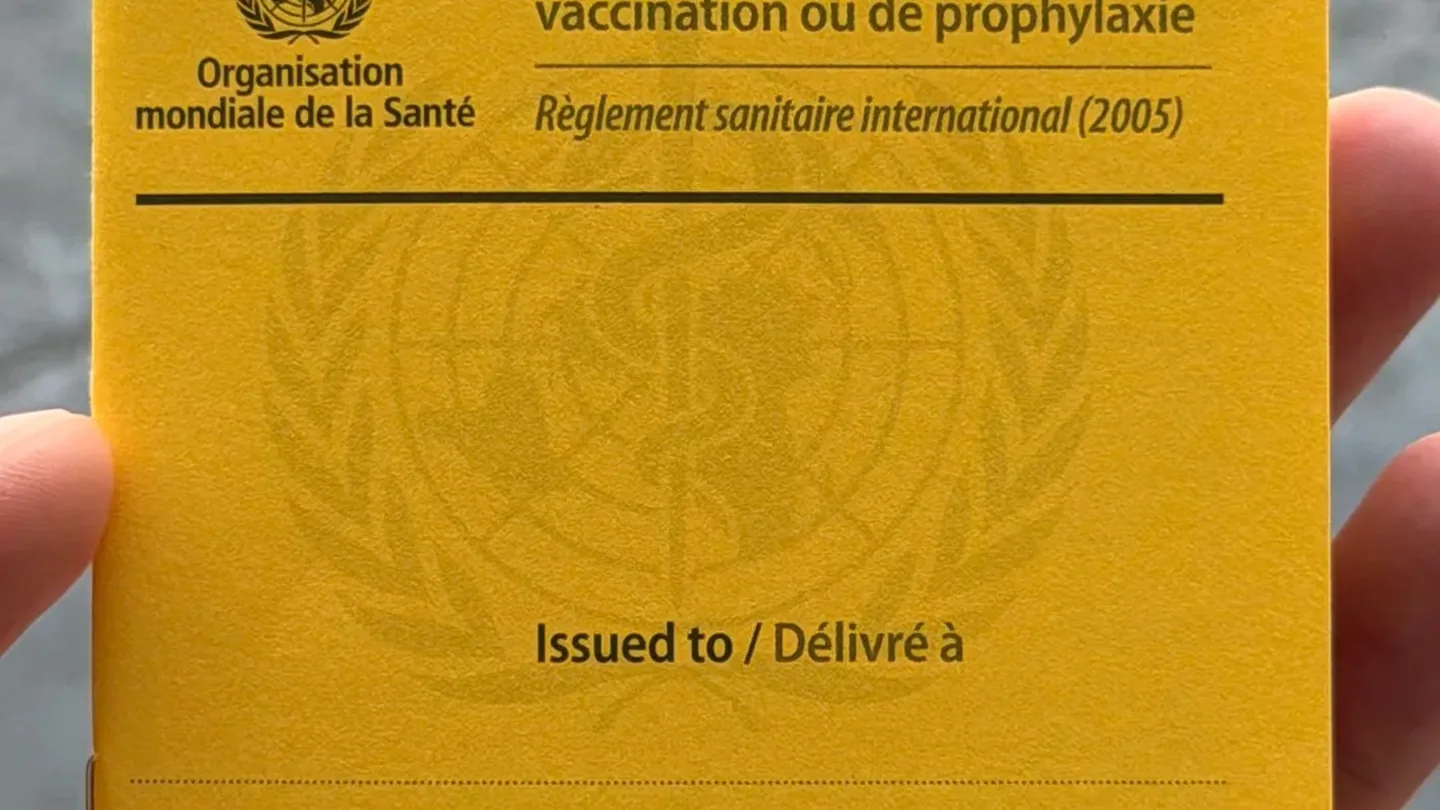
This small yellow booklet can matter more at the border than anything else in your luggage. The Safari Atlas
The quick answer
There's usually no single mandatory vaccine for a safari unless you're arriving from, or transiting, a yellow-fever-risk country – in which case a yellow fever certificate is required and strictly checked. Malaria is the bigger practical issue: most of East Africa's safari areas are malaria zones, so plan on prophylaxis, while much of South Africa is malaria-free.
Book a travel clinic appointment 4–8 weeks out. They'll confirm routine vaccines, whether you need a yellow fever certificate for your route, and the right malaria tablets.
Key facts
- Yellow fever: generally depends on where you arrive from or transit through; many countries require proof after travel from, or long transit in, a yellow-fever-risk country.
- Kenya: yellow fever proof is generally route-dependent; malaria prevention is commonly discussed for safari regions, so confirm your exact itinerary with a travel clinic.
- Tanzania: yellow fever proof is usually tied to travel from or transit through risk countries; CDC notes malaria transmission in areas below 1,800m.
- South Africa: much of the country is malaria-free; CDC highlights risk in parts of the northeast and border areas, including some Kruger-region travel.
- Commonly recommended: routine vaccines up to date, plus hepatitis A and typhoid for many trips.
- Timing: see a travel clinic 4–8 weeks before departure.
Do you need a yellow fever shot?
Usually only because of where you've been, not where you're going. The practical rule is route-based: a yellow fever certificate may be required if you're arriving from, or spending a long airport transit in, a country with yellow fever risk. Fly in directly from Europe, North America or many other low-risk regions and you often won't be asked for one.
The country that catches people out is South Africa, which enforces this strictly at entry – officials at Johannesburg and other ports want to see the actual yellow card if you're coming from a risk country, and can deny entry without it. The vaccine also needs about 10 days to become valid before it counts, so this isn't a last-minute item. If your route involves a layover in a yellow-fever country, sort the certificate early.
How serious is malaria on safari?
Serious enough to plan for, manageable enough not to fear. Malaria is a mosquito-borne disease present across much of sub-Saharan Africa's lower-altitude safari country, and the standard defence is a combination of prophylaxis tablets and bite avoidance. Taken properly, prophylaxis is highly effective, and millions of travellers safari every year without incident.
Risk varies by place and season – it's higher in and after the rains, and lower at altitude and in the dry winter. A travel clinic will match the right tablets to your route, health and any children travelling, since some drugs aren't suitable for young kids or in pregnancy. This is exactly why malaria-free South African reserves are so popular for family safaris – they remove the question entirely.
Health at a glance by country · 2026
| Country | Yellow fever | Malaria |
|---|---|---|
| Kenya | Certificate if from risk country | Most safari areas |
| Tanzania | Only if transiting risk country | Nearly year-round in safari areas |
| South Africa | Strictly checked at entry | Mainly the far northeast (Kruger) |
| Botswana | If from risk country | Northern safari areas, seasonal |
Requirements by country
Kenya generally requires yellow fever proof when your route includes travel from, or qualifying transit through, a yellow-fever-risk country; malaria prevention should be discussed for classic safari regions such as the Mara, Amboseli and Tsavo. Tanzania is similar on yellow fever documentation, while CDC guidance notes malaria transmission in areas below 1,800m, which covers many northern-circuit safari routes.
South Africa can check yellow fever proof strictly when your route includes a risk country, but malaria risk is not nationwide; CDC highlights parts of the northeast and some border areas, including Kruger-region travel. Botswana follows a route-based yellow-fever approach and has seasonal malaria considerations in northern safari regions like the Okavango and Chobe.
Other recommended vaccines
Beyond yellow fever, the usual advice is to make sure your routine vaccinations are up to date – things like measles-mumps-rubella, diphtheria-tetanus-polio, and others depending on your history. For many safari trips, clinics commonly recommend hepatitis A and typhoid, both linked to food and water, and sometimes hepatitis B or others depending on your plans, duration and health.
None of these are usually mandatory for entry, but they're sensible protection for travel in the region. Rabies vaccination is occasionally suggested for longer or more remote trips. Your travel clinic will tailor the list to you – there's no single universal checklist, which is exactly why the appointment matters more than any article.
Planning a trip? We'll flag the health basics
Tell us your route and dates and our safari planning team will flag whether malaria-free options fit and what to raise with your travel clinic – then send back a costed itinerary. No obligation, and never a substitute for medical advice.
Avoiding mosquito bites
Prophylaxis is only half the malaria defence; not getting bitten is the other. The malaria mosquito bites mainly from dusk to dawn, which is exactly when you're back at camp, so the evening routine matters. Cover up after sunset with long sleeves and trousers, use an insect repellent containing DEET or picaridin on exposed skin, and sleep under the net your camp provides.
Neutral, light clothing helps a little, and many camps spray or screen rooms. None of this is onerous – it's the same sensible evening habit every night – but combined with tablets it's what makes malaria a manageable footnote rather than a real worry. Keep taking your prophylaxis for the full course after you get home, too; that's the step people most often skip.
Read: safari packing list → Repellent, long sleeves and the evening kit that helps against bites. See the listWhat to do before you go
The whole thing comes down to one action: book a travel clinic or GP appointment 4 to 8 weeks before departure. That lead time lets any vaccines take effect and lets you start malaria tablets on schedule if they need to begin before travel. Bring your itinerary, your vaccination history, and details of anyone travelling with you, especially children or anyone pregnant.
Ask specifically about the yellow fever certificate for your exact routing (including layovers), the right malaria prophylaxis, and whether hepatitis A, typhoid or others are recommended for you. Keep your yellow card with your passport if you have one. That single visit replaces all the second-guessing – and it's the one piece of safari admin worth not leaving late.
Browse malaria-free safaris → Big Five reserves that take the malaria question off the table. See optionsFive questions to ask your travel clinic
- Do I need a yellow fever certificate for my exact route, including layovers? The transit rule catches people out.
- Which malaria tablets suit me and my route? Options differ by health, age and destination.
- Are hepatitis A, typhoid or others recommended for this trip? Common add-ons, not usually mandatory.
- Anything different for children or if pregnant? Some drugs and vaccines aren't suitable – ask early.
- When do I start and stop the malaria course? Many need starting before travel and continuing after you return.
The bottom line
Safari health is simpler than it sounds. The yellow fever certificate is the one document that can actually stop you at a border, so sort it early if your route touches a risk country. Malaria is the real day-to-day concern in most of East Africa – tablets plus bite avoidance handle it – while much of South Africa sidesteps it entirely. Everything else is sensible routine protection.
One appointment, 4 to 8 weeks out, answers all of it for your specific trip. Do that, and the health side of your safari stops being a worry and becomes a box ticked. This is a sensitive topic; if you have underlying conditions, are pregnant, or are travelling with young children, get personalised advice rather than relying on any general guide.
This guide is general planning information only and is not medical advice. Requirements, risk maps and recommendations change and vary by exact location and personal circumstances. Always confirm current guidance with a travel clinic or physician before you travel.
Sources & health notes
Malaria and yellow-fever guidance checked July 2026 against the CDC Yellow Book (by country) and WHO malaria information. Requirements and risk areas change – confirm current guidance for your route with a travel clinic before you travel.