Planning guides · When to go
Where to Go on Safari by Month
There is no bad month for a safari – only better and worse months for a particular thing. Every month of the year, somewhere in Africa, is having its finest hour: the calving in one place, the crossings in another, the green-season bargains in a third. The trick isn't finding "the best time". It's matching the month you can travel to the experience that month does best.
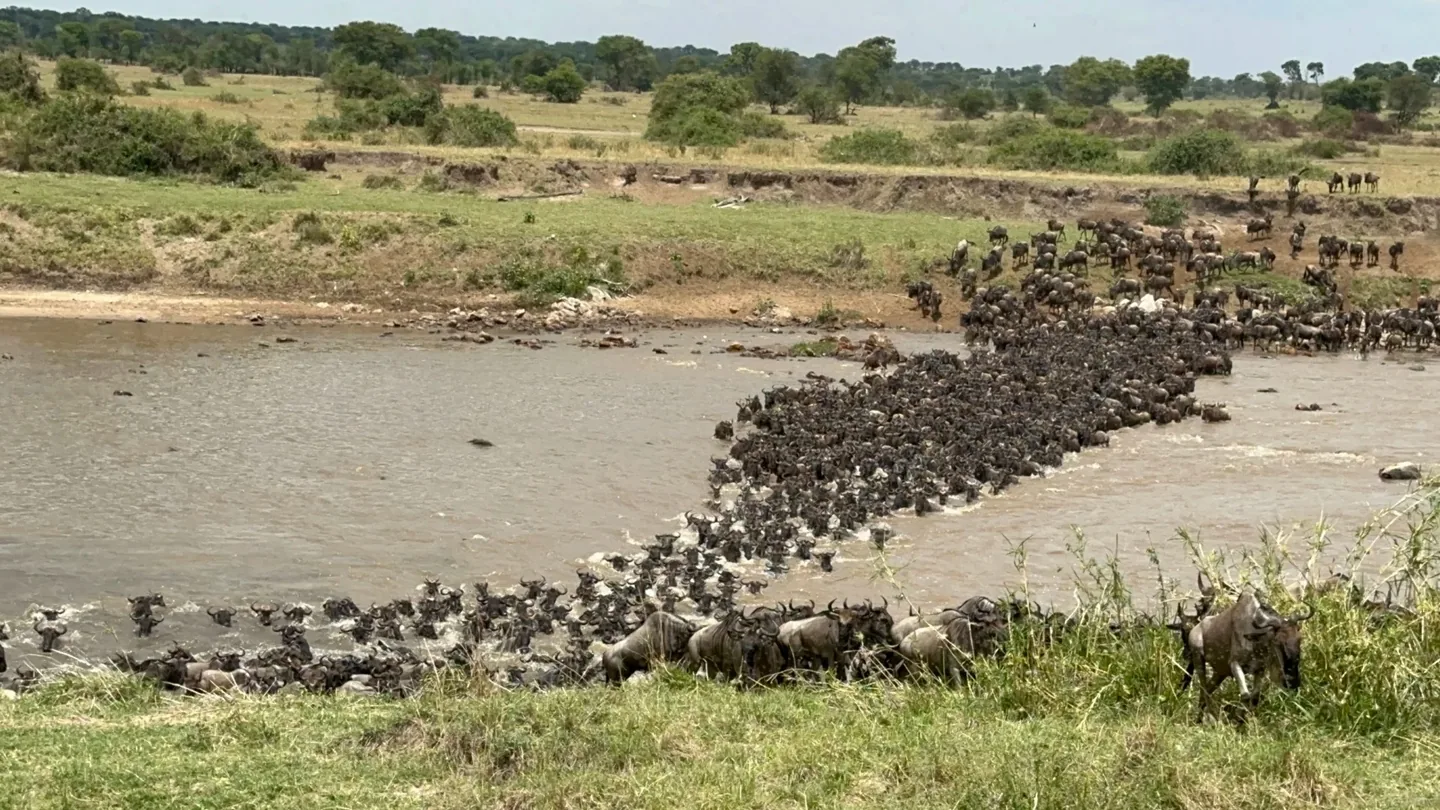
The crossing lasts minutes; the build-up on the riverbank can take hours. The Safari Atlas
The quick answer
January–February: calving on the southern Serengeti – newborns and predators. March–May: the green season – lush, quiet and cheapest. June: dry season begins, migration heading north. July–October: peak – the Mara River crossings and the easiest game-viewing. November–December: short rains, quieter and better value, festive-week prices aside.
So if you can travel any month, pick the experience: crossings in August–September, calving in January–February, value in the green months. If your dates are fixed, there's a great safari to be had – just aim it at what that month does best.
Key facts
- Jan–Feb: Serengeti calving (Ndutu/southern plains) – newborns, intense predator action.
- Mar–May: the long rains and green season – lush, quiet, and 30–40% cheaper.
- Jun: dry season begins; herds move north through the central and western Serengeti.
- Jul–Oct: peak – the Mara River crossings (esp. Aug–Sep) and the easiest big-game viewing.
- Nov–Dec: short rains, quieter and better value; festive week (late Dec) is a pricey exception.
- Southern Africa peaks in its dry season (roughly May–October) – ideal when East Africa is in the rains.
The year at a glance
Here's the whole East African year on one strip – the seasons, the migration highlights, and the value windows. Find the month you can travel and read what it does best; the sections below fill in the detail.
The East African safari year · 2026
January to February
The year opens with one of the migration's great spectacles: calving on the southern Serengeti, around the Ndutu plains, where hundreds of thousands of wildebeest give birth in a matter of weeks. The newborns draw every predator for miles, so this is peak big-cat action – lions, cheetahs and hyena all cashing in. It's a relatively dry window between the rains, the plains are green and photogenic, and it's a wonderful, slightly less crowded alternative to the July–October rush.
For families and photographers especially, January and February are a quietly brilliant choice. The wildlife drama is at least the equal of the famous crossings, the light is gorgeous, and prices sit below the mid-year peak. If your dates are flexible and calving appeals, this is a window worth building a trip around, as our migration month-by-month guide lays out in full.
See calving-season safaris → January and February trips to the southern Serengeti's newborn plains. Check dates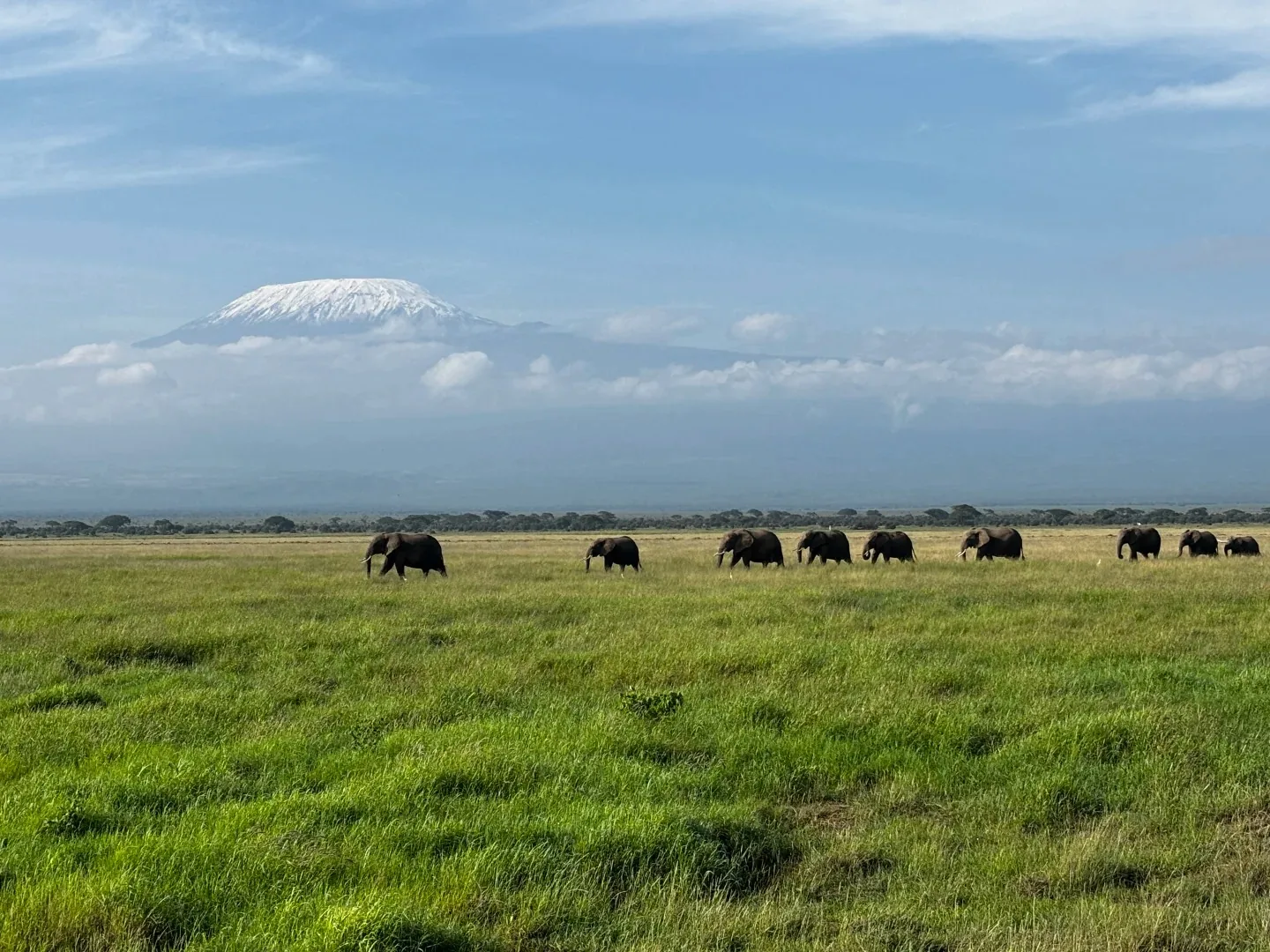
March to May
These are the green-season months – the long rains – and they carry an undeserved bad reputation. Yes, it's the wettest window, particularly April; but the rain usually comes as short storms rather than all-day washouts, the landscapes turn lush and dramatic, the parks empty out, and prices fall 30 to 40 percent below peak. Birding is at its best, and the resident wildlife is superb regardless of where the herds are.
This is the value traveller's and the photographer's season. If you can accept a little rain and slightly harder spotting in thicker bush, you'll have the parks nearly to yourself for a fraction of the peak price. The shoulders – late March and May – give you most of that value with a lower chance of a heavy-rain day, as our green season guide explains.
June to October
The classic safari season, and the busiest. As the land dries out from June, the vegetation thins, animals concentrate around water, and game-viewing becomes as easy as it gets all year. The migration moves north through the Serengeti, and then the headline event arrives: the Mara River crossings, roughly August and September, when the herds pour across the crocodile-filled river between the Serengeti and Kenya's Maasai Mara. It's one of the greatest wildlife spectacles on earth.
The trade is price and crowds – this is peak, the most expensive and busiest window, and in Kenya the Maasai Mara gate fee itself rises to $200 per person. If the crossings or the surest possible game-viewing are your goal, it's worth every dollar; book well ahead, because the best camps sell out first. If you're flexible, the shoulders of June and October give you excellent dry-season conditions for less, a trade we weigh in our peak vs shoulder guide.
Tell us your month – we'll tell you where to go
Every month has a great safari in it; the skill is aiming your dates at the right experience. Tell us the month you can travel and what you'd most love to see, and our safari planning team will match you to the best destination for that window and cost a trip. No obligation.
November to December
The short rains arrive around November – lighter and more scattered than the long rains – and with them another value window. The parks quieten after the peak-season crowds disperse, the landscapes green up again, and prices ease. The herds begin drifting back south through the eastern Serengeti toward the calving grounds. It's an underrated month: good conditions, fewer people, and better rates.
December is a tale of two halves. Early December continues the quiet, good-value pattern; then the festive week around Christmas and New Year spikes to peak-plus prices as the holiday crowd arrives, before calving season proper begins in the new year. So aim for November or early December for value, and book the festive window very early – and expect to pay for it – if that's when your holidays fall.
A note on Southern Africa
One reason there's no bad month: the seasons flip as you move south. When East Africa is in its wettest window – the long rains of March to May – Southern Africa (South Africa, Botswana, Zambia) is heading into or enjoying its dry season, which runs roughly May to October and is its own game-viewing peak. So a "wrong" month for the Serengeti can be a right month for the Okavango or Kruger.
This is worth knowing if your dates are fixed and East Africa's calendar doesn't suit them: rather than force a rainy-season East African trip, you can often just point south instead. The continent almost always has somewhere in fine form, which is exactly why the best question isn't "when should I go?" but "where should I go, given when I can?" – the logic behind our best destinations guide.
Read: the best time to go on safari → The full seasonal picture across every major destination. See the guideFive questions to match your month
- Which months can I actually travel? Start here – the calendar works backwards from your availability.
- Do I want the crossings or the calving? Crossings mean Aug–Sep; calving means Jan–Feb.
- Is value my priority? If so, the green months (Mar–May) and the short rains (Nov) win.
- Am I locked to a holiday period? The festive week is peak-plus – book very early or shift a few days.
- Does my month suit the south instead? East Africa's rains are Southern Africa's dry season.
So when should you go?
For the Mara River crossings and the easiest, surest game-viewing of the year. The classic peak – busiest and priciest, and worth it if the crossings or certainty are your goal. Book early.
January to February for the calving and predator action; March to May for green-season value, lush scenery and empty parks. Both are quieter, cheaper and quietly superb alternatives to the peak.
The shoulders either side of peak – strong conditions, thinner crowds and lower prices. And if your fixed month doesn't suit East Africa, point south, where the dry-season calendar runs the other way.
Flip the usual question. Don't ask when the best time to go is – ask what the month you can travel does best, and aim your trip at that. Do it that way and there genuinely isn't a bad time to be on safari; there's only the right destination for your dates.
Month-by-month timings are typical 2026 patterns and shift year to year with the rains and the migration. Park fees follow official schedules current at July 2026. Confirm current conditions, event timing and rates with your operator before booking.
Sources & price notes
Calving and crossing windows shift with the rains each year; seasonal and migration timings are indicative, not fixed. The Maasai Mara peak fee ($200 Jul–Dec vs $100 Jan–Jun) follows the official Maasai Mara schedule (Narok County); Serengeti fees follow the TANAPA schedule. Timings are indicative – confirm current conditions and event timing with your operator before booking.