Planning guides · Activities
Night Safari in Africa: Where, What You'll See & Cost
Most of the bush's real drama happens after you've gone to bed. Around 70% of predator activity in the best conservancies takes place after dark – which is why a night drive can be the most memorable two hours of a whole trip. The catch: you can only do it in the right places.
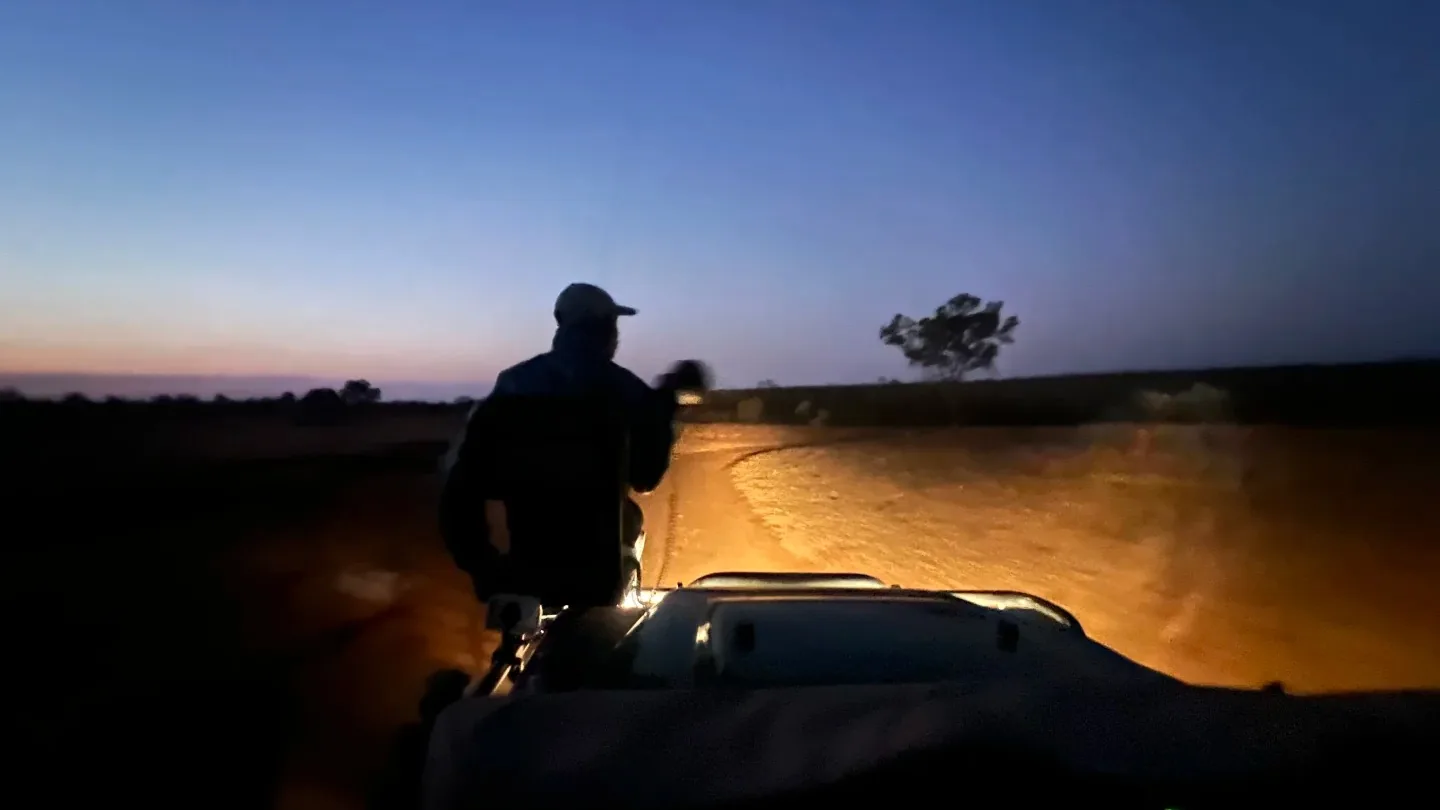
After dark, the safari begins again under a much narrower beam of light. The Safari Atlas
The quick answer
Night safaris are allowed in private conservancies and private game reserves – think Ol Pejeta, Mara Naboisho and Olare Motorogi in Kenya, and South Africa's private reserves – but not in most national parks or the main Maasai Mara reserve, where driving stops at sunset. A night drive typically costs $50–$70 per person and runs about two hours after dark.
You'll see nocturnal species you'll never catch by day – and often predators at their most active. If a night drive matters, base yourself in a conservancy, not the national park.
Key facts
- Where: private conservancies and private reserves (Ol Pejeta, Mara Naboisho, Olare Motorogi; South African private reserves) – not most national parks or the main Mara reserve.
- Cost: about $50–$70 per person; some camps include one in the nightly rate on 2+ night stays.
- Timing: roughly 7pm to 9:30–10pm, about two hours, usually after dinner or as a sundowner extension.
- Light: a red or amber-filtered spotlight, which is easier on the animals' eyes; unfiltered white light is a red flag.
- Vehicle: closed-sided vehicles after dark for safety.
- Why: around 70% of predator activity in top conservancies happens after dark.
Where are night safaris allowed?
The single most important thing to know is that night drives are a private-land privilege. In Kenya, they run in the private conservancies – Ol Pejeta, Mara Naboisho, Olare Motorogi, Ol Kinyei and others – that border or surround the famous reserves, not inside the main Maasai Mara National Reserve itself. In South Africa, the private reserves bordering Kruger (Sabi Sand and neighbours) are night-drive country, while Kruger's own gates close at sunset.
The pattern holds across the continent: national parks and government reserves almost always prohibit driving after dark, while privately managed conservancies and reserves have the flexibility to offer it. So if a night safari is on your wish list, the decision isn't really "which park" – it's "book a camp on private land." Staying inside a conservancy is what unlocks the activity.
Night drives: where they run
Usually allowed
- Private conservancies (Ol Pejeta, Naboisho, Olare Motorogi)
- Private game reserves (Sabi Sand and neighbours)
- Some concessions bordering national parks
Usually not allowed
- National parks (Serengeti, Kruger, etc.)
- The main Maasai Mara National Reserve
- Government reserves with sunset gate closures
Why national parks don't allow them
It isn't red tape for its own sake. National parks host huge numbers of visitors on shared, largely public land, and unrestricted night driving would be hard to police, risky for both wildlife and people, and disruptive in areas with many vehicles and self-drivers. Closing the gates at sunset is the simplest way to protect animals from disturbance and keep everyone safe.
Read: Serengeti vs Maasai Mara → Why the Mara's conservancies allow night drives the reserve can't. ComparePrivate conservancies can do things differently precisely because they control access. They cap visitor and vehicle numbers, employ their own guides, and set their own rules – which is exactly what lets them run night drives and off-road tracking that the parks can’t, plus more flexible walking. It's the same reason conservancies feel more exclusive by day: fewer people, more flexibility, private management. The night drive is one of the clearest perks of that model.
What you'll see at night
A night drive is a genuinely different safari, not just a dark version of the day one. The spotlight picks out a whole cast you'll never meet at noon: leopards and lions moving to hunt, hyenas on the trot, and smaller nocturnal specialists – aardvark, aardwolf, bushbaby, genet, civet, porcupine, springhare and the enormous eyes of a bush baby caught in the beam. Different conservancies specialise: Ol Pejeta for the range of nocturnal species, Naboisho for big cats.
The bigger draw is behaviour. Because so much predator activity happens after dark, a night drive is your best chance to see cats actually hunting rather than sleeping off the day's heat. Even the soundscape changes – the calls, the rustles, the sudden tension when the spotlight catches eyeshine. For many travellers it's the two hours they talk about most when they get home.
Want a night drive built into your trip?
Tell us your dates and where you're headed and our safari planning team will make sure you're based on private land where night drives run – then send back a costed itinerary. No obligation.
What a night drive costs
Night drives are usually a paid extra on top of your stay, running about $50 to $70 per person at most conservancies – Ol Pejeta, for instance, prices it around $70 per person. Some camps fold one night drive into the nightly rate if you're staying two or more nights, so it's worth asking what's included before you book add-ons separately.
Set against a balloon safari or the day's park fees, it's one of the better-value activities on a safari – a couple of hours of genuinely unique viewing for the price of a nice dinner back home. If you're already paying a conservancy premium to stay on private land, the night drive is the payoff you came for, so it's rarely the extra to cut. See our safari cost guide for how the extras stack up.
The rules that keep it good
Good conservancies run night drives responsibly, and it's worth knowing what that looks like so you can tell. The spotlight should use a red or amber filter, which is far easier on animals' eyes than harsh white light; if a guide sweeps an unfiltered white beam straight into a leopard's face, that's poor practice worth mentioning to the camp manager. Vehicles are closed-sided after dark for safety – sensible when a hyena wanders up to the bumper at 9pm.
Drives are kept short, usually around two hours, both for the animals' sake and yours, and good guides keep their distance and don't chase or corner wildlife. The point is to observe the nocturnal world, not to harass it. A conservancy that takes these rules seriously delivers a better drive anyway – calmer animals, more natural behaviour, and a clearer conscience.
How to plan one in
The whole trick is where you sleep. Because night drives only run on private land, the way to guarantee one is to book at least a couple of nights in a conservancy or private reserve rather than only inside the national park. Slot it in as a two-night addition to a classic Mara or Kruger trip and you get the day-time icons plus the after-dark bonus.
Confirm with the camp before you book that night drives are offered on your dates, whether they're included or charged as an extra, and roughly when they run – most go out after dinner, some as an extended sundowner into darkness. If a night drive is a priority, say so when planning, because a single tweak to your accommodation is all it takes to make it happen.
Read: what a safari costs → Where a $50–$70 night drive sits among the other extras. See the cost guideFive questions to ask before a night safari
- Is my camp on private land? Night drives run in conservancies and private reserves, not most national parks.
- Is it included or an extra? Often $50–$70 per person; some camps include one on 2+ night stays.
- What filter does the spotlight use? Red or amber is correct; harsh white light is poor practice.
- When does the drive run? Usually about two hours after dinner, roughly 7pm to 10pm.
- Which nocturnal species is this area known for? Conservancies specialise – ask what you're likely to see.
Is a night safari worth it?
For most travellers, yes – and it's our quiet hill to die on that a night drive beats several better-known add-ons for sheer memorability. You see animals and behaviours the day simply doesn't offer, at the time predators are most active, for a modest price. The only real barrier is location, and that's solved by choosing where you stay rather than paying more.
If your itinerary is locked inside a national park with no private land, you'll miss out – so plan the conservancy night in early. If you're already staying somewhere that offers it, don't skip it to save an hour's sleep. The bush after dark is a different world, and two hours in it is often the part of the trip people remember longest.
Night-drive availability, rules and prices vary by conservancy, reserve and country and change over time. Confirm current availability, inclusions and pricing with your camp or operator before booking.