Planning guides · Itineraries
7-Day Kenya Safari Itinerary & Cost (2026)
You don't need two weeks to do Kenya properly. Seven days is the country's sweet spot – long enough to pair the elephants of Amboseli, the rhinos of Lake Nakuru and the predators of the Maasai Mara, short enough to keep the pace and the price sensible. The trick isn't more days. It's the right route and the right tier.
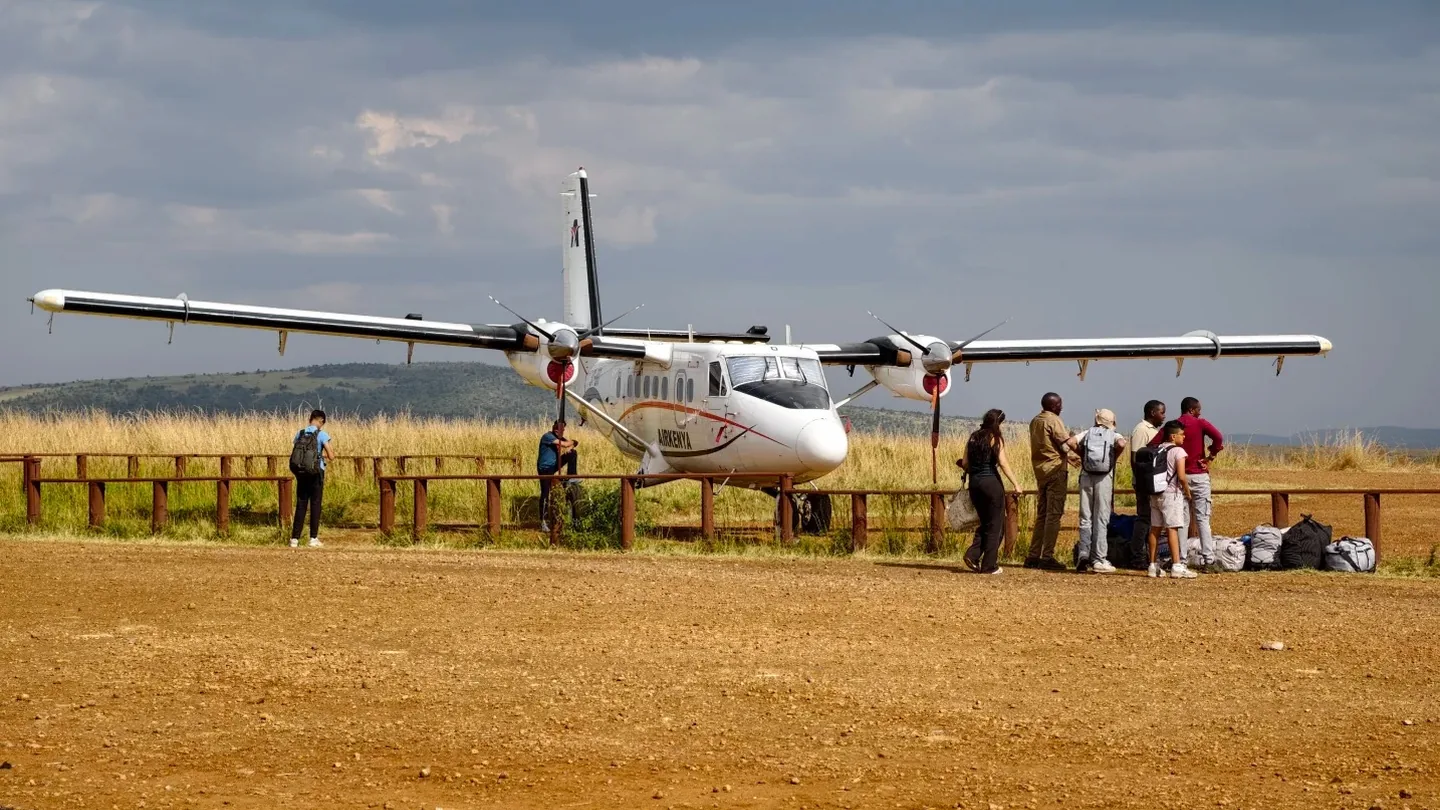
Flying between Kenya's parks buys back the one thing a seven-day itinerary cannot add: time. The Safari Atlas
The quick answer
The classic seven-day route runs Nairobi → Amboseli → Lake Nakuru → Maasai Mara, covering the Big Five, Kilimanjaro views and three very different landscapes. Budget on roughly $1,400–$2,500 per person for a budget group trip, $2,800–$4,800 mid-range, and $5,000+ for luxury – before international flights.
Where you land in that range depends more on tier, season and group size than on the itinerary itself. If your dates are flexible and you're happy in a shared vehicle, the low end is very reachable.
Key facts
- Classic route: Nairobi → Amboseli → Lake Nakuru → Maasai Mara, covering the Big Five.
- Budget (group): about $1,400–$2,500 per person.
- Mid-range (private): about $2,800–$4,800 per person.
- Luxury: from about $5,000 per person.
- Maasai Mara fee: $100 per person (Jan–Jun) rising to $200 (Jul–Dec), each valid 12 hours.
- Save: group departures cut per-person cost 15–25%; low season (Jan–Feb) is 30–40% cheaper than peak.
The classic 7-day route, day by day
Most well-built seven-day Kenya safaris follow a version of this loop out of Nairobi. It front-loads Amboseli and Nakuru, then saves the Maasai Mara – the headline act – for a solid two nights at the end.
Nairobi to Amboseli
Drive south to Amboseli for an afternoon game drive. Big elephant herds and, on a clear day, Kilimanjaro filling the horizon.
Full day in Amboseli
Morning and afternoon drives across the swamps and open pans, the best chance for those classic elephant-and-mountain photographs.
Amboseli to Lake Nakuru
A longer transfer up through the Great Rift Valley, with a viewpoint stop, to one of the few places you can see both black and white rhino.
Lake Nakuru to the Maasai Mara
Morning drive at Nakuru for rhino and flamingos, then on to the Mara in time for an evening game drive as the light drops.
Full day in the Maasai Mara
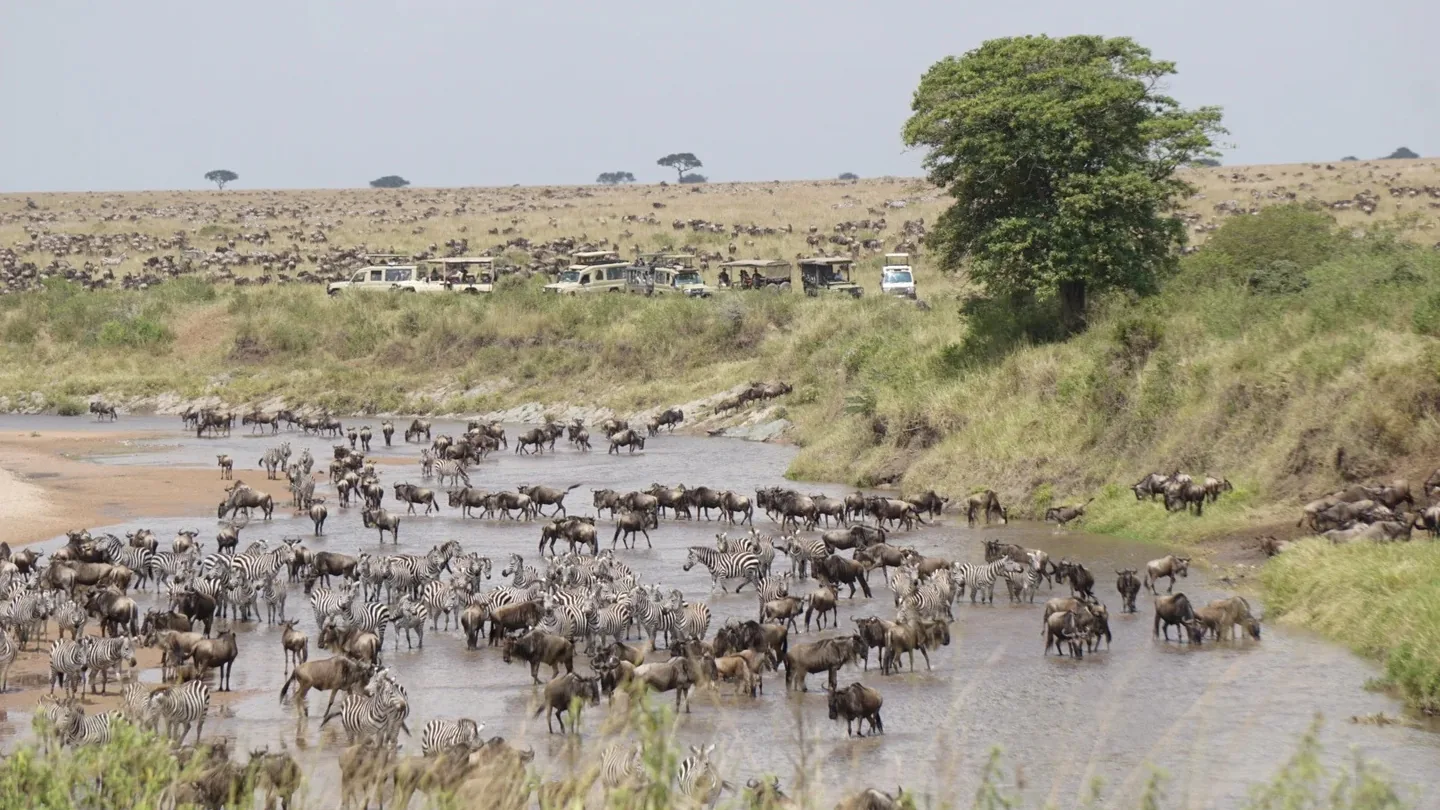
The heart of the trip. Big cats, wide plains, and in season the wildebeest migration and its river crossings.
Maasai Mara, your way
Another full day, or trade a morning for an optional balloon safari over the plains at dawn. Predator action is reliably good here.
Maasai Mara to Nairobi
A morning drive, then the road back to Nairobi – or a short bush flight if you'd rather swap six hours of driving for one.
How much does a 7-day Kenya safari cost?
The same seven days can cost $1,400 or $10,000 a head, and the gap is almost entirely about where you sleep and who you share the vehicle with. Three honest bands:
Budget (group)
$1,400–$2,500
Shared 4x4, basic camps or lodges, park fees and meals included.
Mid-range
$2,800–$4,800
Comfortable tented camps, private vehicle for two, often a bush flight.
Luxury
$5,000–$10,000+
Small private camps, fly-in, guide to yourselves, four to a vehicle.
In per-day terms that's roughly $200–$300 a day at the budget end, $350–$600 mid-range, and $700–$1,500 or more for luxury. Our view, for most first-time travellers: the mid-range tier is where the value sits. A comfortable tented camp inside or bordering the Mara delivers most of the luxury experience – the same lions, the same sunsets – at roughly half the nightly rate. If a private plunge-pool tent is what you're paying for, that logic doesn't apply to you.
7-day Kenya cost per person · 2026
How much are Kenya's park fees?
Park and conservation fees are charged per person, sit on top of a lot of cheaper quotes, and in Kenya they're a real chunk of the total. The Maasai Mara is the big one: a non-resident adult pays $100 per person from January to June, then $200 from July to December, and each ticket is valid for 12 hours rather than a full day. Amboseli and Lake Nakuru run lower, in the region of $100 per person per day, though rates are revised periodically.
Two people spending three days across those parks in high season can rack up several hundred dollars in gate fees before a single night's lodging. So the one question worth asking in writing: are park fees included in the quote? A rate that folds them in isn't dearer – it's just being straight with you.
Want this itinerary costed for your dates?
Tell us your dates, group size and tier and our safari planning team will send back a costed seven-day Kenya itinerary – budget, mid-range or luxury – with park fees and transfers itemised, so there are no surprises. No obligation.
Group vs private, and how to save
The single biggest lever on price after tier is whether you're in a shared vehicle or your own. Joining a scheduled group departure of four or more typically cuts the per-person cost by 15 to 25 percent versus a private trip, because the vehicle, fuel and guide are split more ways. The trade is control – a shared vehicle sets its own pace and stops.
Beyond that, the reliable savings are about timing and routing: travel in the low or shoulder season, keep the route tight rather than chasing a fourth park, and drive the transfers rather than adding internal flights where the distances are short. What we wouldn't cut is the quality of the guide or enough nights in the Mara – a rushed single night there is the economy people tend to regret.
When is the best time to go?
Season swings both the wildlife and the bill. July to October is peak: the migration is in the Mara, sightings are easiest, and lodge rates and that $200 Mara fee are at their highest. January and February are quieter and cheaper – a low-season trip can cost 30 to 40 percent less than the same itinerary in peak, and a mid-range safari runs 20 to 30 percent more in July than in November. The long rains of April and May are cheapest of all, green and dramatic, with the trade-off of wetter roads.
Talk to a Kenya specialist → Operators who'll match the route and tier to your dates and budget. Get a proposalIs 7 days actually enough?
Here's our hill to die on: for a first Kenya safari, seven days is not a compromise – it's the right length, and stretching to ten mostly makes sense only if you're adding a beach on the coast or a quieter conservancy, not another big-name park. The classic Amboseli–Nakuru–Mara loop already gives you the Big Five, three distinct ecosystems and real time with the predators. If you've a specific reason to go longer – photography, the migration at its peak, a Diani beach finish – add the days with intent. If you don't, seven is plenty, and the money saved is better spent on a stronger camp.
Five questions to ask before you book
- Are park fees included? Get it in writing. In Kenya this single line explains most of the gap between two otherwise similar quotes.
- Private vehicle or shared? A shared group vehicle is cheaper but you don't control the pace or how long you sit with a sighting.
- Which season are my dates in? Peak July–October costs materially more – and the Mara gate fee doubles – versus the green and shoulder months.
- How many nights in the Mara? Two is the sensible minimum. Don't let the route trade Mara time for a longer drive elsewhere.
- Drive or fly the transfers? A bush flight back from the Mara saves hours; on shorter legs, driving saves money. Know which each leg is.
So how should you book it?
If the wildlife is the point and comfort is negotiable. A shared-vehicle group trip in shoulder season delivers the full route from around $1,400–$2,500 a head.
Our pick for most first-timers. Your own vehicle and guide, comfortable tented camps, often a bush flight, at $2,800–$4,800 – most of the luxury experience for half the nightly rate.
If privacy and fly-in access are what you want – not the animals, which are the same from every vehicle. Small camps and exclusivity, from $5,000 and climbing.
Whichever tier you choose, the route is the constant and the value is in the details: fees included, enough Mara nights, and a season that suits both your wallet and what you came to see.
Itinerary shapes and prices are typical 2026 figures for planning only and vary by operator, season, group size and camp standard.
Sources & price notes
Maasai Mara entry fees checked July 2026 against the official Maasai Mara schedule (managed by Narok County); Amboseli and Lake Nakuru are Kenya Wildlife Service parks – confirm current rates with the Kenya Wildlife Service. Cost ranges are typical mid-market figures and move with season, camp standard, group size and exchange rates. Park fees are revised periodically, so confirm current rates and exactly what a quote includes with your operator before booking.