Planning guides · Costs
How Much Does an African Safari Cost in 2026/2027?
The sticker price you see advertised isn’t the trip. A “$1,995 safari” and a “$1,995 safari” can differ by thousands once park fees, season, and what’s actually bundled into the day rate come into play – and the number that matters isn’t the total, it’s the cost per person per day.
The quick answer
For 2026/2027, budget on roughly $150–$250 per person per day for a no-frills camping safari, $350–$900 for the mid-range comfort most first-time travellers actually want, and $800–$1,500+ for fly-in luxury. A typical 6–7 night East African safari lands most people somewhere between $3,000 and $7,000 per person, flights excluded.
If you’re chasing a specific thing – the river crossings in peak season, a private conservancy, a green-season bargain – those ranges bend. The rest of this guide is about knowing which lever you’re pulling.
Key facts
- Budget: roughly $150–$250 per person per day (camping or simple guesthouses, shared vehicle, group departures).
- Mid-range: about $350–$900 per person per day (comfortable tented camps, meals and twice-daily drives, park fees usually included) – where most first-timers should look.
- Luxury: about $800–$1,500+ per person per day; ultra-luxury runs beyond $2,500.
- A typical 6–7 night East African safari lands most people between $3,000 and $7,000 per person, international flights excluded.
- Park fees are the line quotes hide: Maasai Mara $100 (Jan–Jun) / $200 (Jul–Dec) per adult on a 12-hour ticket; Serengeti about $83 per day (VAT included).
- Season moves the price more than tier: a green-season trip can cost 30% or more below peak.
What each price tier actually buys
Safari pricing sorts into three honest bands, and the gap between them isn’t really about luxury for its own sake. It’s about how close you sleep to the animals, how few other vehicles you share a sighting with, and whether you drive for hours or fly over them.
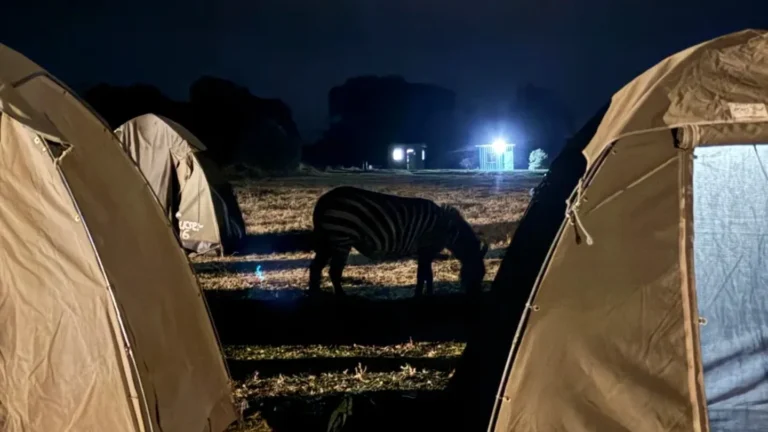
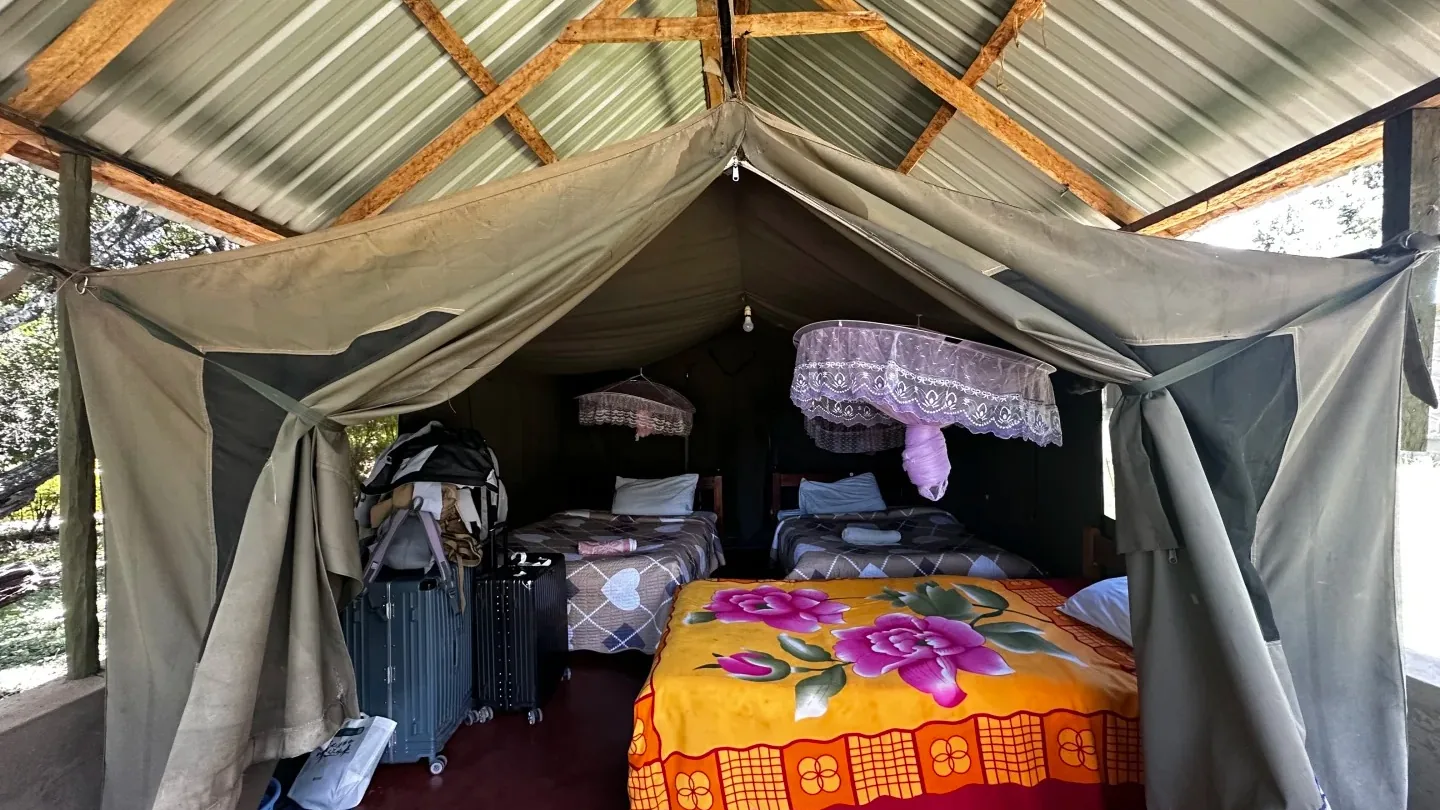
Budget safaris start around $150 per person per day and run to roughly $250. That buys basic campsites or simple guesthouses, a shared vehicle, group departures, and often off-season timing. It’s real safari – the lions don’t know what you paid – but you trade comfort, privacy, and flexibility for the price.
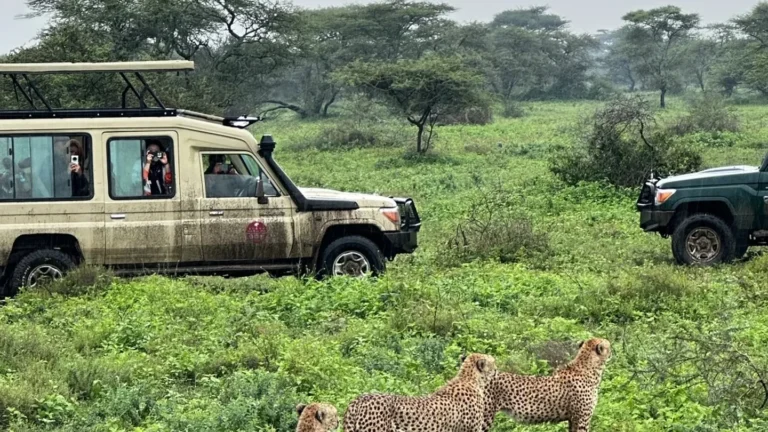
Mid-range is where most people should be looking. Comfortable tented camps and small lodges, all meals, twice-daily game drives, park fees usually folded in: expect $350–$600 in the green and shoulder seasons and $500–$900 at peak. In Tanzania, comfortable tented camps commonly run $450–$800 a day.
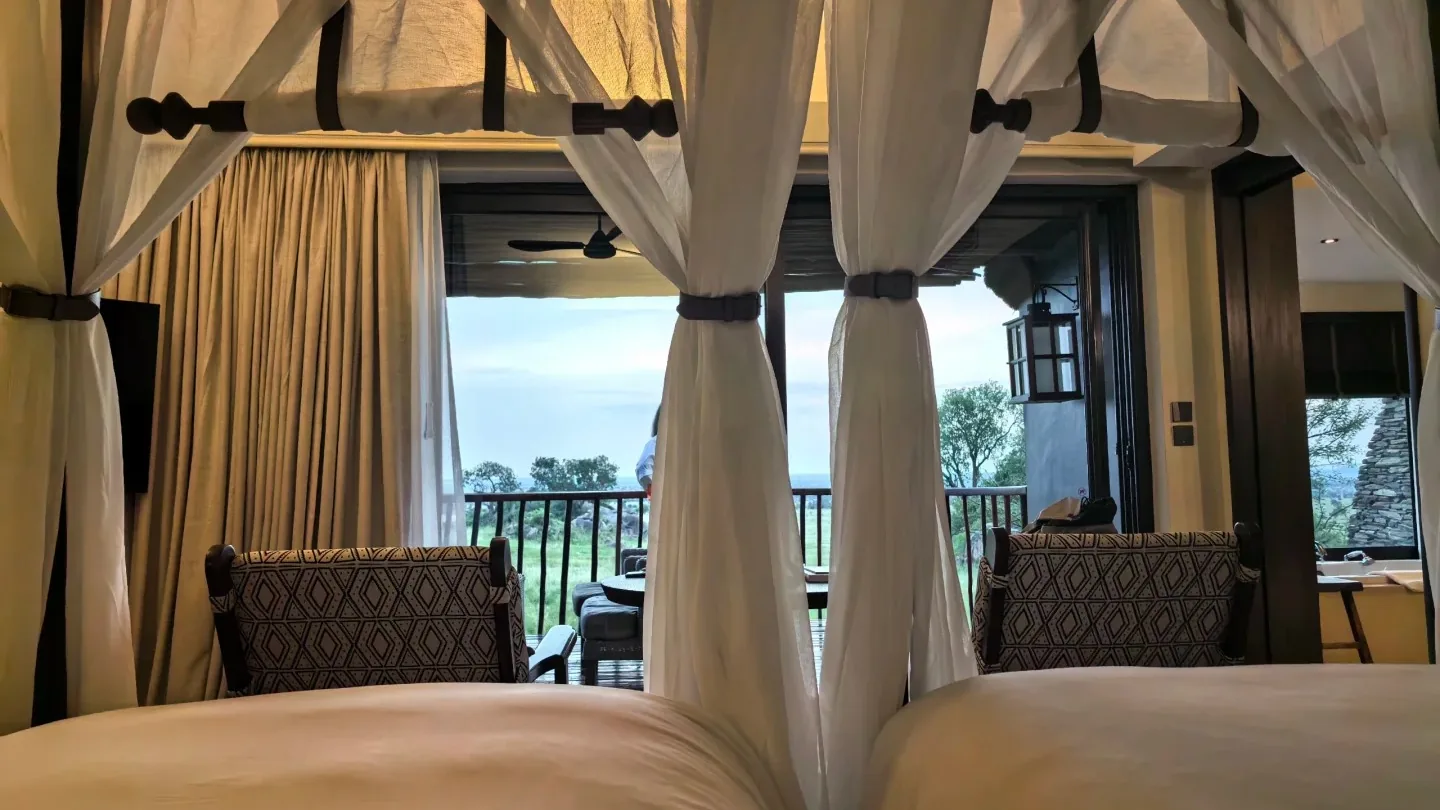
Then luxury, from about $800 to $1,500 a day, and ultra-luxury beyond that, past $2,500 at the handful of properties that sell exclusivity as the product. Private guides, fly-in access, four guests to a vehicle, a pool tent you’ll barely use because you’re out at dawn.
The mid-range and luxury bands overlap on purpose, roughly in that $800–$900 zone, and which side a given trip lands on comes down to what you’re buying rather than the number alone. An $850 day at a busy peak-season lodge with a shared vehicle is really top-end mid-range; the same $850 buying a small camp, a private guide, and fly-in access is entry-level luxury. Read what the rate includes, not just its size.
Budget
$150–$250
Camping, shared vehicle, group departures, off-season.
Mid-range
$350–$900
Tented camps, all meals, twice-daily drives, fees usually included.
Luxury
$800–$1,500+
Fly-in, private guide, small camps, four to a vehicle.
Here’s our hill to die on: for most first-time travellers, the jump from budget to mid-range is worth every dollar, and the jump from mid-range to luxury usually isn’t. A good mid-range camp in a quiet conservancy delivers ninety percent of the luxury sighting experience at half the rate. If a plunge pool and a private butler are what you came for, that logic doesn’t apply to you – but the wildlife is identical from both vehicles.
Cost per person, per day · 2026/2027
Mid-range
Luxury
Park fees: the number nobody quotes you
This is where budgets quietly break. Park and conservation fees are set by governments, charged per person per day, and in most cases they sit on top of whatever a cheaper operator advertised to win your booking. They aren’t optional and they aren’t small.
The latest TANAPA tariff page available when this guide was checked listed Serengeti conservation at $70.80 for a non-resident adult, including 18% VAT. Because that published schedule is labelled FY 2023/24, treat the figure as a planning reference rather than a guaranteed 2026 rate. Ngorongoro is charged separately: allow roughly $70–$80 per adult, plus a crater service fee of about $295 per vehicle for a descent. Confirm both amounts with your operator against the tariff in force for your travel dates.
Kenya’s Maasai Mara is the one to watch, because the price nearly doubles mid-year. A non-resident adult pays $100 from January through June 2026, then $200 from July through December – and each ticket is valid for 12 hours, not a full 24, expiring at 6:00 PM on the day you enter. Same reserve, same lions, twice the gate fee, timed exactly to the migration everyone wants to see.
Non-resident park fees, per adult · 2026
Kenya (Maasai Mara)
Fee sources, accessed 18 July 2026: TANAPA tariff schedule (labelled FY 2023/24 – confirm current rate before booking), NCAA Ngorongoro tariffs, Narok County Finance Act fee schedule.
Run the arithmetic and it adds up fast. Two people doing four days of game drives in the high-season Mara need a fresh 12-hour ticket each day: that’s $200 x 2 x 4, or $1,600 in gate fees alone, before a single night’s accommodation or a cent of vehicle fees. When a quote looks suspiciously cheap, this is almost always the line that’s been left off – so ask, in writing, whether park fees are included. A rate that folds them in isn’t more expensive. It’s just honest.
Where you go changes the price
Same continent, very different bills. Botswana sits at the top by design: a deliberate high-value, low-volume model, strict visitor caps, and remote camps you can often only reach by light aircraft. Even basic group camping there starts around $300 a day, and luxury lodges clear $1,300.
Kenya and Tanzania land in the middle, pushed up mostly by those park fees and dollar-denominated pricing. South Africa is the value outlier – good roads, self-drive options in parks like Kruger, strong infrastructure, and a favourable exchange rate that stretches a mid-range budget further than anywhere else on this list.
Typical mid-range day rate by country · 2026
East Africa
Premium
Season swings it more than tier does
People obsess over budget versus luxury and then book the single most expensive week of the year without noticing. Season moves the number more than tier does.
Peak means the migration and the dry months – roughly July to October in East Africa – when herds concentrate, sightings are easiest, camps sell out, and both lodge rates and park fees climb. The Mara doubling its gate fee on July 1 is the clearest example, but lodge pricing follows the same curve everywhere.
Green season, the wetter months, is the quiet lever nobody wants to pull. Rates drop by a third or more, the landscape is lush, newborn animals are everywhere, and the crowds thin out. Yes, some roads get muddy and a few remote camps close. The trade-off is real. But if your dates are flexible and you’re not fixed on a river crossing, a green-season mid-range trip can cost less than a peak-season budget one and feel like far more.
And sometimes the calendar just doesn’t cooperate with the wallet.
Not sure which season fits your budget?
Tell us your rough dates and what you most want to see. Our safari team will send back a realistic per-day estimate and two or three itineraries that actually fit – no obligation, no sales script.
What’s included – and the extras that blow the budget
An all-inclusive day rate usually covers accommodation, all meals, twice-daily game drives with a guide, park and conservation fees, and often local transfers and some drinks. That’s the number worth comparing between operators, because it’s the one that’s genuinely comparable.
The extras are where a tidy budget goes sideways. International flights are almost never included. Neither are premium wines and spirits, tips for guides and camp staff (budget roughly $10–$20 per guest per day), travel insurance, visas, or the optional activities that are half the reason people come.
The big one is a balloon safari. Floating over the Serengeti or Mara at dawn runs $450–$550 per person, and it’s worth knowing that even if you’re staying in a private conservancy, you still owe the main reserve’s entry fee on the day you fly, because the balloons land inside the reserve. Guided walking safaris are also available in designated parts of the Serengeti for an additional activity and ranger fee. Availability, group limits and charges can change, so ask your operator to confirm the current TANAPA rules before building one into your budget.
How to lower the cost without gutting the trip
You don’t cut the cost of a safari by cutting the safari. You cut it by moving the levers that don’t touch the wildlife. Travel in shoulder or green season and you’ll save a third before you’ve done anything else. Join a small-group scheduled departure instead of a private vehicle and split the guide and fuel across more people.
Base yourself in one strong region rather than chasing four parks in a week – every transfer and every new gate is money, and the animals don’t reward the mileage. Fly less, drive more if you have the time; skip the internal light-aircraft hops that quietly add hundreds. And pick a private conservancy bordering a famous reserve, where nightly rates often beat the marquee lodges inside it and the vehicles are fewer.
What we wouldn’t trim: the quality of the guide, and enough nights to actually settle into a place. A great guide is the difference between seeing a landscape and reading it. Two rushed nights somewhere spectacular is the one economy that tends to be regretted.
Five questions to ask before you compare quotes
- Are park and conservation fees included? Get it in writing. This single line explains most of the gap between two quotes that look otherwise identical.
- Is this a private vehicle or a shared one? Shared drives are cheaper but you don’t control the pace, the stops, or how long you sit with a sighting.
- Which season do these dates fall in? The same itinerary can swing 30–50% between green and peak. Ask where your dates sit on that curve.
- What isn’t included? Flights, tips, drinks, balloon flights, visas, insurance. Add the likely extras to the quote before you compare, not after you’ve booked.
- How many nights in each location? Fewer, longer stays usually beat a checklist of one-night stops – and cost less in transfers.
So which tier is right for you?
If the wildlife is the whole point and comfort is negotiable. Camping and shared drives in green season deliver the real thing for $150–$250 a day. You’ll rough it a little; the lions won’t care.
Our pick for most first-time travellers. At $350–$900 a day you get comfortable tented camps, fees usually included, and 90% of the luxury sighting experience. A quiet conservancy at this tier beats a big-name lodge inside the reserve.
If privacy, fly-in access, and a small camp with four guests to a vehicle are what you’re paying for – not the animals, which are the same from every vehicle. From $800 a day, and worth it when exclusivity is the experience you actually want.
Whichever band you land in, the cost per day is the honest yardstick, and the park fees are the line to double-check. Get those two right and the rest of the budget tends to fall into place.
Sources & price notes
Park-fee references checked 18 July 2026: TANAPA tariff page (the page remains labelled FY 2023/24), NCAA tariffs, and the official Narok County Finance Act fee schedule. Package-price ranges in this guide are editorial planning estimates, not fixed official prices. Rates vary by season, camp, itinerary, group size and exchange rate; confirm the tariff and inclusions applying to your dates before booking.